Yoon Kyung Bai
Residual Forms
This thesis examines how architecture can serve as a visible record of collective consumption by transforming everyday waste into a material language that reflects a community’s identity, time, and values. In contemporary cities, architectural surfaces are designed to appear new, uniform, and untouched by the traces of human activity. Waste is a constant byproduct of life, yet it is hidden from view, removed to basements, back alleys, or off-site facilities. This removal conceals the social and cultural narratives embedded in what people discard.
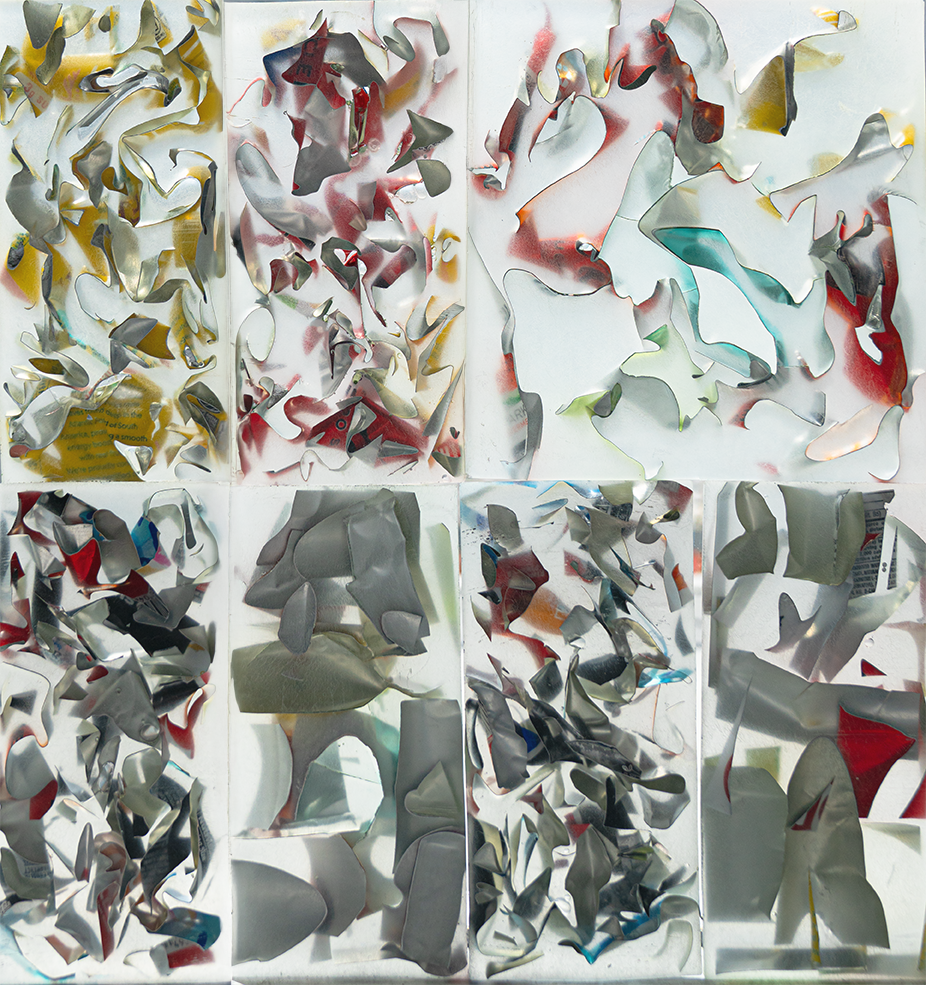
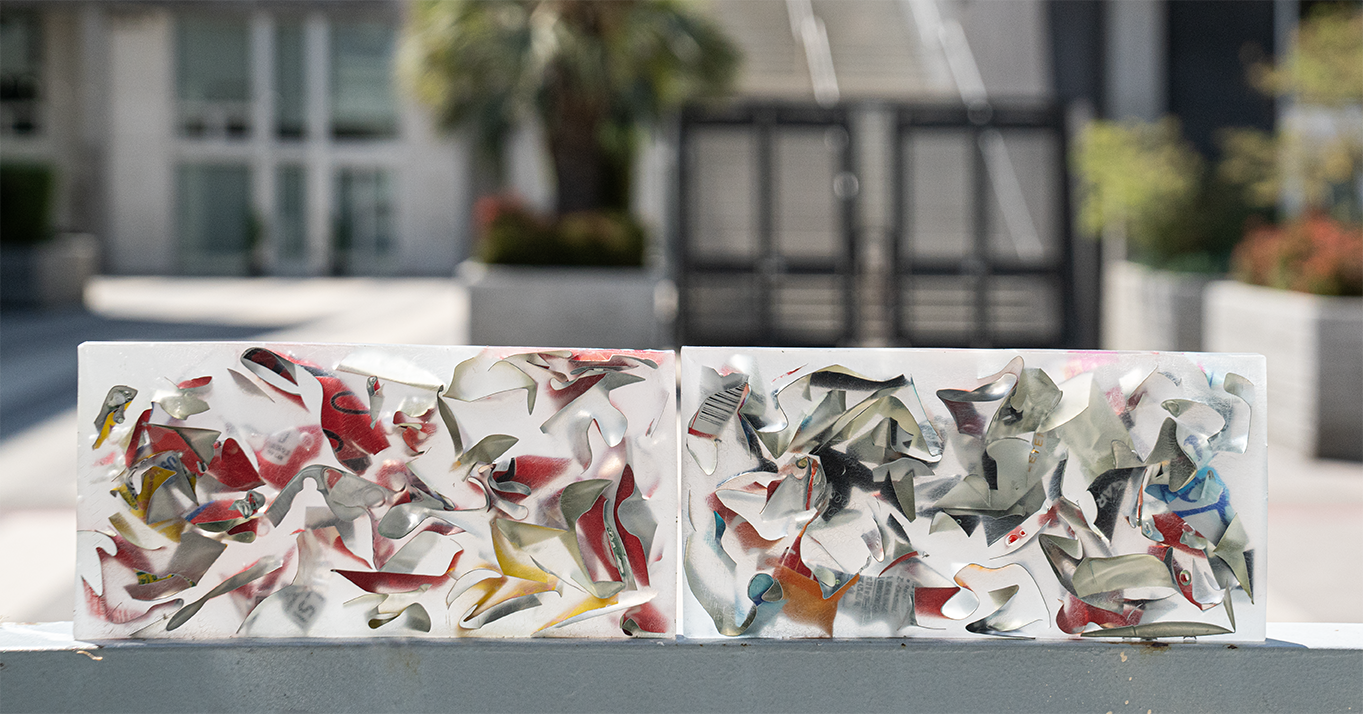
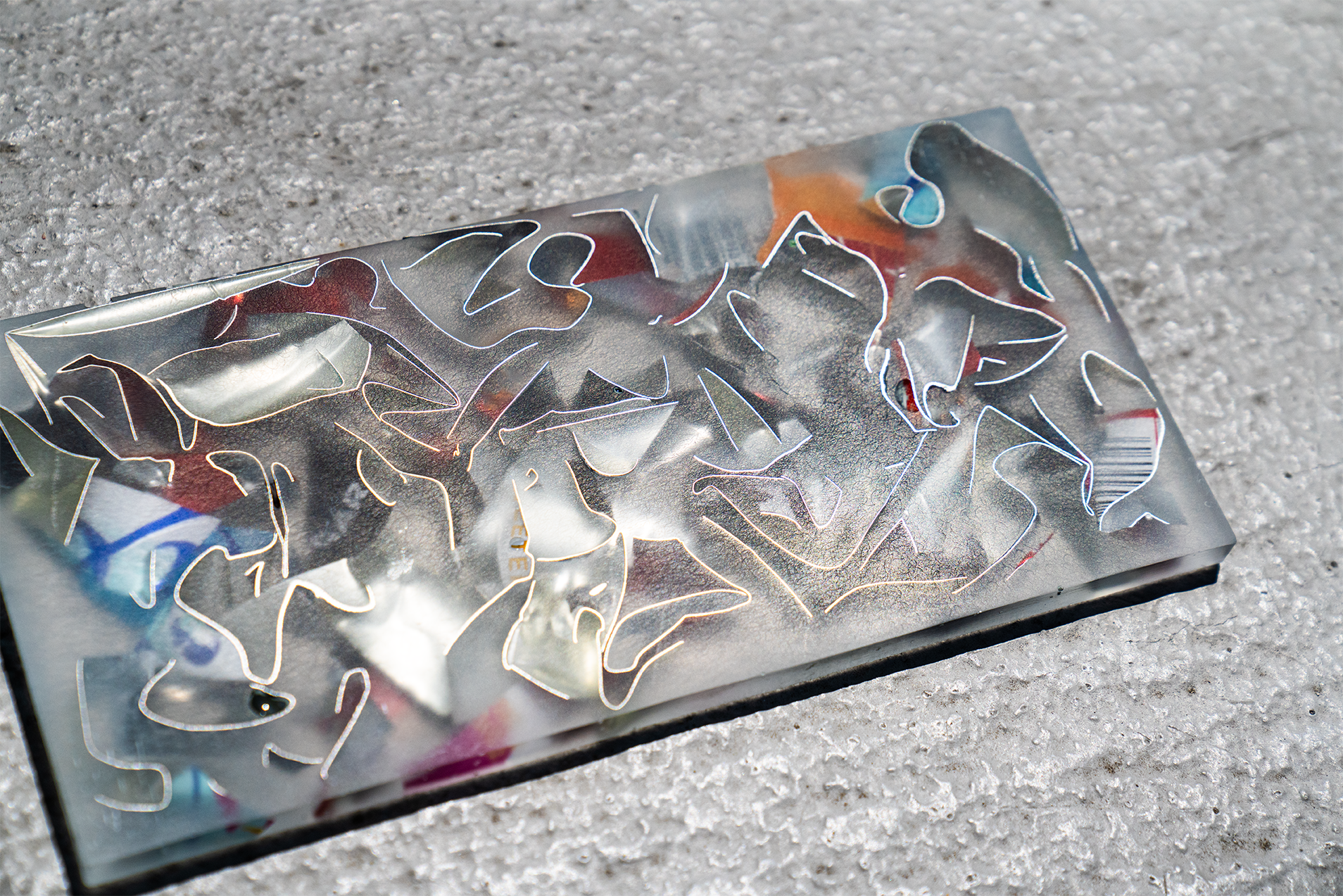
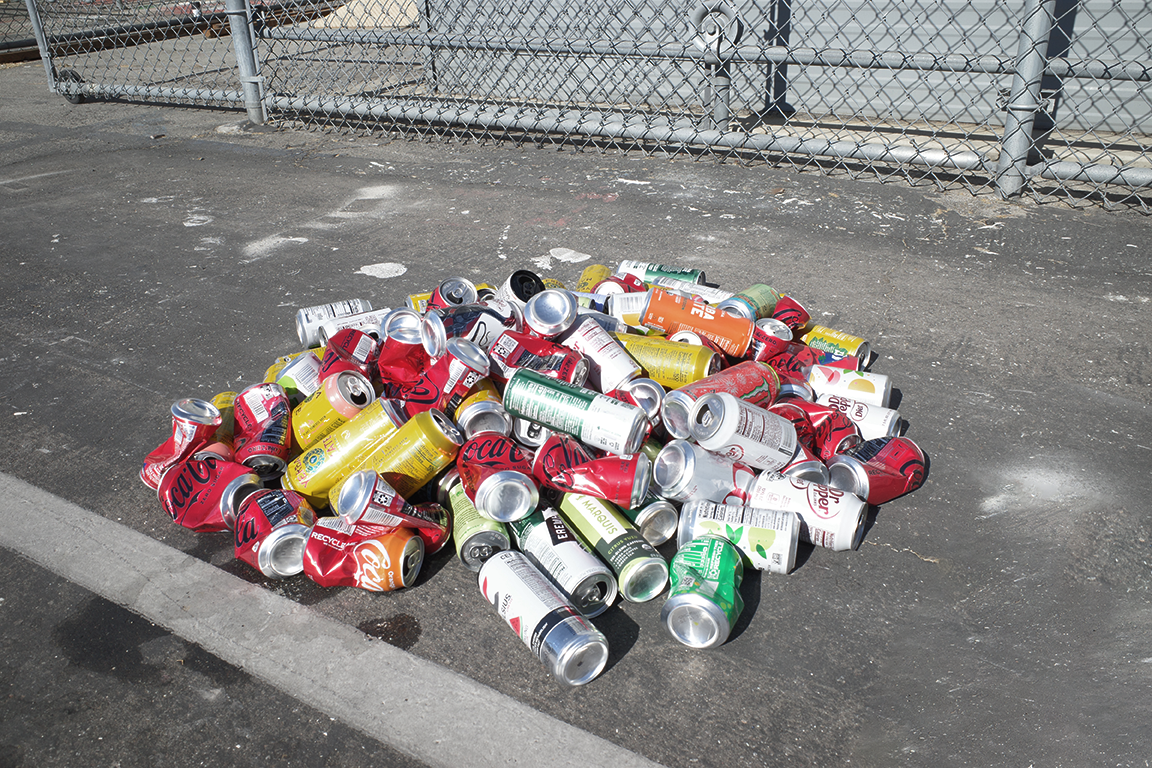
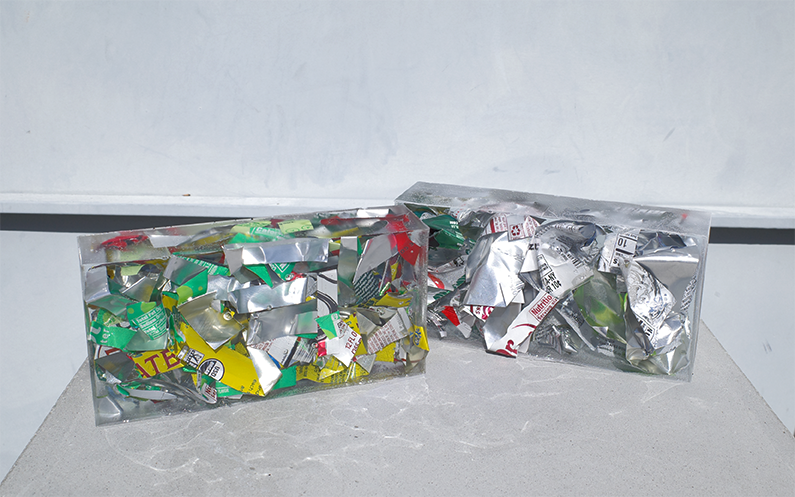
This project focuses on aluminum beverage cans, which are universally familiar and visually distinctive as a form of waste. It proposes a design methodology in which locally collected cans are processed into resin-embedded panels for architectural application. The collection process is community-based, sourcing materials from neighbors, friends, and peers to embed social relationships into the resulting material. Each crushed, cut, and cast panel captures a cross-section of collective habits, freezing a moment in time where color, typography, and texture document patterns of consumption.
When assembled, these panels form a surface language that is unique and unpredictable. The process favors localized variation over industrial uniformity, creating architecture rooted in specificity rather than anonymity. Applied to a site in Koreatown, Los Angeles, the system supports a closed-loop building program: an experimental lab where community members bring waste, participate in material transformation, and see it reintegrated into the built environment.
The methodology can be extended to other material streams such as fabric, plastic, or found objects. This adaptability allows each building to express the unique identity of its community. This thesis positions architecture as an active participant in documenting and materializing the everyday traces of human life, reframing waste as a cultural and architectural asset.