Yian Li
Kids Return
Due to centralized education reforms and urban migration, more than 370,000 rural schools in China have closed since 2001. Each closure erases daily rituals, social cohesion, and spatial identity. This thesis reimagines one such school in Hongguang Village, Zunyi, Guizhou—abandoned after only nine years of use—as a senior nursery for the very people who once studied there as children.
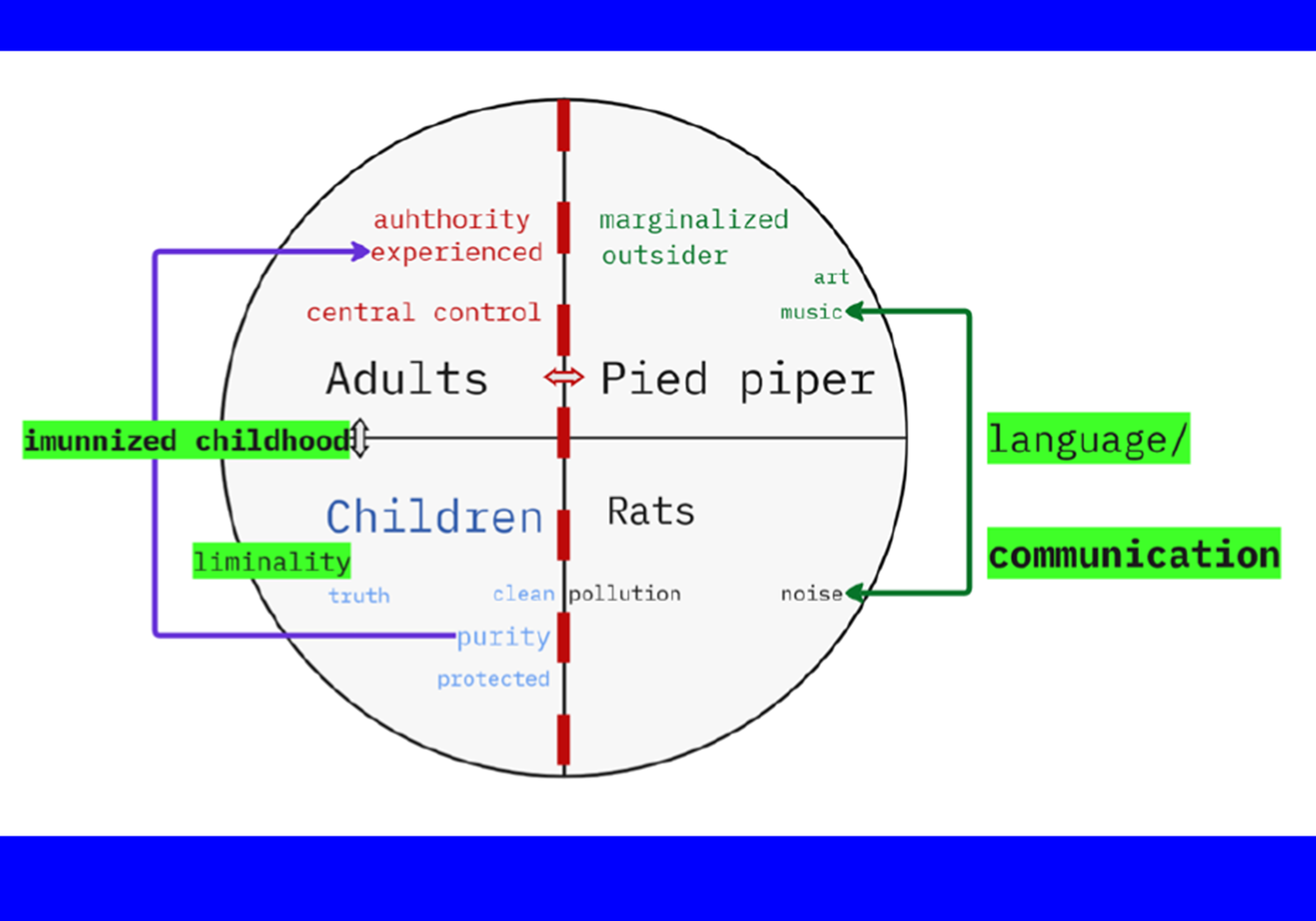
The project draws from Ilya Kabakov’s School No. 6, which renders memory through fragmented space, and from the tale of the Pied Piper of Hamelin, where children vanish to an unseen destination. This project imagines where they go afterwards, and the architecture itself becomes the Piper.
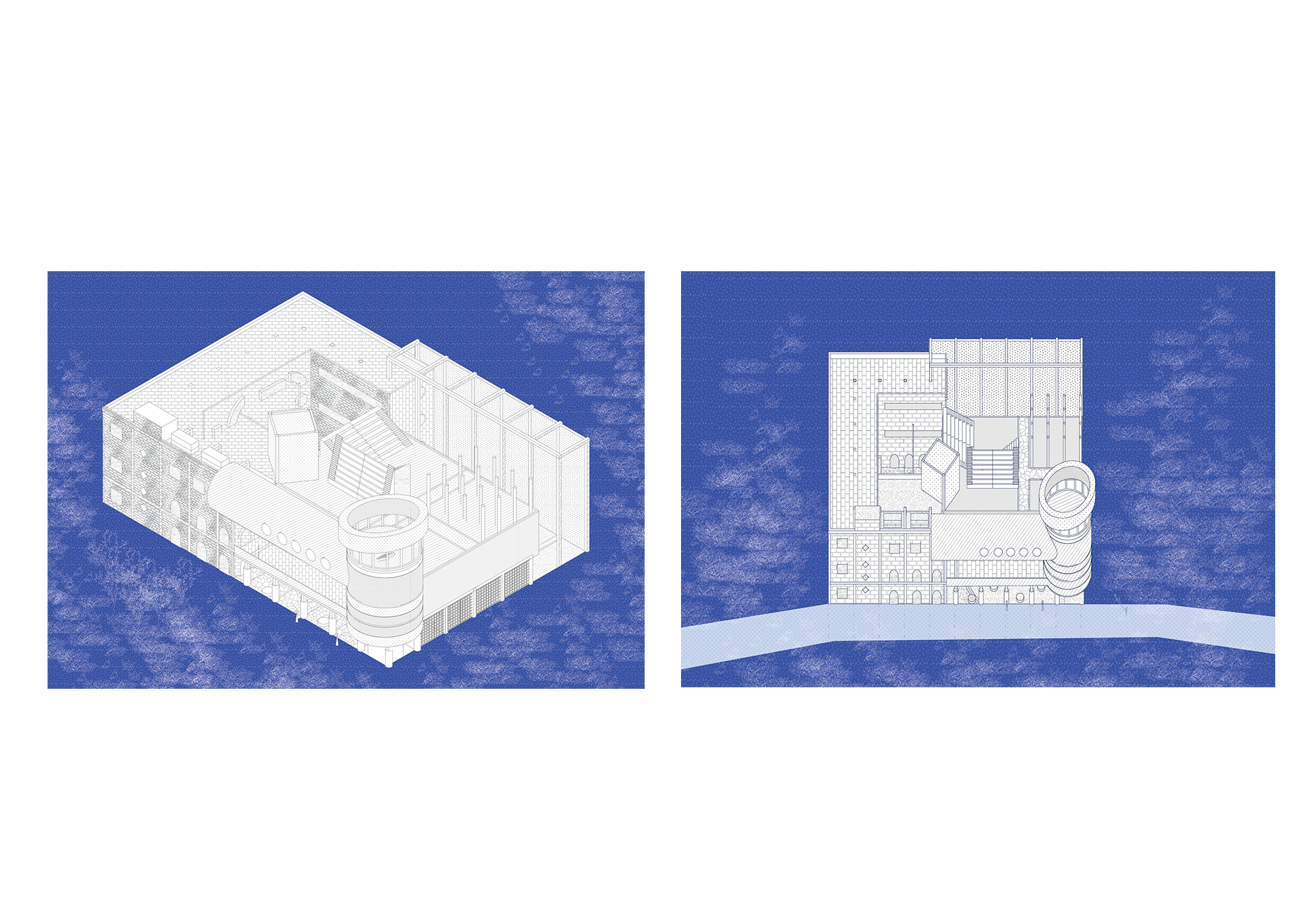
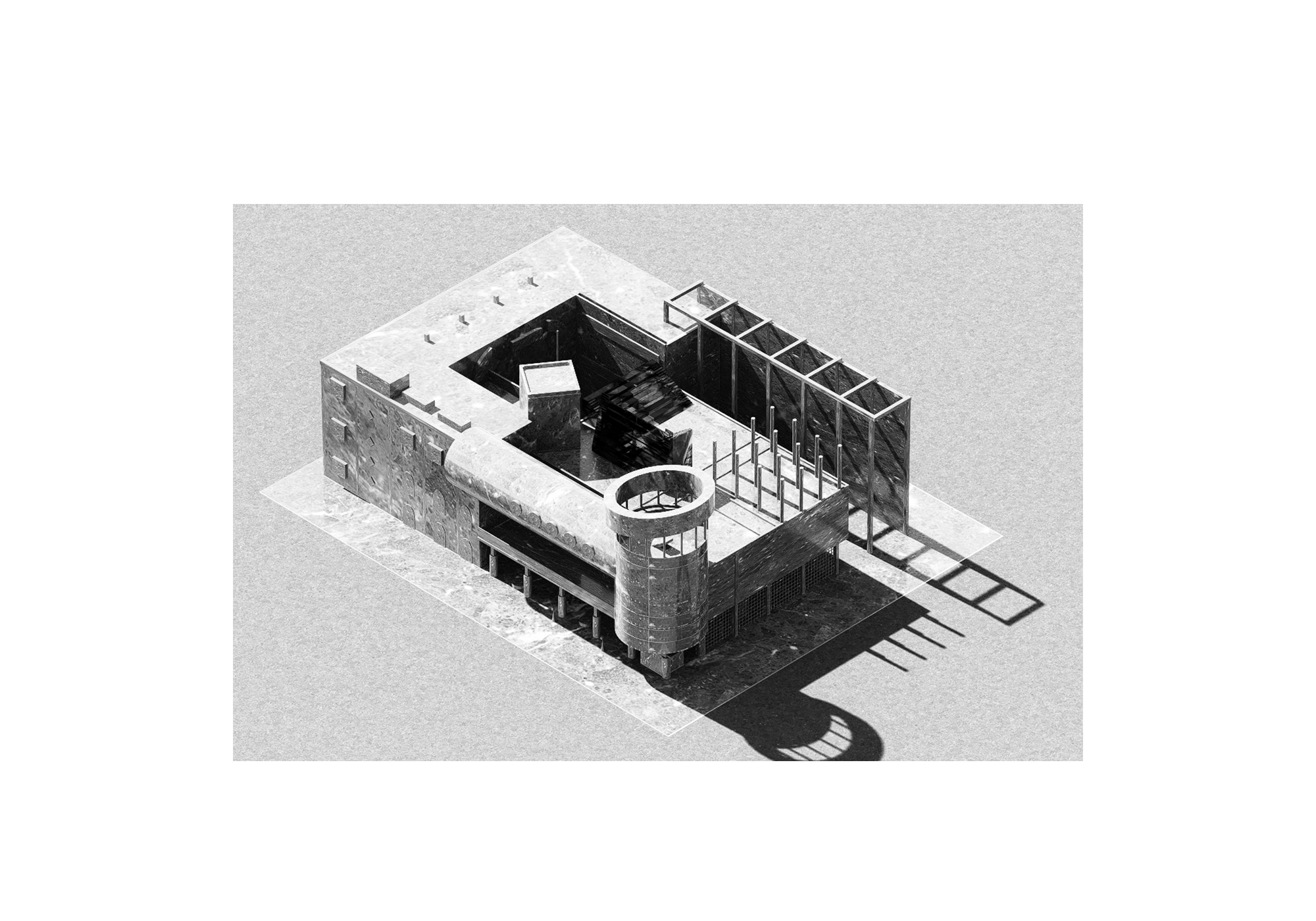
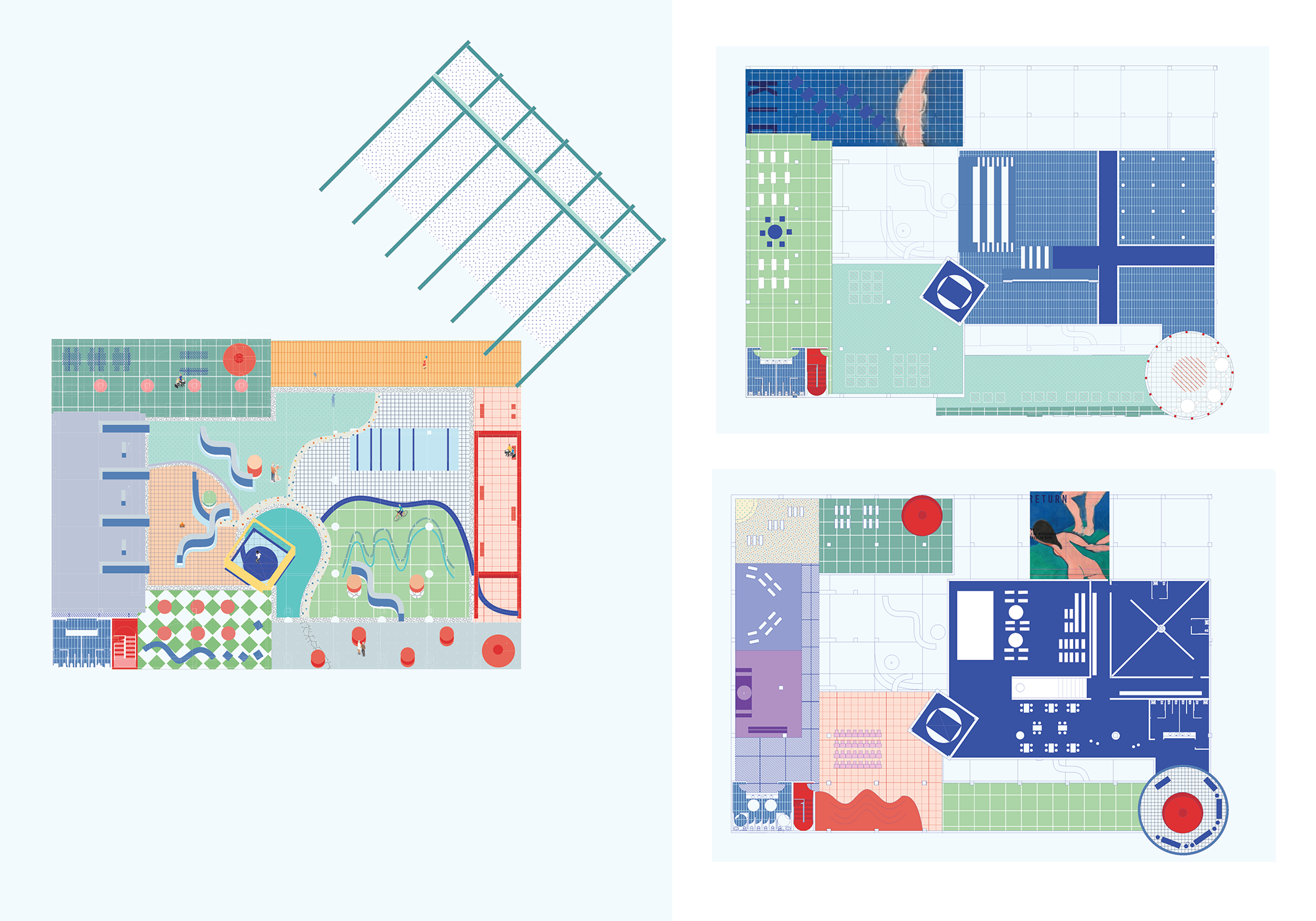
The design employs a dreamcore aesthetic, integrating fragments of the original modernist building with new insertions. Existing classrooms are reconfigured into a library, reception area, café, and courtyard. The upper floors host an auditorium, music room, dance and painting studios, nap spaces, and a rooftop farm. A new bathhouse, connected to a central core, doubles as a therapeutic garden retreat, while a circular “adults’ tower” accommodates administration and security.
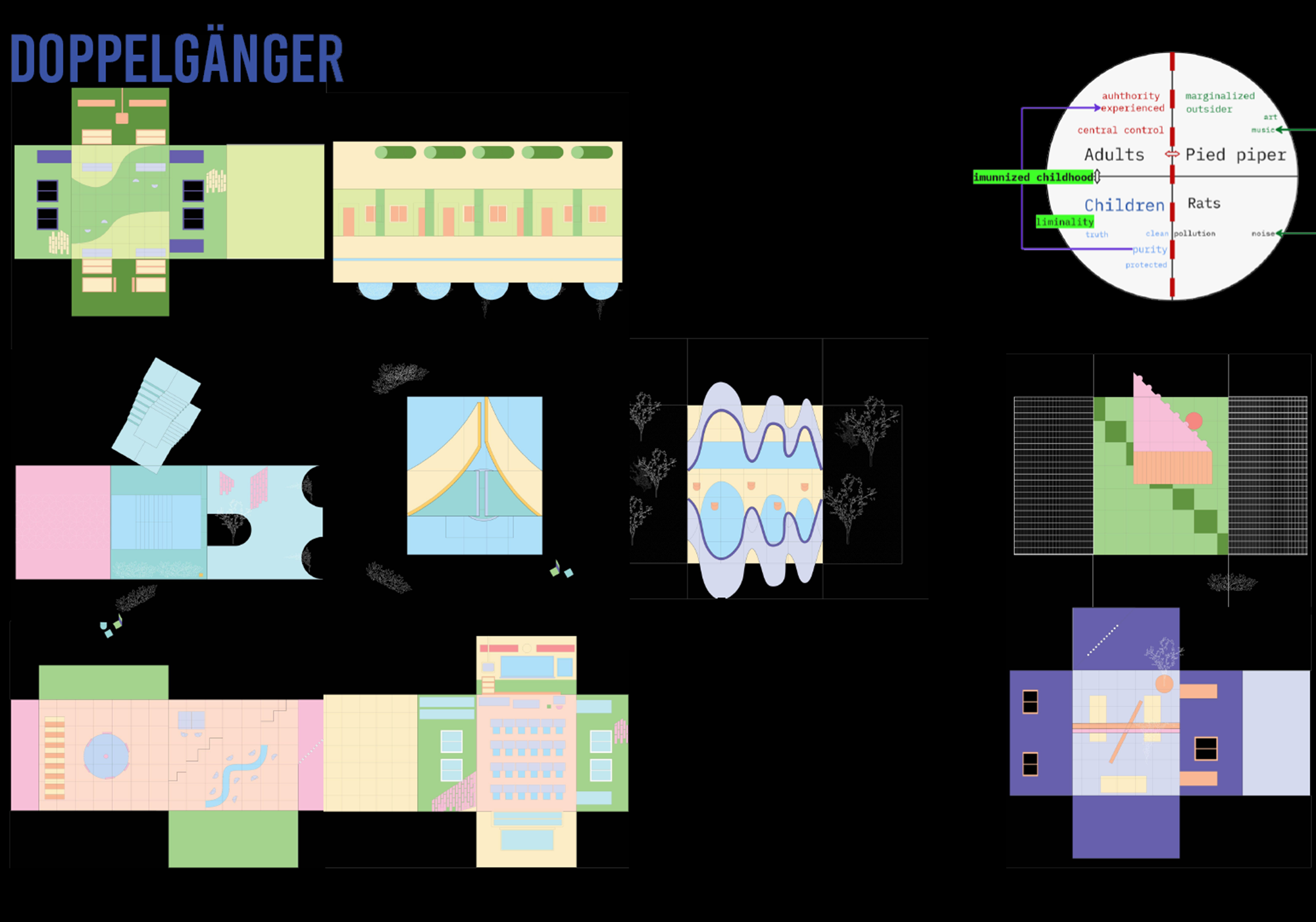
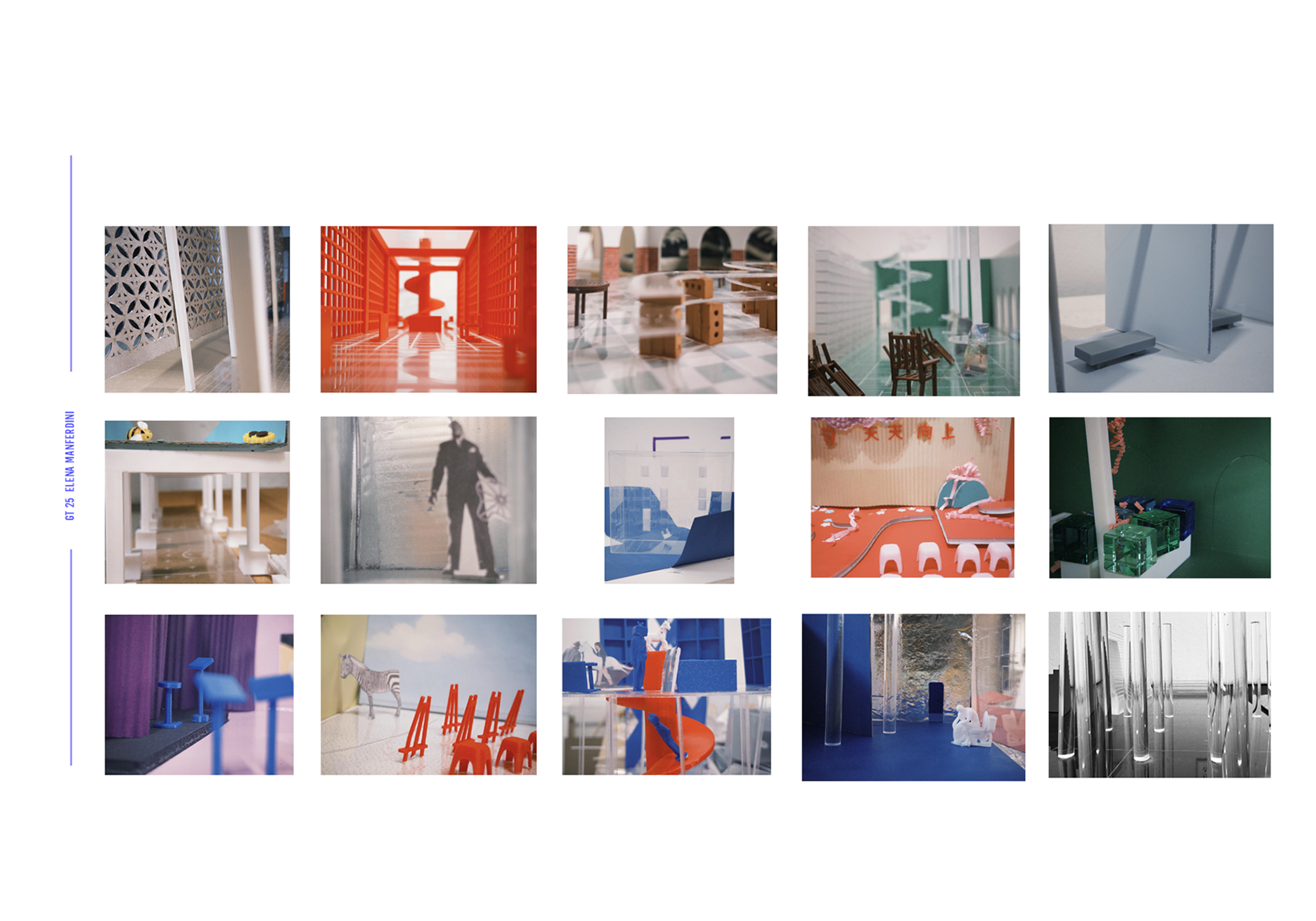
Spaces are choreographed like tracks in a concept album—each with its own color, material, and light, shaping the narrative atmosphere. The design stages a continuing journey of the pipers and the children. We enter the senior nursery through patterned-brick hallways where sunlight and shadow weave across the path. Another narrative thread of the rats starting from “rats square”; moves through the library, reception, and café around a tranquil courtyard; ascending to an auditorium, music and dance rooms, nap spaces, and a rooftop farm; culminating in a bathhouse and terrace garden—a space that might be an ending, or a beginning. Here, Escape can also be a return.
Architecture is closely intertwined with “people”, yet people forget what they were. The story reveals a state of liminality as children become adults, showing the dilemmas the Piper faces. The Piper can awaken awareness in children or even rats, yet is powerless in the adult world without resources, allies, or authority. Here, architecture embraces conflict, memory, and playfulness to provoke awakening and resist control. It challenges the viewer to see architecture not as a passive container, but as an active force of creativity, disruption, and revelation—like the Piper, or the music that lures you.