Info
Info
Info

INFORMATION

“Translation is taking on new forms this year, whether turning datasets into spatial proposals, physical models into digital systems, or environmental inputs into architecture. Across these varied approaches, architecture becomes a means of inquiry, grounded in making and attuned to both digital and material conditions.”

— Jackilin Hah Bloom, Graduate Thesis Coordinator

Over three days of reviews, 72 thesis students will present and engage their work in dialogue with over 80 guest critics from within and outside the discipline, alongside 17 faculty thesis advisors. This year’s projects will be alive with ideas and possibilities. We invite you to explore the work on view throughout the halls of SCI-Arc for an additional two weeks as part of the 2025 Graduate Thesis Exhibit.

“In a world that often struggles to imagine a different future, creativity in architecture becomes an act of hope, a way to envision, shape, and insist on possibilities beyond the present. Creation demands risk, vision, and responsibility; it asks us not only to understand what is wrong, but to imagine what could be right and to build it. In the face of global challenges that often seem overwhelming, the creative act becomes a form of resistance, of hope, and of agency. Especially in architecture, where the built environment reflects and shapes human experience, the power to design new possibilities is a necessity, not a luxury.”

— Elena Manferdini, Graduate Programs Chair

DIRECTOR/CEO

Hernán Díaz Alonso

VICE DIRECTOR/CHIEF ACADEMIC OFFICER

John Enright

GRADUATE PROGRAMS CHAIR

Elena Manferdini

GRADUATE THESIS COORDINATOR

Jackilin Hah Bloom

ASSISTANT TEACHER

Aram Radfar

TEACHING ASSISTANTS

Suleyman Aminzada Hongyue Dai

HISTORY + THEORY ADVISORS

John Cooper Erik Ghenoiu Marcelyn Gow

DESIGN ADVISORS

Matthew Au Herwig Baumgartner Jackilin Hah Bloom Ramiro Diaz-Granados David Eskenazi Damjan Jovanovic Zeina Koreitem Elena Manferdini Eric Owen Moss Anna Neimark David Ruy William Virgil Devyn Weiser Andrew Zago
Graduate Thesis ’25 · Graduate Thesis ’25 · Graduate Thesis ’25 · Graduate Thesis ’25 · Graduate Thesis ’25 · Graduate Thesis ’25 · Graduate Thesis ’25 · Graduate Thesis ’25 · Graduate Thesis ’25 · Graduate Thesis ’25 · Graduate Thesis ’25 · Graduate Thesis ’25 · Graduate Thesis ’25 · Graduate Thesis ’25 · Graduate Thesis ’25 · Graduate Thesis ’25 · Graduate Thesis ’25 · Graduate Thesis ’25 · Graduate Thesis ’25 · Graduate Thesis ’25 · Graduate Thesis ’25 · Graduate Thesis ’25 · Graduate Thesis ’25 · Graduate Thesis ’25 · Graduate Thesis ’25 · Graduate Thesis ’25 · Graduate Thesis ’25 · Graduate Thesis ’25 · Graduate Thesis ’25 · Graduate Thesis ’25 · Graduate Thesis ’25 · Graduate Thesis ’25 · Graduate Thesis ’25 · Graduate Thesis ’25 · Graduate Thesis ’25 · Graduate Thesis ’25 · Graduate Thesis ’25 · Graduate Thesis ’25 · Graduate Thesis ’25 · Graduate Thesis ’25 · Graduate Thesis ’25 · Graduate Thesis ’25 · Graduate Thesis ’25 · Graduate Thesis ’25 · Graduate Thesis ’25 · Graduate Thesis ’25 · Graduate Thesis ’25 · Graduate Thesis ’25 · Graduate Thesis ’25 · Graduate Thesis ’25 ·

Yi Han

Advisor: Ramiro Diaz-GranadosMA1

Porcupine: A Robust Brick Arrangement System for Freeform Surfaces


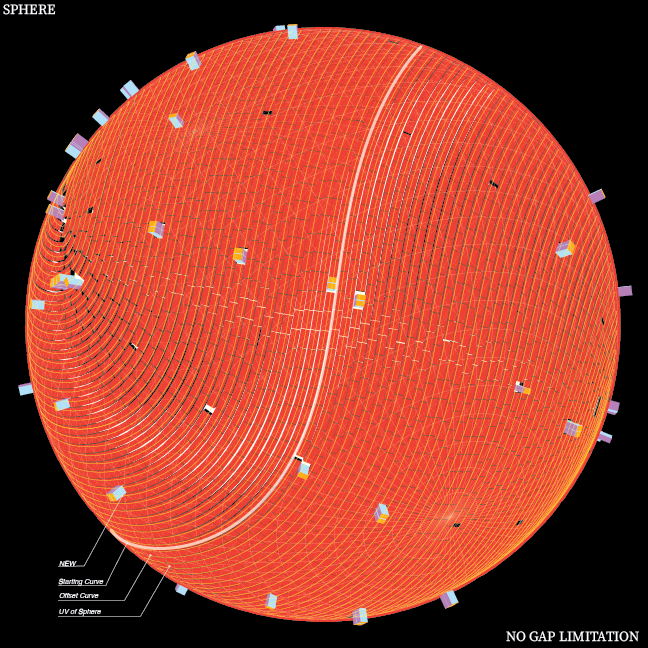
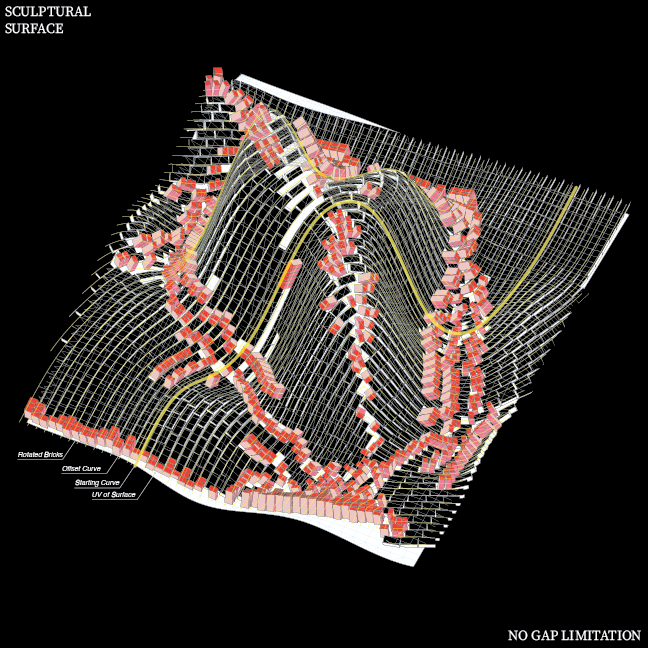
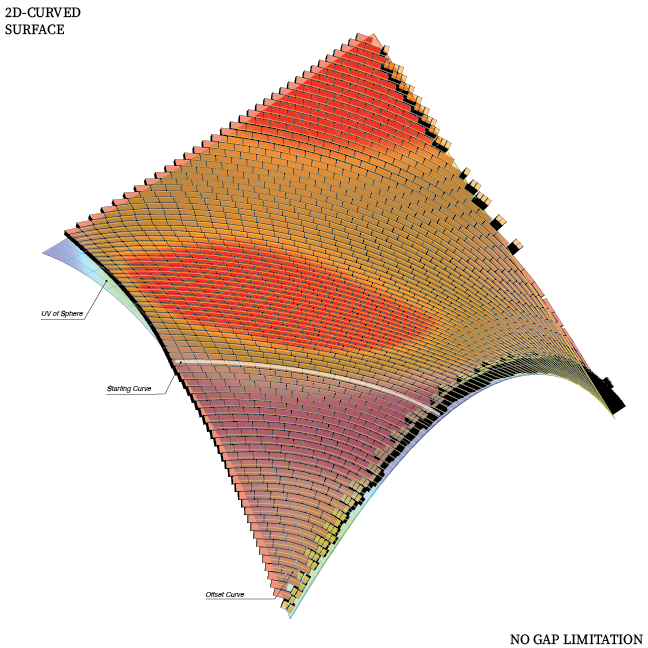
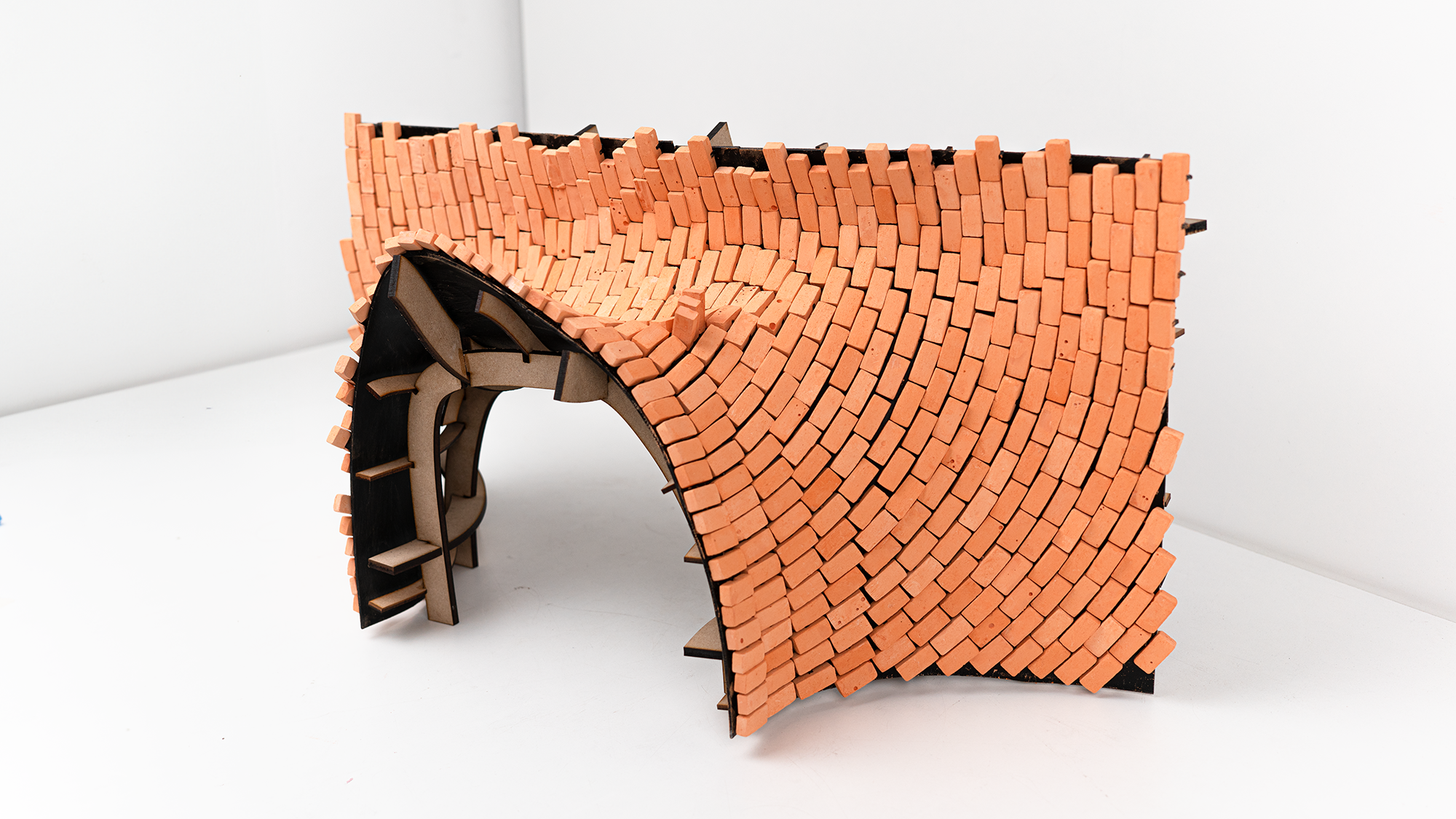
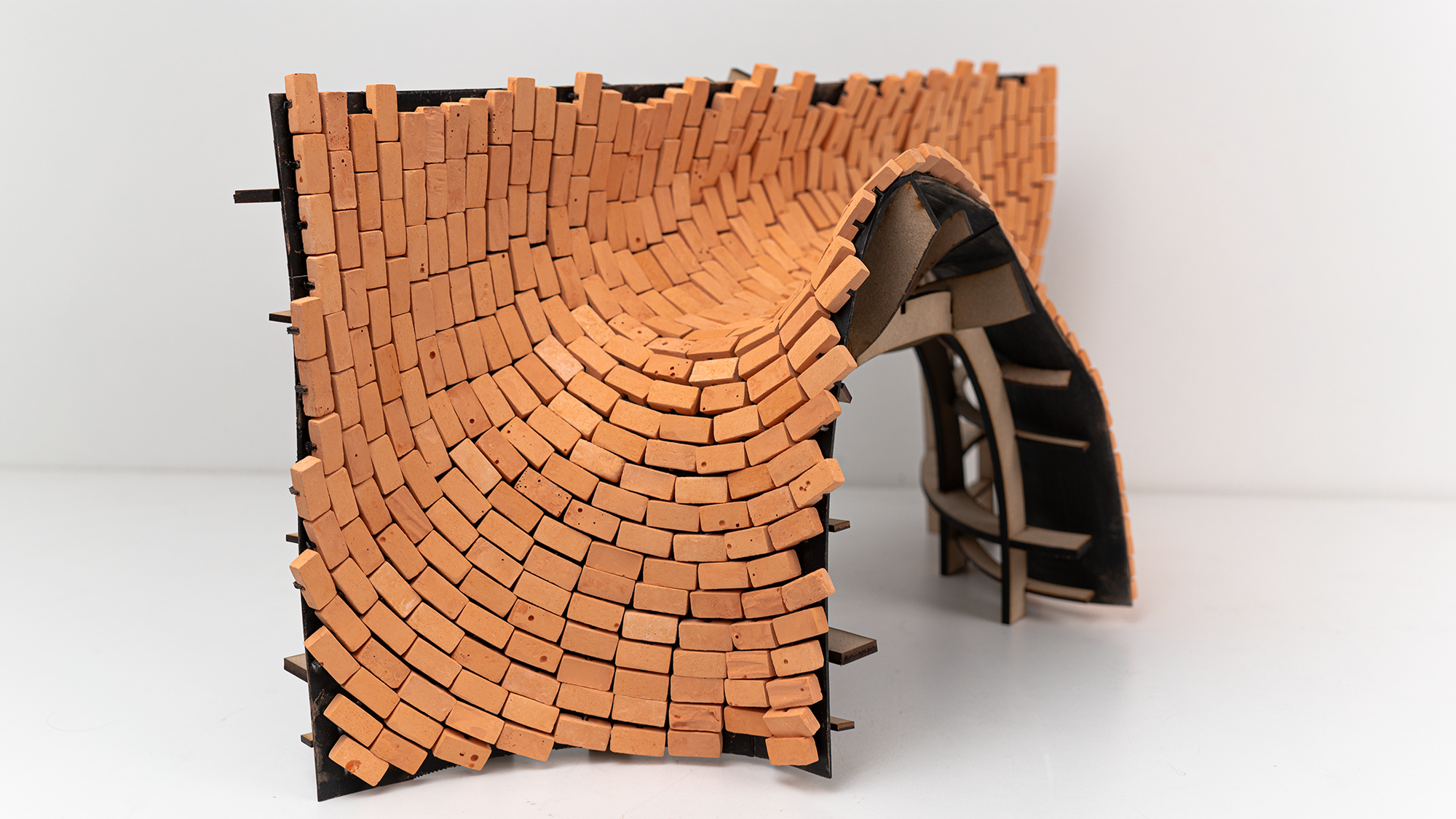
Porcupine is a parametric plug-in for Grasshopper that allows for free-form masonry layouts on topological or topographic surfaces. It enables architects and designers to arrange standard masonry units seamlessly across complex geometries, maintaining continuity, collision-free placement, and curvature conformity without custom-cutting bricks. By addressing the limitations of existing approaches to freeform brick masonry, Porcupine offers a computational framework that bridges design adaptability with construction feasibility.

Current approaches to brick masonry on freeform surfaces reveal three recurring limitations:

  1. Formal freedom yet conventional structure — Projects such as Gehry’s achieve visually complex surfaces but remain bound to horizontal layering and customized bricks, never fully liberating units within free geometry.

  2. Forms dictated entirely by force paradigms — Dieste’s arches and shells are defined by compressive paths; bricks act as particles in a continuous medium rather than autonomous design units. Once aggregated, their configuration appears intricate but is effectively fixed, resisting local variation or adaptive control.

  3. Expressive collage without systemic logic — Works like Tony Cragg’s sculptures or Wang Shu’s Ningbo Museum employ irregular masonry driven by cultural or artisanal intuition, but cannot translate into parametric frameworks or large-scale reproducibility.\

Research at ETH Zurich (Gramazio Kohler, Block Research Group) and Zaha Hadid Architects’ CODE group has advanced freeform masonry through robotic fabrication and parametric partitioning, yet these approaches typically rely on custom components or fixed structural logics. None address how standard modular bricks might be robustly adapted to free-form curved surfaces.

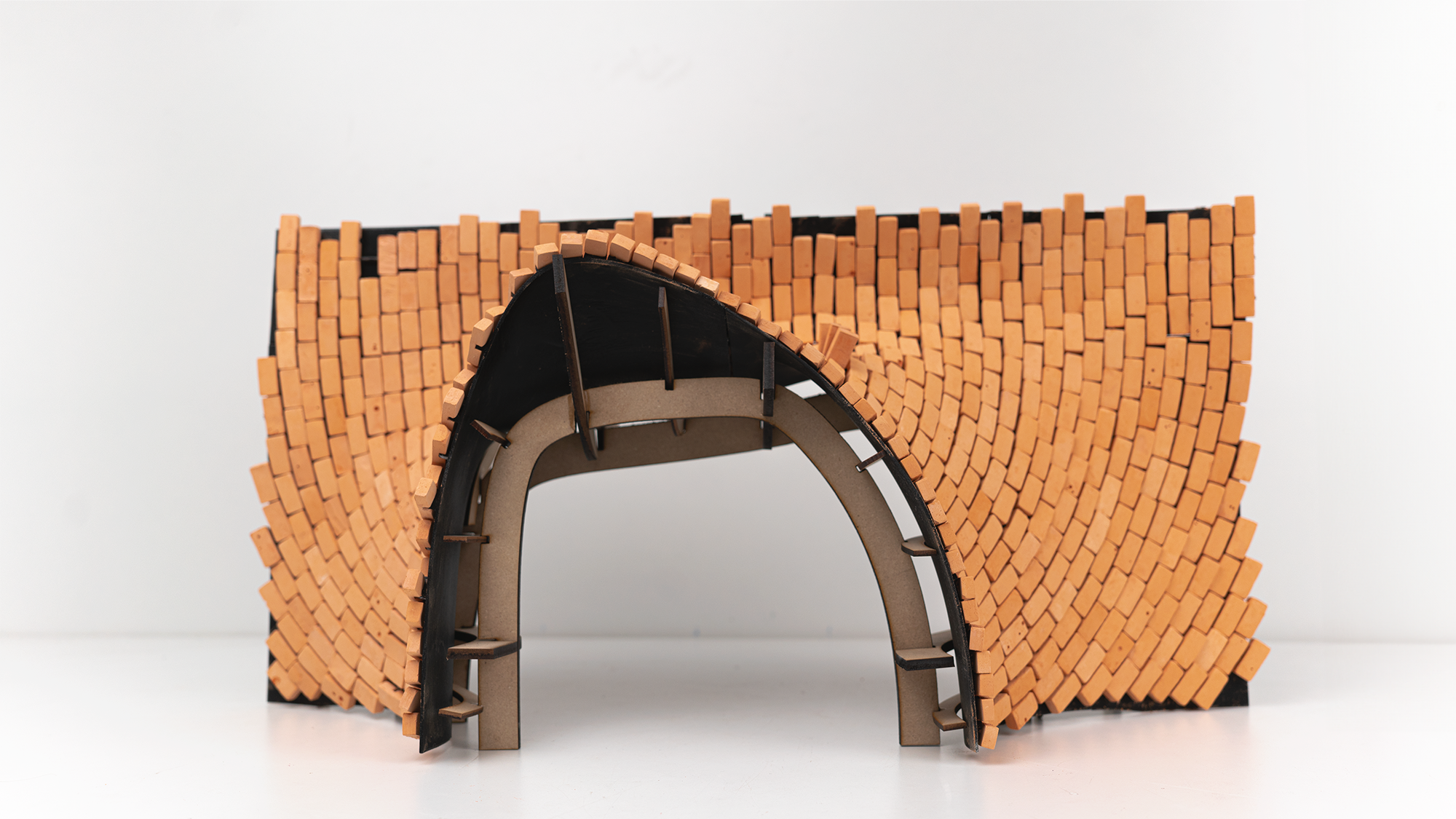
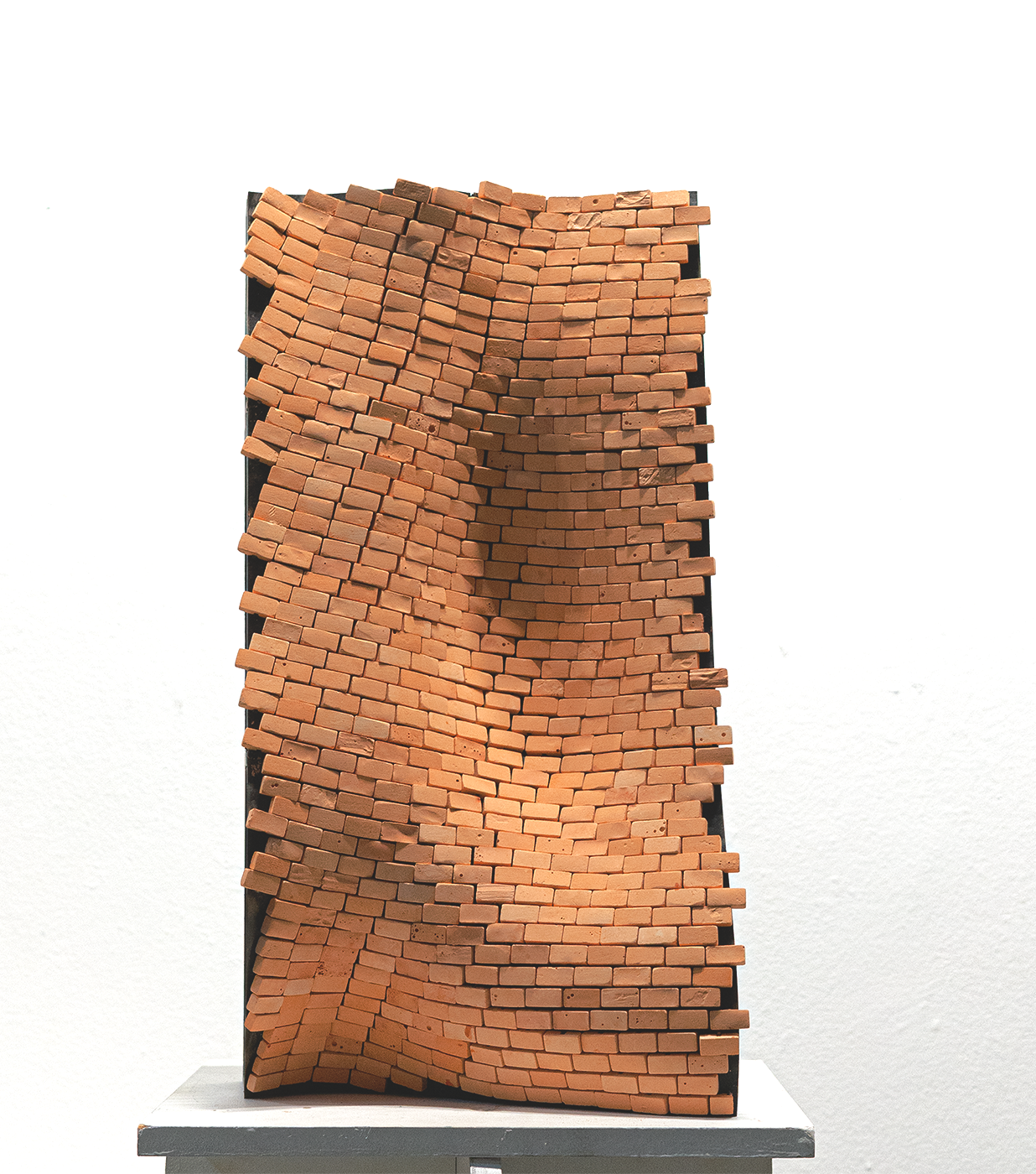
Porcupine proposes such a system: a parametric framework that arranges standard bricks across freeform geometries with continuous, collision-free, and curvature-conforming layouts—without cutting or customizing units. The algorithm is encapsulated as a C# plugin for Grasshopper and validated through three 1:8 physical prototypes, demonstrating both geometric adaptability and construction feasibility.

In practice, the system operates within the Grasshopper environment, taking a target freeform surface and a key curve as its primary inputs. The curve establishes the initial brick orientation and governs transitions across complex geometries; at present, more than one curves are handled manually. Apertures can be addressed by arranging bricks along their edges to preserve continuity. Brick joint widths can be adjusted within design-specified ranges, though precise control is influenced by local brick orientations on curved surfaces. To enhance robustness, Porcupine employs an adaptive unit optimization mechanism and incorporates strategies inspired by some typical algorithms, improving overall layout continuity and consistency. When extreme curvature or boundary conditions create anomalous gaps, the system resolves them by different ways, for instance, insertion of dedicated filler units. The output is a collision-free, curvature-conforming brick arrangement ready for digital fabrication or manual construction.

Porcupine resolves a long-standing tension in architectural theory and practice: the incompatibility between the equality of identical modules and the freedom of adapting to complex global geometries. While Structuralism and modular design theory have conceptualized this balance for decades, no prior system has achieved it without sacrificing either equality (through customization) or freedom (through geometric simplification). Porcupine demonstrates, for the first time, a computational and constructible framework where standard units retain their identity yet conform to any form—an architectural embodiment of coexistence between equality and freedom.

In the future, this system could evolve into a structure- and performance-driven generative framework: calculating self-supporting load relationships between bricks, integrating robotic assembly, and adapting to extreme environments. Porcupine’s logic can be applied to diverse materials—from industrially produced bricks to locally sourced earth blocks, stone, or recycled masonry—allowing construction to respond to the specific resources, skills, and cultural context of each site. By grounding freedom of form in the equality of standard units and the specificity of local materials, the system supports scales from small community structures to extraterrestrial habitats. Operating in a fully digital environment—where every brick carries precise spatial coordinates—Porcupine naturally enables intelligent construction workflows, from robotic and drone-based assembly to deployment in environments where human labor is limited or impossible.
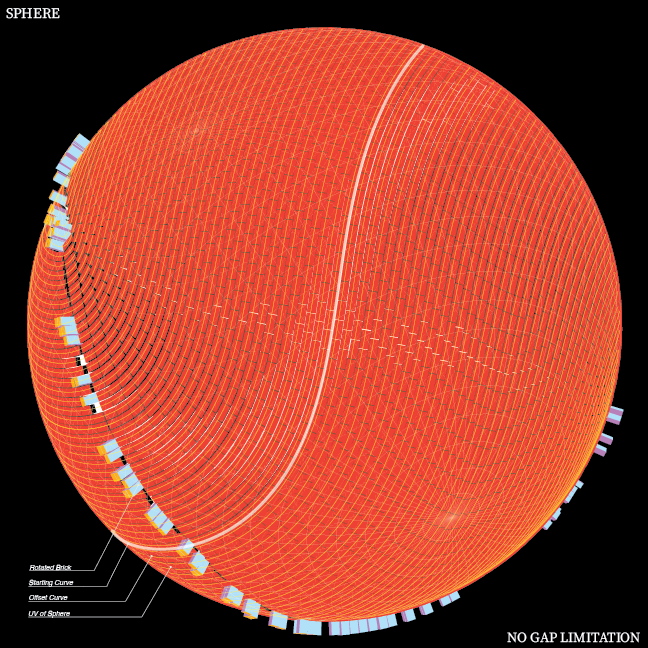
research diagram
research diagram
research diagram
research diagram
model photo
model photo
model photo
Alonso Alonso · Carissa Auth · Yoon Kyung Bai · Shaikha Ben Sabt · Shaheen Bharwani · Esteban Chavez · Geng Chen · Yuhang Chen · Monica Cherrington · Yi Cheung · Krish Dittmer · Sabrina Ellison · Yingzhe Fan · Drake Gaither · Paula Guerrero · Jonathan Guirguis · Nash Guyre · Yeasuh Ha · Jun Han · Yi Han · Basheer Hejal · Haven Henningsen · Minkuan Hu · Sean Keeley · Jinyun Kim · Dilara Şule Kipel · Noah Knuckles · Zachary Kuderna · Sze-Hin Jason Leung · Acacia Li · Jia Li · Yian Li · Zhengda Liu · Maxwell Lorenze · Noah Losani · Huihao Ma · Piyush Mahulkar · Oskar Maly · Carlos Martin · Quinn McCormack · Taylor Naftali · Chuwei Ni · Tarunima Nigam · Gabriella Pena · Samuel Perng · Harrison Phan · Sagar Ratnani · Jesus Renteria · Aahan Sakhuja · Brian Slusher · Carson Somer · Courtney Springbett · Werakul Srihahsan · William Tan · Mingfei (Allen) Teng · Modhi Tifouni · Karlson Spencer Ty · Giuseppe Vecchio · Raymund Vista · Chunjie Wang · Ke Wang · Jack Wasielwski · Wang Ching Wong · Kaijiani Wu · Ruozheng Wu · Chen Xu · Yunpeng Xu · Phuchong Yamchomsuan · James Yeh · Shander Yeh · Xiaoyun Zeng · Xintong Zhu ·  Alonso Alonso · Carissa Auth · Yoon Kyung Bai · Shaikha Ben Sabt · Shaheen Bharwani · Esteban Chavez · Geng Chen · Yuhang Chen · Monica Cherrington · Yi Cheung · Krish Dittmer · Sabrina Ellison · Yingzhe Fan · Drake Gaither · Paula Guerrero · Jonathan Guirguis · Nash Guyre · Yeasuh Ha · Jun Han · Yi Han · Basheer Hejal · Haven Henningsen · Minkuan Hu · Sean Keeley · Jinyun Kim · Dilara Şule Kipel · Noah Knuckles · Zachary Kuderna · Sze-Hin Jason Leung · Acacia Li · Jia Li · Yian Li · Zhengda Liu · Maxwell Lorenze · Noah Losani · Huihao Ma · Piyush Mahulkar · Oskar Maly · Carlos Martin · Quinn McCormack · Taylor Naftali · Chuwei Ni · Tarunima Nigam · Gabriella Pena · Samuel Perng · Harrison Phan · Sagar Ratnani · Jesus Renteria · Aahan Sakhuja · Brian Slusher · Carson Somer · Courtney Springbett · Werakul Srihahsan · William Tan · Mingfei (Allen) Teng · Modhi Tifouni · Karlson Spencer Ty · Giuseppe Vecchio · Raymund Vista · Chunjie Wang · Ke Wang · Jack Wasielwski · Wang Ching Wong · Kaijiani Wu · Ruozheng Wu · Chen Xu · Yunpeng Xu · Phuchong Yamchomsuan · James Yeh · Shander Yeh · Xiaoyun Zeng · Xintong Zhu ·