Werakul Srihahsan
Instructed Matter
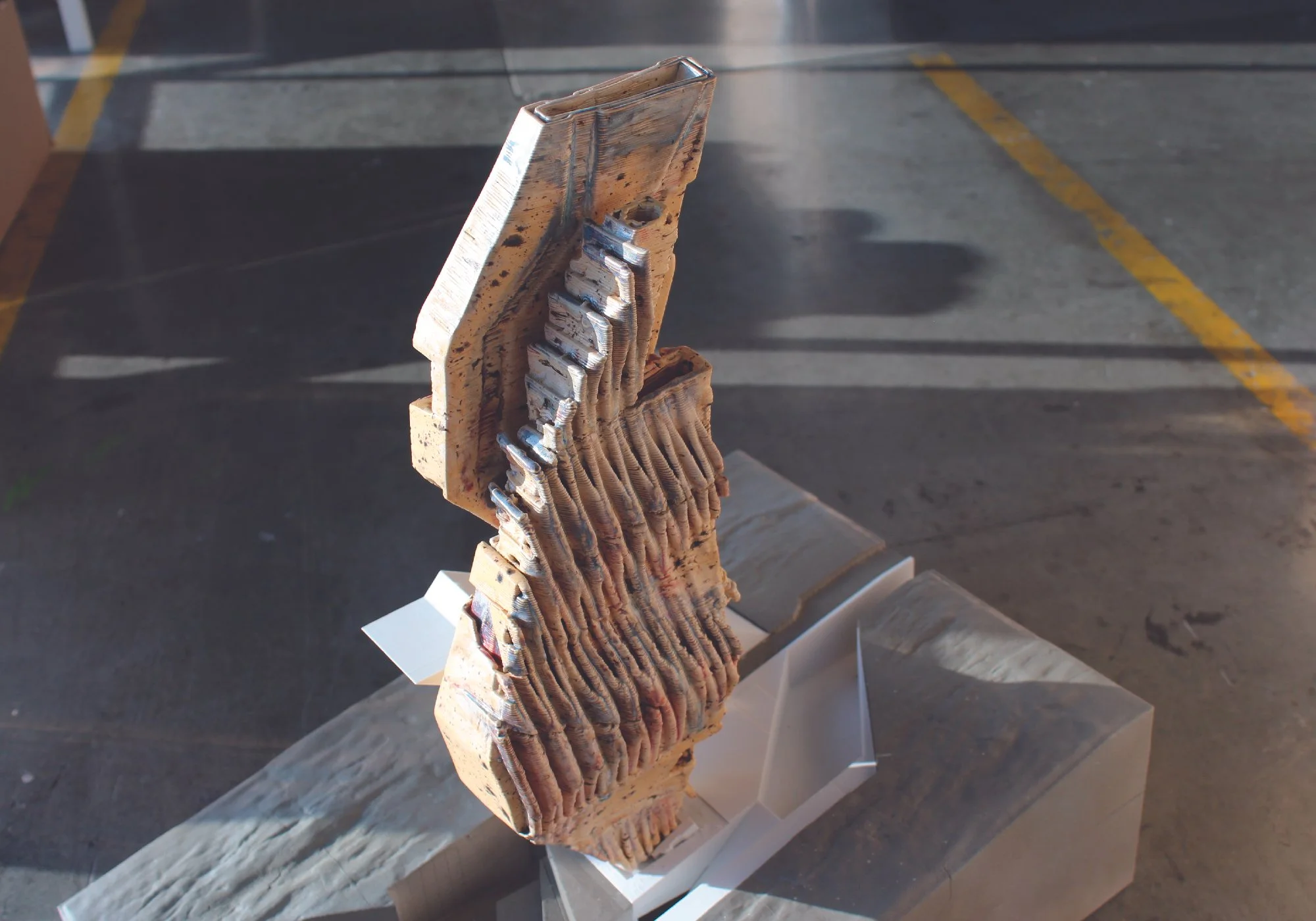
As architecture confronts environmental challenges and rapid technological change, this thesis reimagines one of its most ancient materials, ceramic, through the lens of on-site robotic fabrication. Historically associated with craft and permanence, ceramic is here positioned as a dynamic material capable of evolving alongside contemporary technologies.
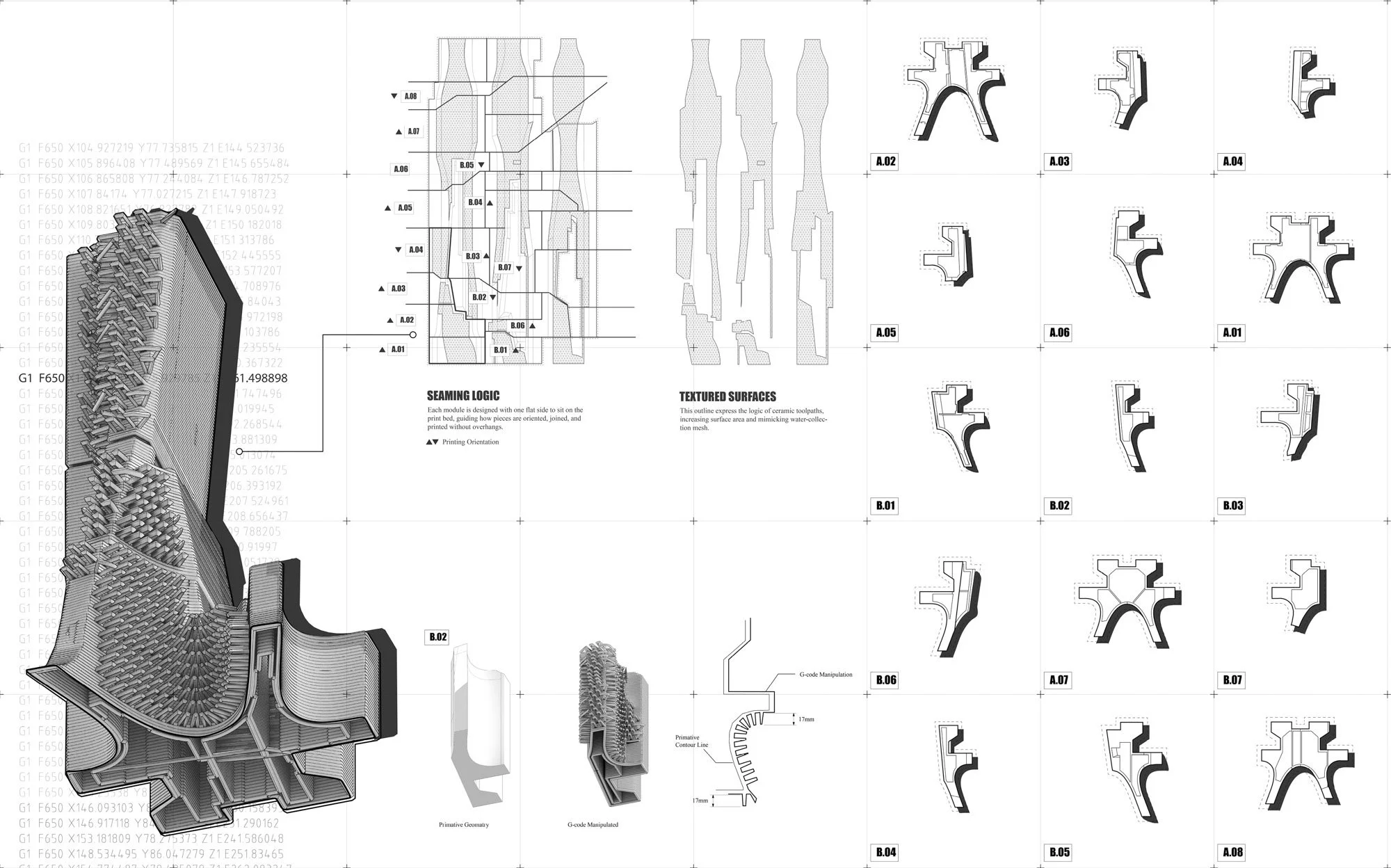
Freed from the constraints of prefabrication and mass repetition, ceramic 3D printing enables the production of unique, site-responsive components at no greater cost than standardized ones. In this context, fabrication becomes an extension of design, where each print is an opportunity for architectural expression and experimentation.
This is an investigation into the act of fabrication as an architectural pursuit in itself. By working with ceramic across multiple scales, from tabletop printer to robotic prototyping, the project reveals how a single fabrication logic can generate radically different outcomes yet remain materially and tectonically unified. Ceramic’s unique flexibility to move seamlessly between these scales demonstrates its potential as both a tool for speculative formal exploration and a means of building context-responsive architecture.
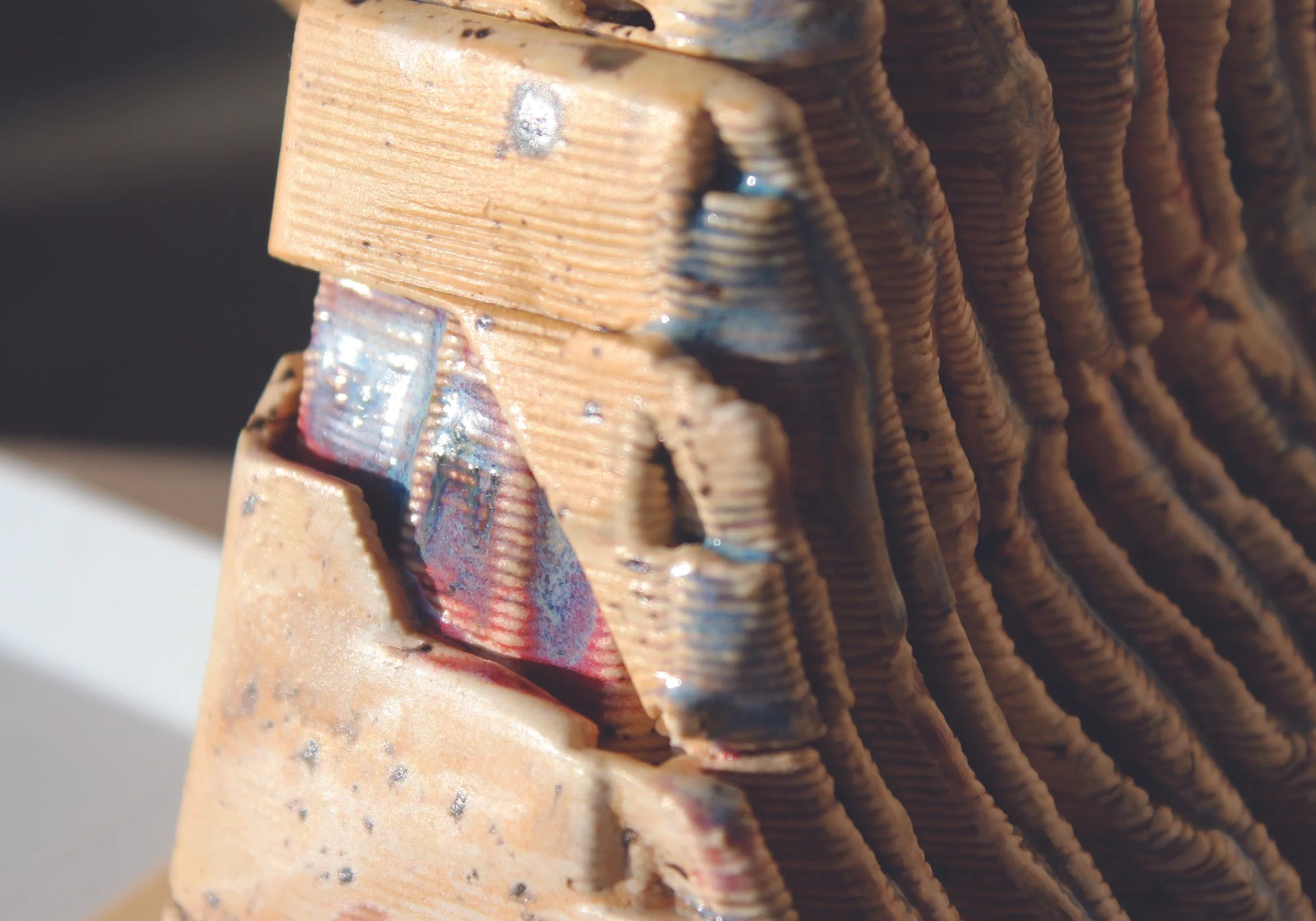
This work positions fabrication not as a means to an end, but as a process of continuous architectural discovery, where form, structure, and detail emerge from direct engagement with material behavior and fabrication constraints. Through this approach, ceramic becomes a medium for developing new architectural languages that are expressive, adaptive, and inseparable from the act of making.