Shaikha Ben Sabt
After Oil
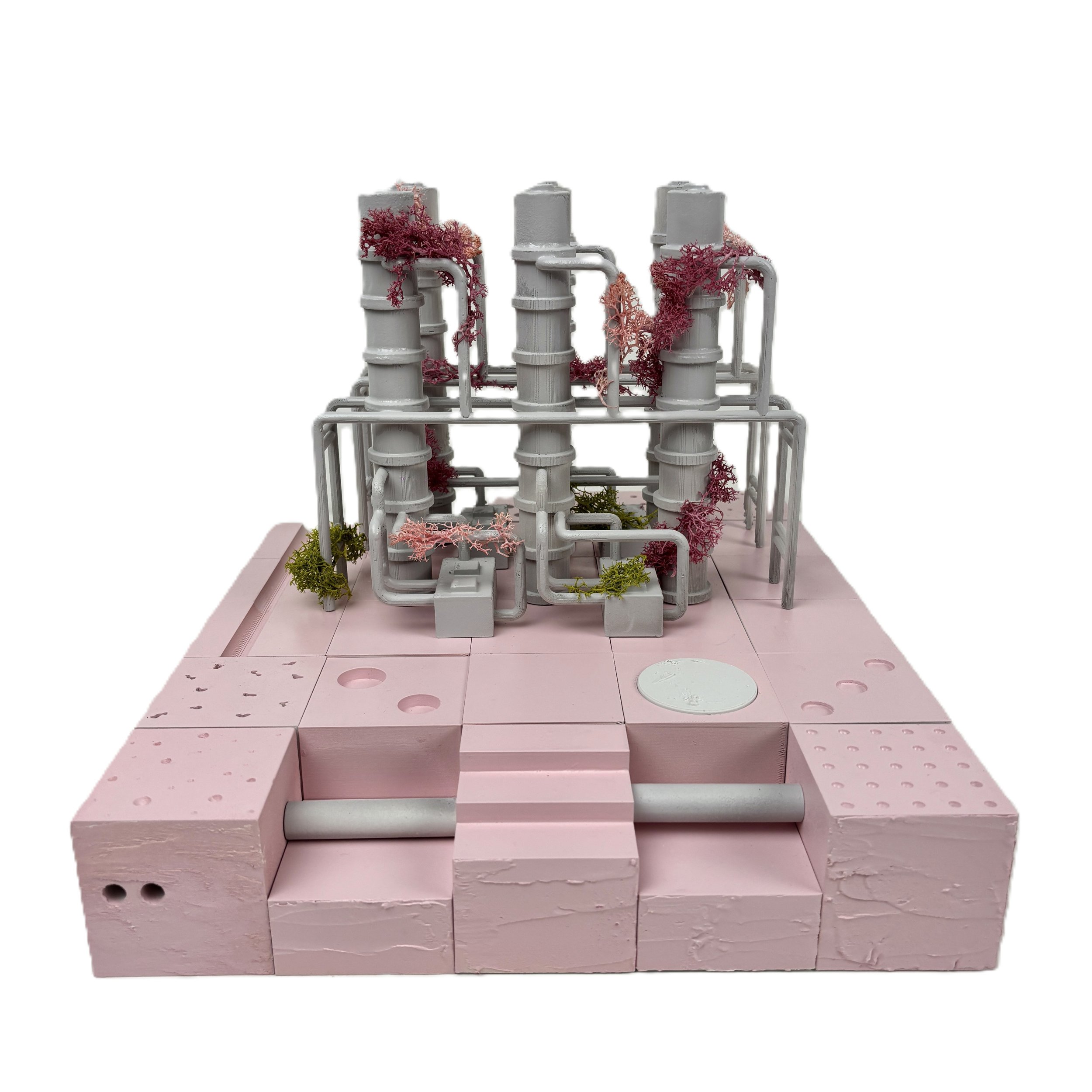
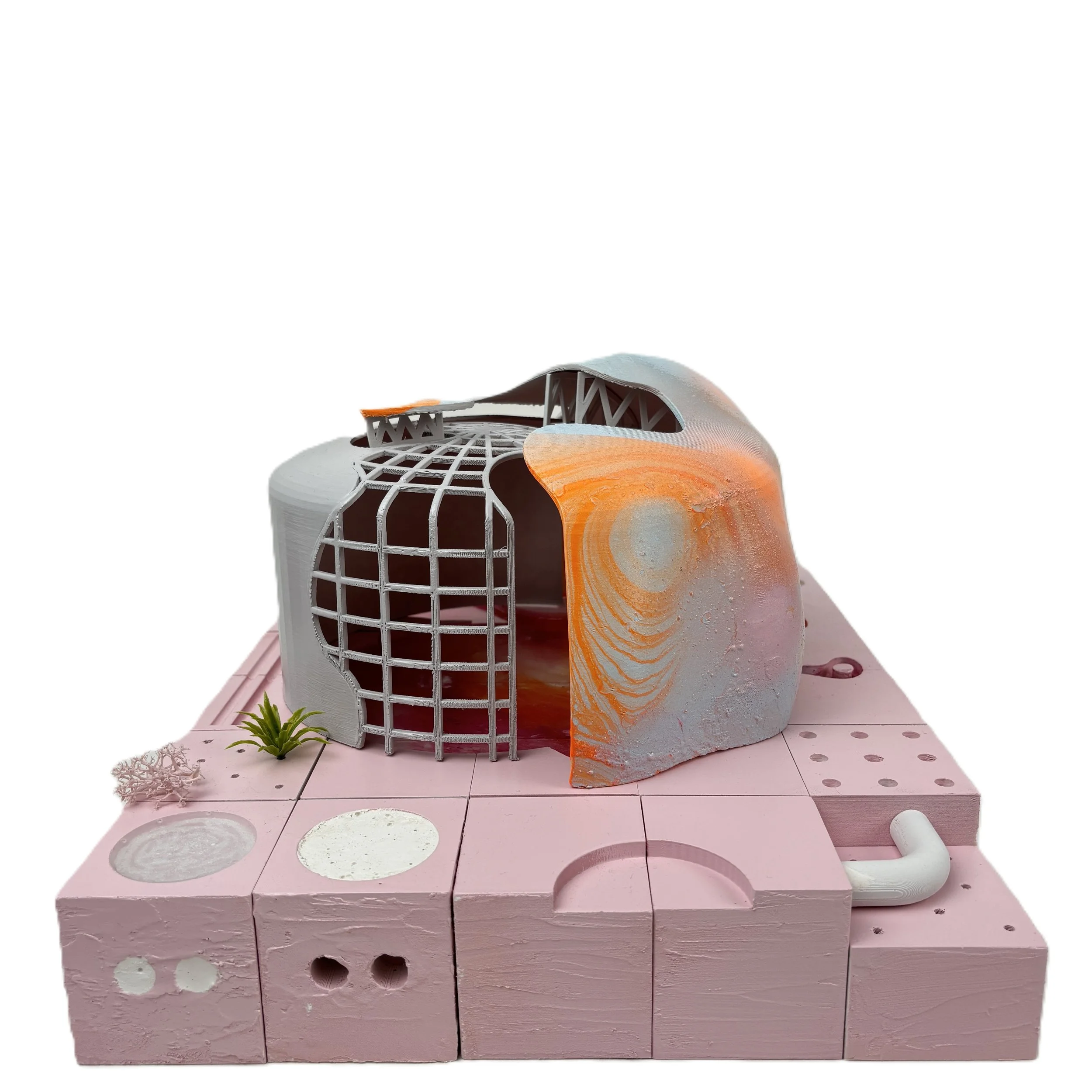
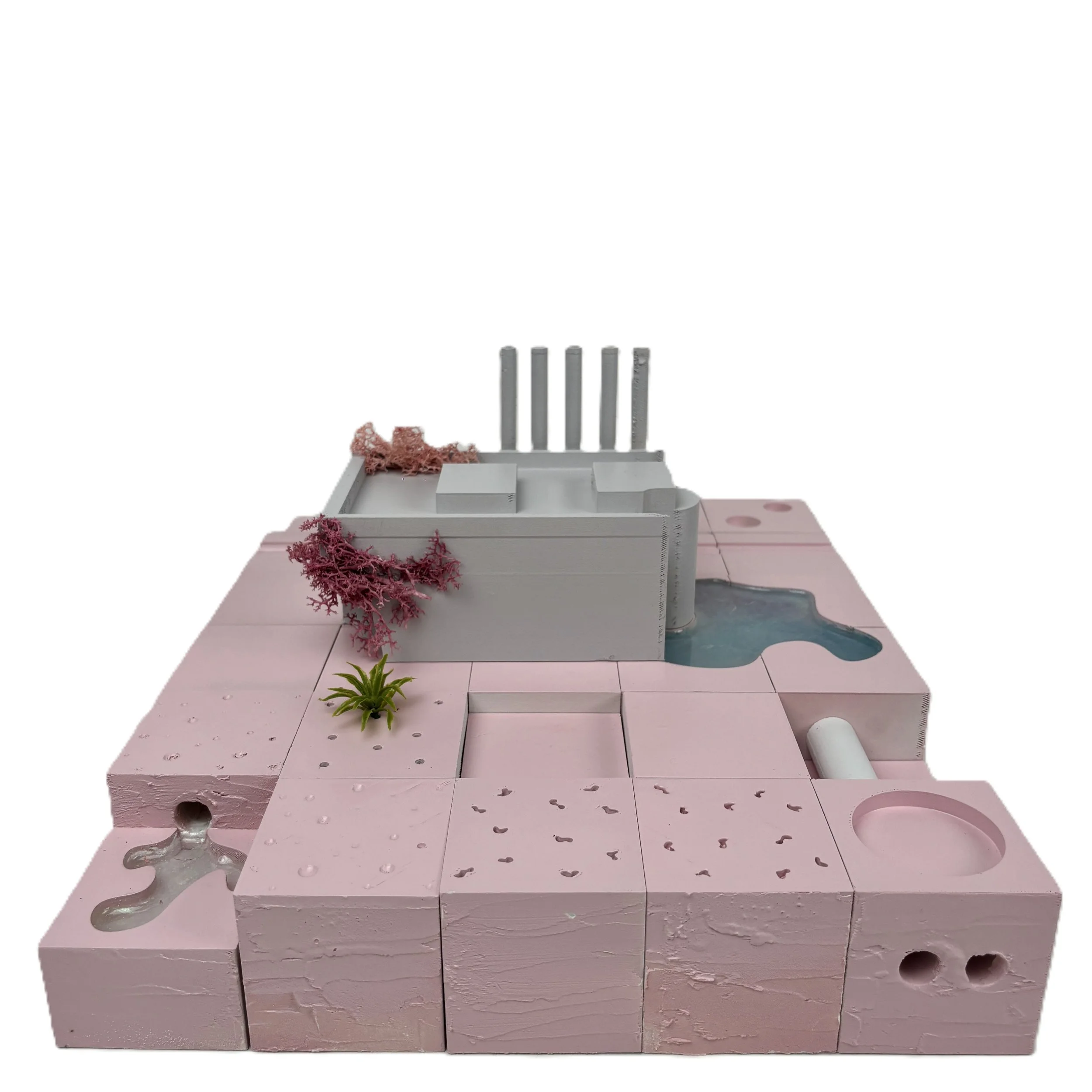
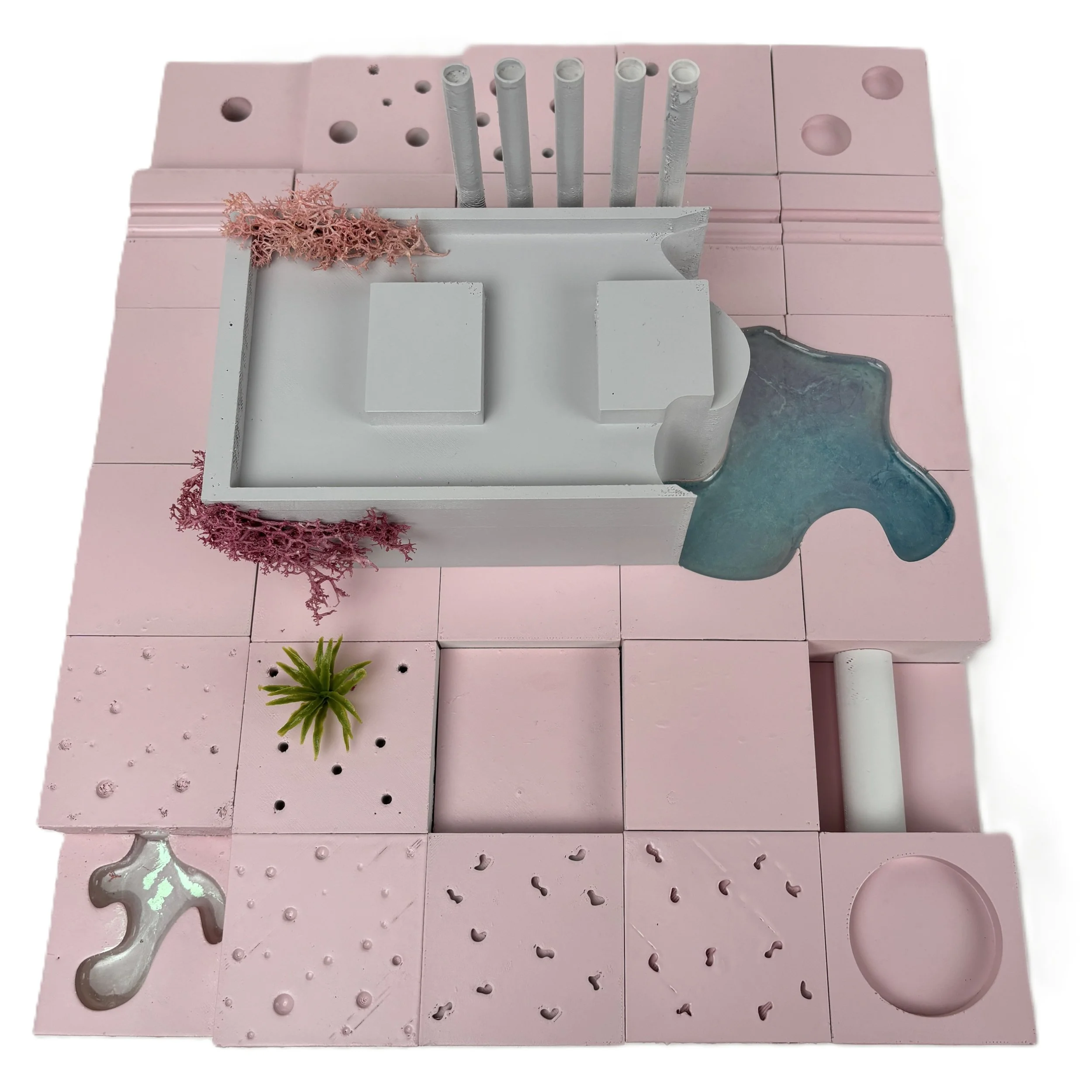
This thesis explores the transformation of abandoned oil refineries in Kuwait into public spaces by reimagining the aesthetics of environmental disaster. Oil refineries, long seen as symbols of industrial exploitation and environmental degradation, are typically removed from public life, hidden in the periphery, fenced off, and left to decay. My work challenges this erasure by asking: What if the refinery itself became a site of beauty, memory, and civic engagement?
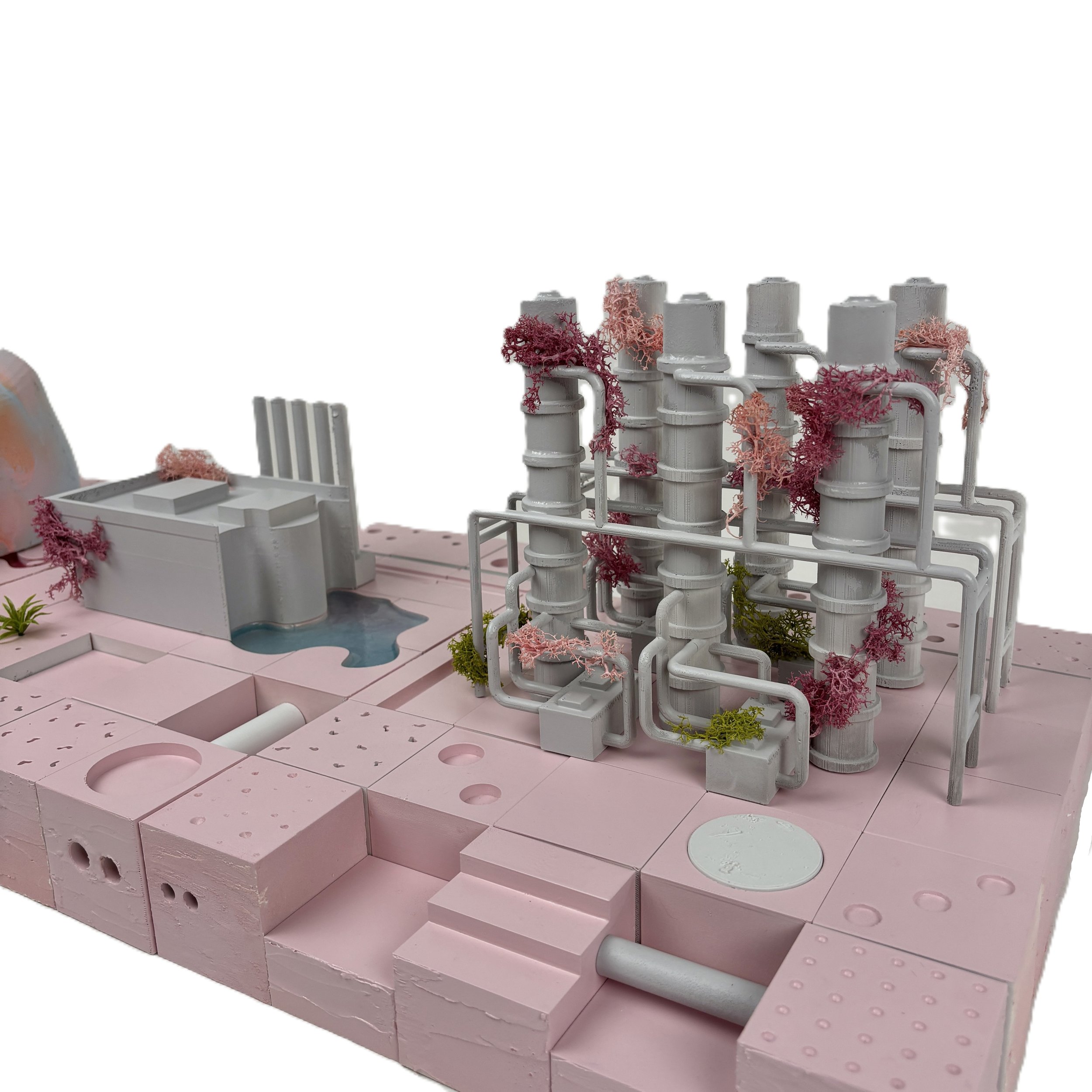
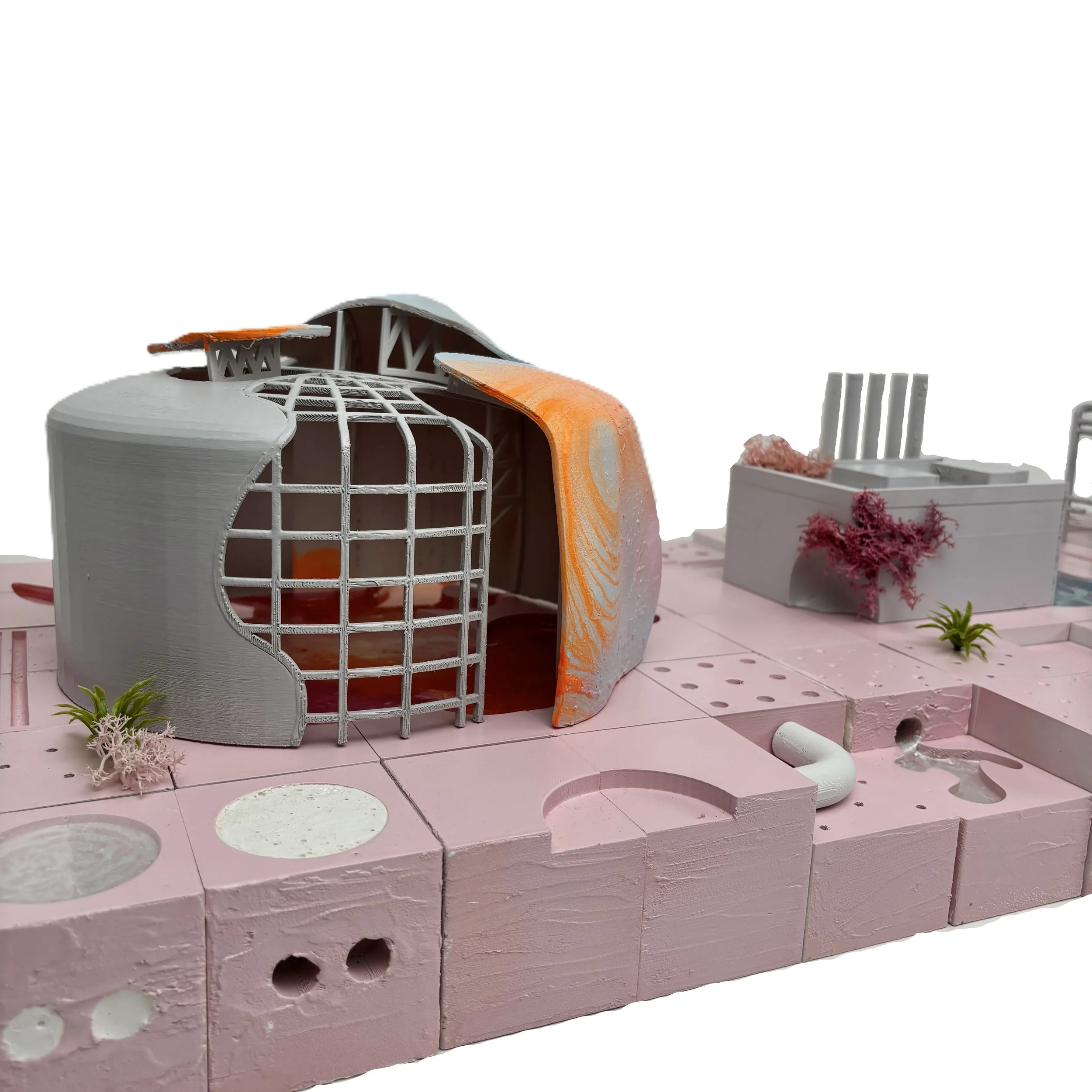
The project begins with the visual language of oil spills. From the satellite scale, these spills form unruly, fluid patterns that are organic, uncontrolled, and visually striking. At the architectural scale, these forms inspire spatial interventions, facade systems, and landscape strategies that reinterpret the refinery’s rigid industrial geometry. Through adaptive reuse, the existing structures are cut, layered, and re-skinned in ways that invite public interaction while allowing nature to reclaim the site.
The design operates through three layers: Form, which introduces new architectural elements derived from oil spill geometries; Atmosphere, which blends industrial remnants with ecological growth; and Nature, which creates spaces within the refinery to host plant life, remediation zones, and public gathering areas. This layered approach transforms a place of environmental harm into one of repair and cultural value.
By engaging with the refinery as both artifact and landscape, the project reframes disaster as an opportunity for new forms of beauty. This aesthetic is not about erasing the past, but revealing it in a way that provokes reflection. Drawing from artists such as Edward Burtynsky, who capture the seductive complexity of environmental ruin, the proposal bridges the gap between industrial heritage, ecological restoration, and public space.
Ultimately, this thesis imagines the oil refinery not as a relic to be forgotten, but as a living site where beauty, ruin, and environmental responsibility coexist.