Sabrina Ellison
The Felt Image
This thesis explores how two-dimensional visual constructs can act as sensory translators that shift and skew spatial perception. It asks how public and semi-public environments might be reimagined through layered, material-driven interventions that rethink how space is seen, touched, and understood. The project uses a neutral warehouse as its container, not as an architectural type to be celebrated, but as a blank shell to be reoccupied with conflicting sensory logics.
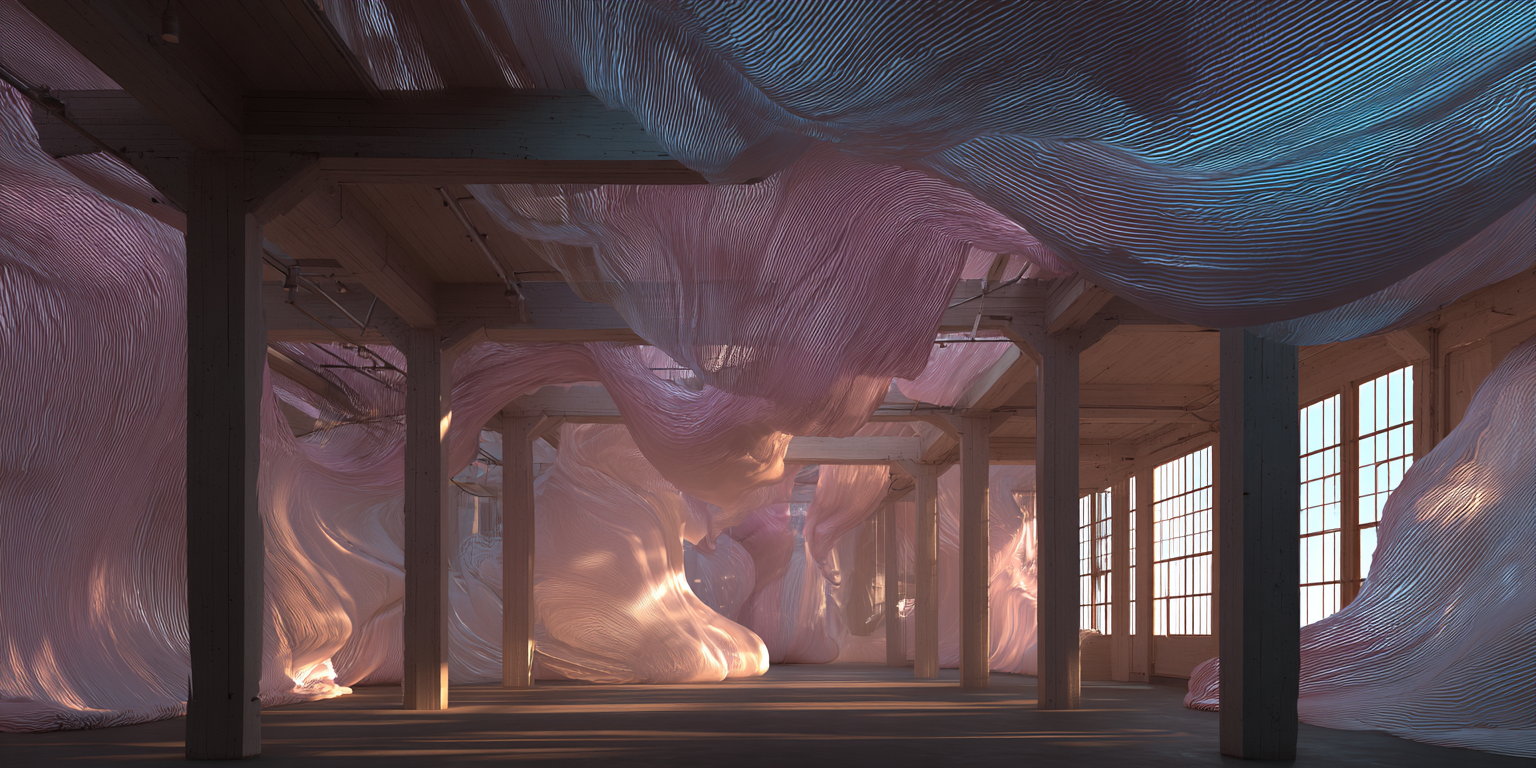
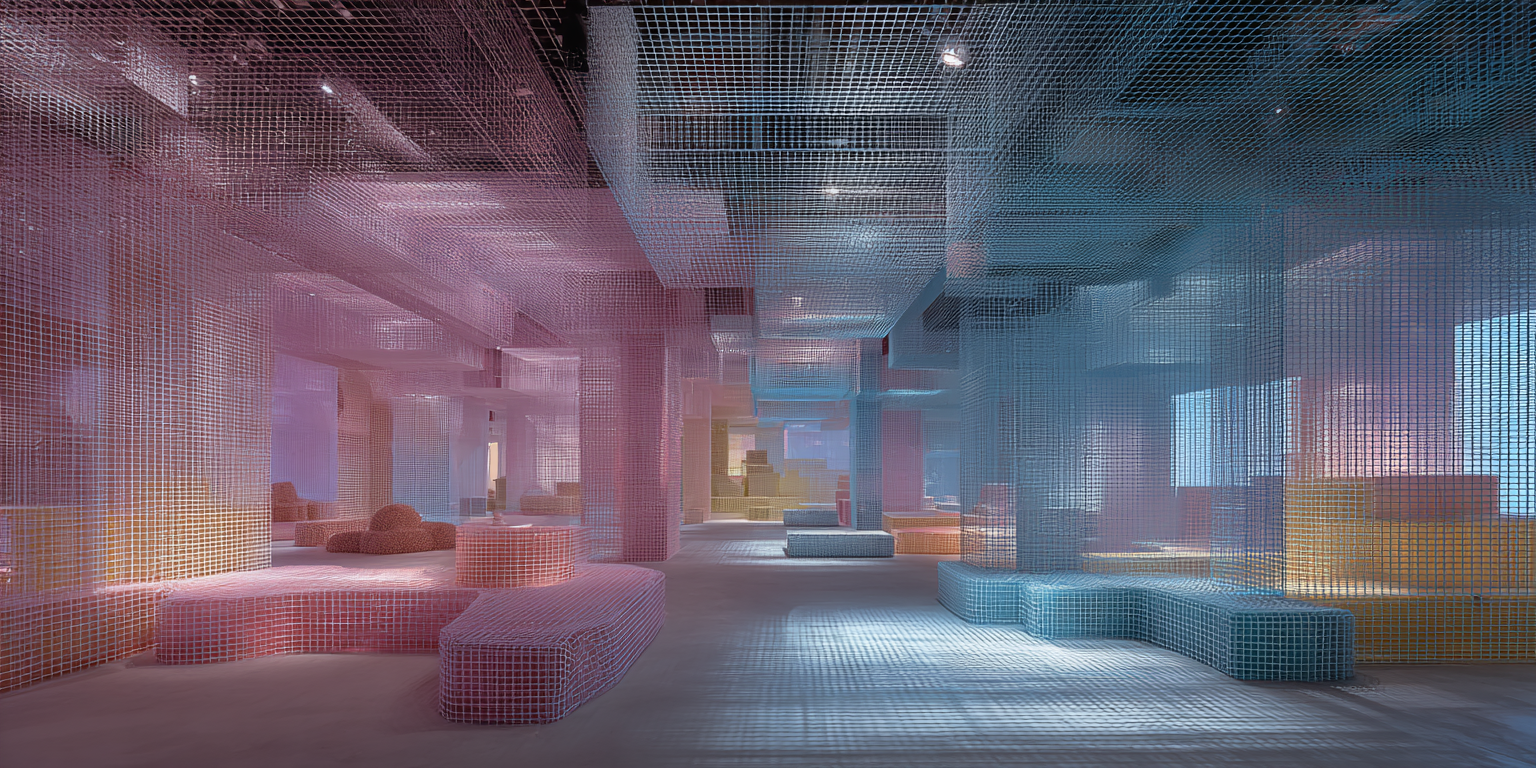
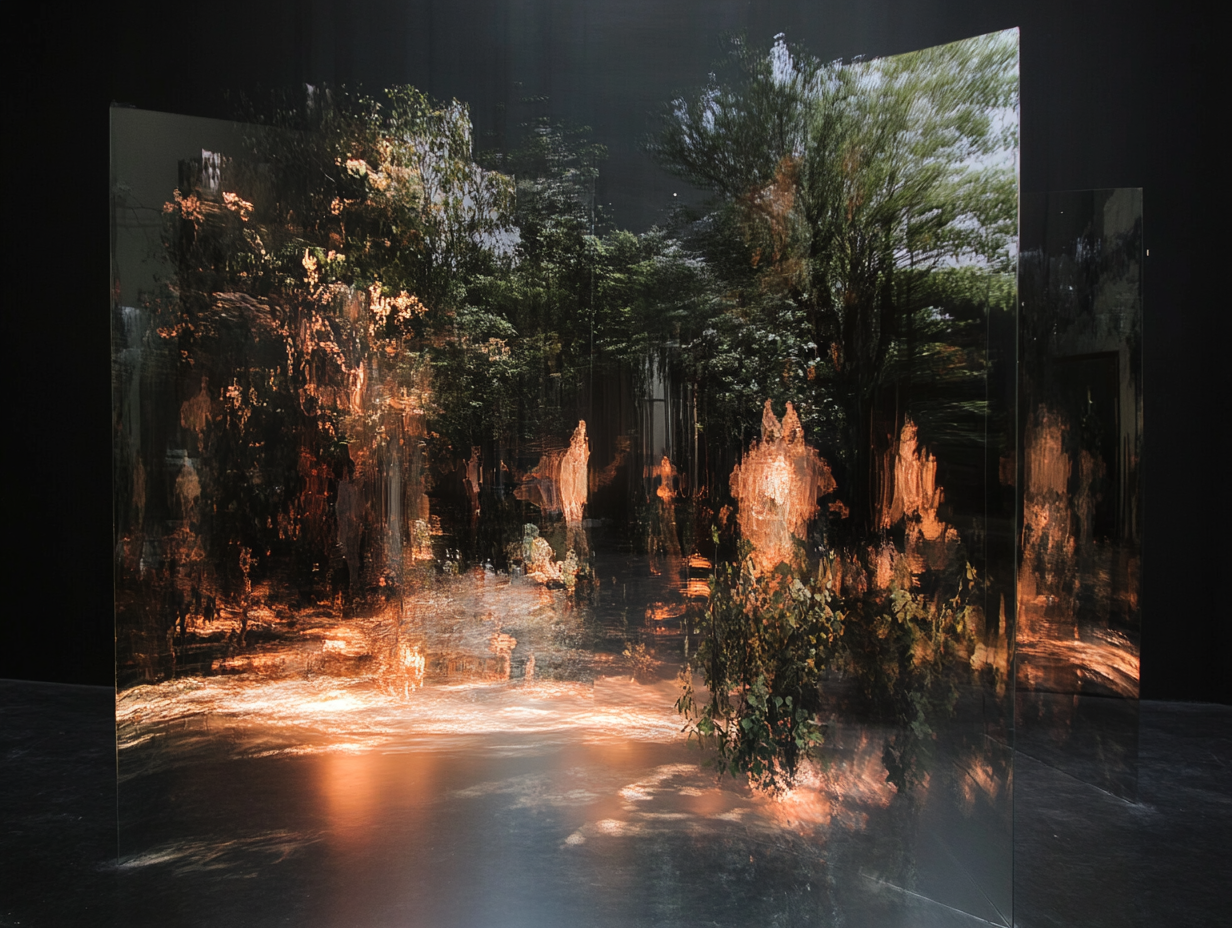
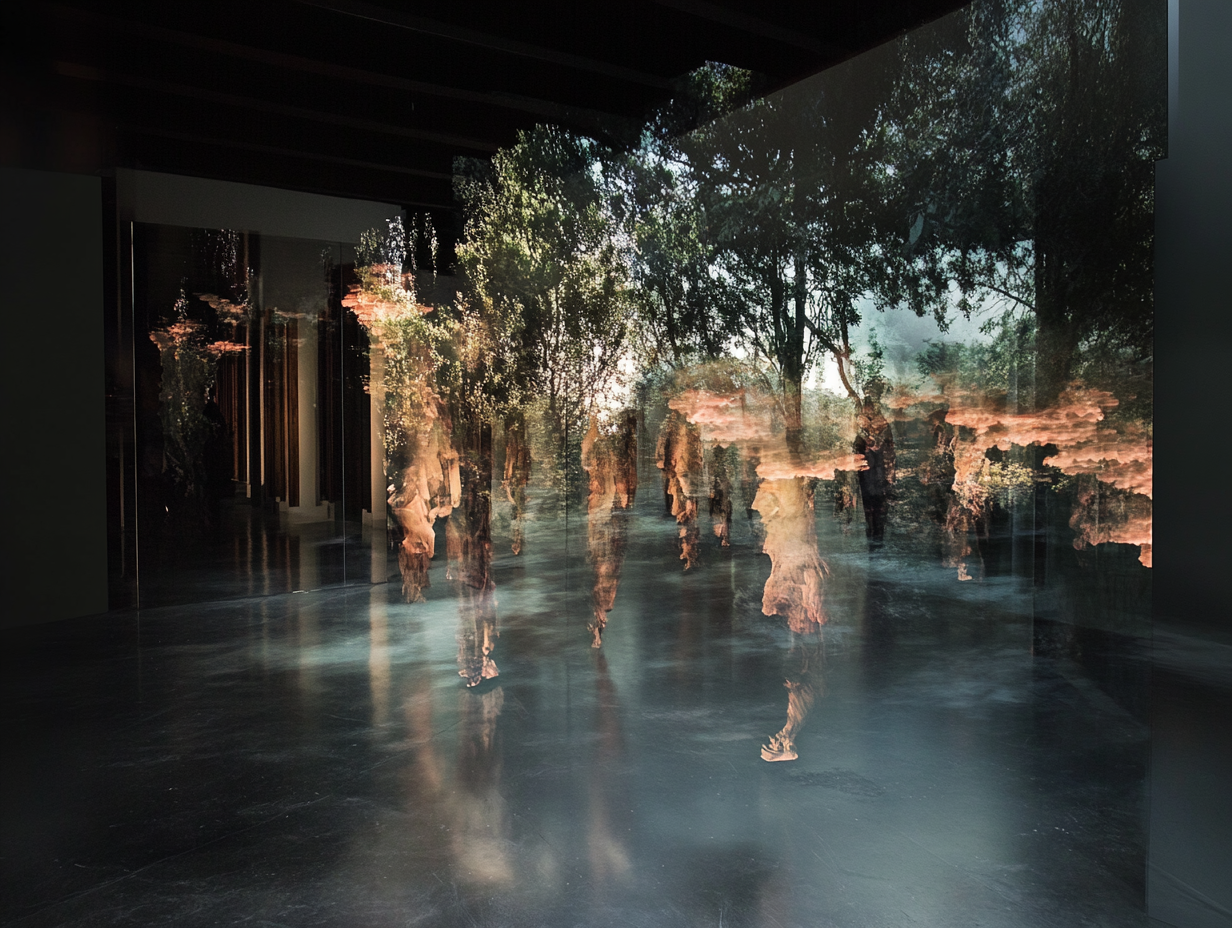
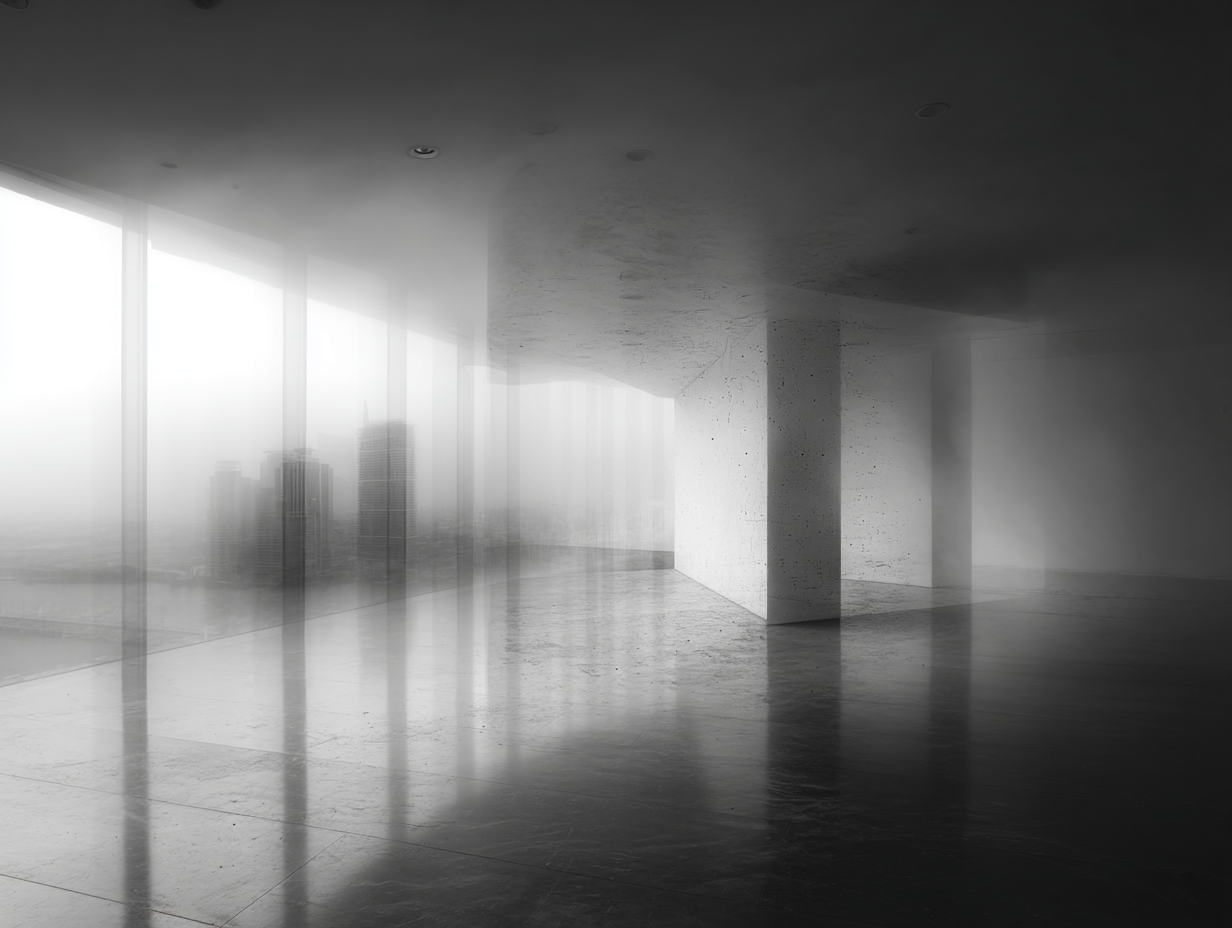
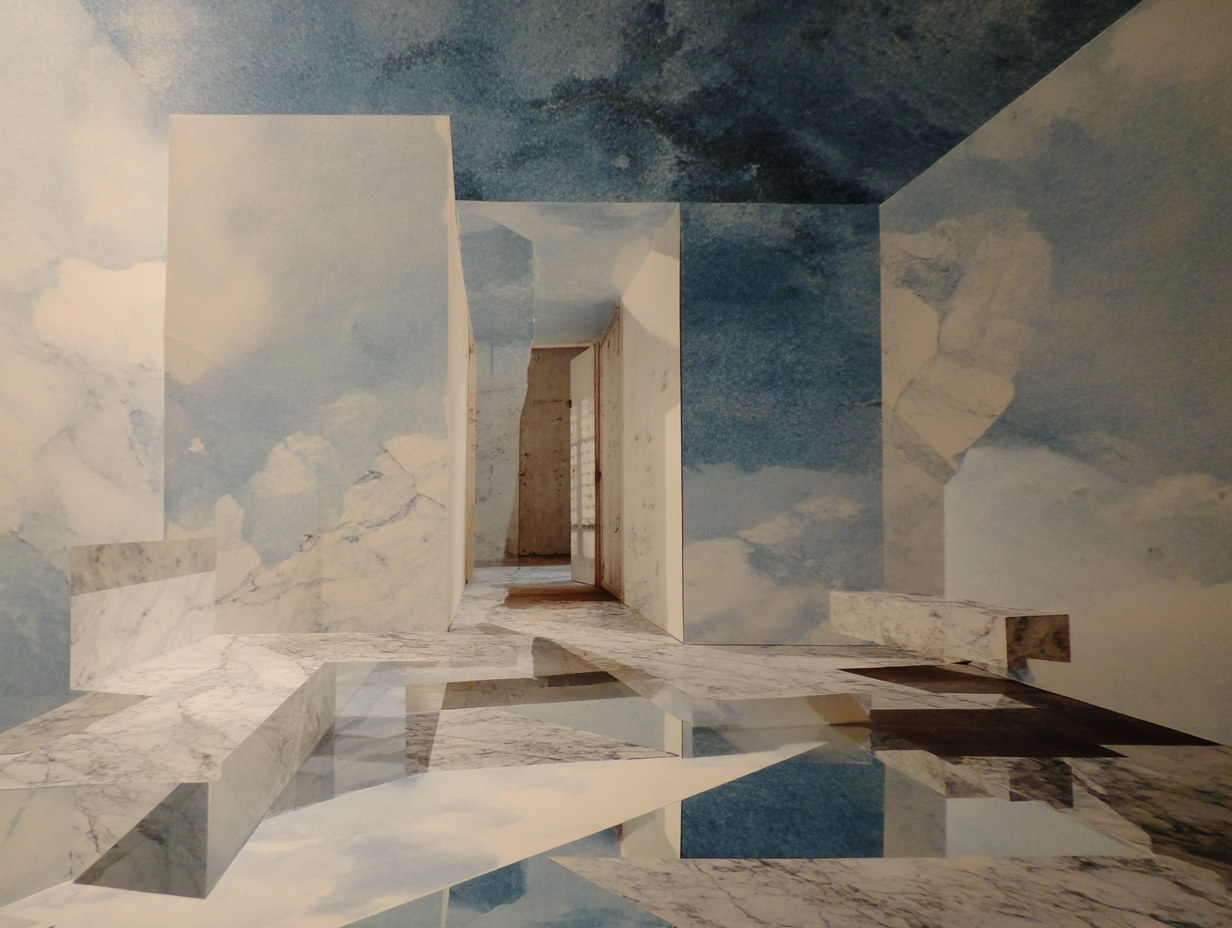
The design process begins with the author’s personal perception of space as someone with synesthesia, an experience where senses overlap and blend. Early work involved creating dissolving, layered collages to externalize this perceptual multiplicity. These collages were then digitally transformed using Midjourney AI, not to produce architectural renderings, but to investigate how different material atmospheres could alter the same structural container. Through iterative blending, each image proposed a distinct material effect (porous, reflective, fuzzy, translucent) each with its own sensory implications.
From these blended images, the project isolates and translates specific material effects into vignettes. Each vignette is a prototype that tests the tension between what is seen and what is felt, between surface and depth, between clarity and confusion. The work draws from Mies van der Rohe’s collage techniques, using them not to assert perspectival control but to introduce friction and misalignment. It also references immersive art and architecture practices, such as those of Olafur Eliasson, James Turrell, Yayoi Kusama, and Philip Beesley, all of whom engage the body through atmosphere, light, repetition, and interaction.
The final model is a reoccupation of the warehouse shell, saturated with overlapping, conflicting material systems. Rather than offering a single, unified reading, it proposes architecture as a layered, unstable field, one that resists resolution and instead invites multiple modes of sensing. The Felt Image asks how architecture can be designed not only to be seen, but to be felt.