Piyush Mahulkar
Xenofarm
A Space-Age Architecture for Food Sovereignty in Los Angeles
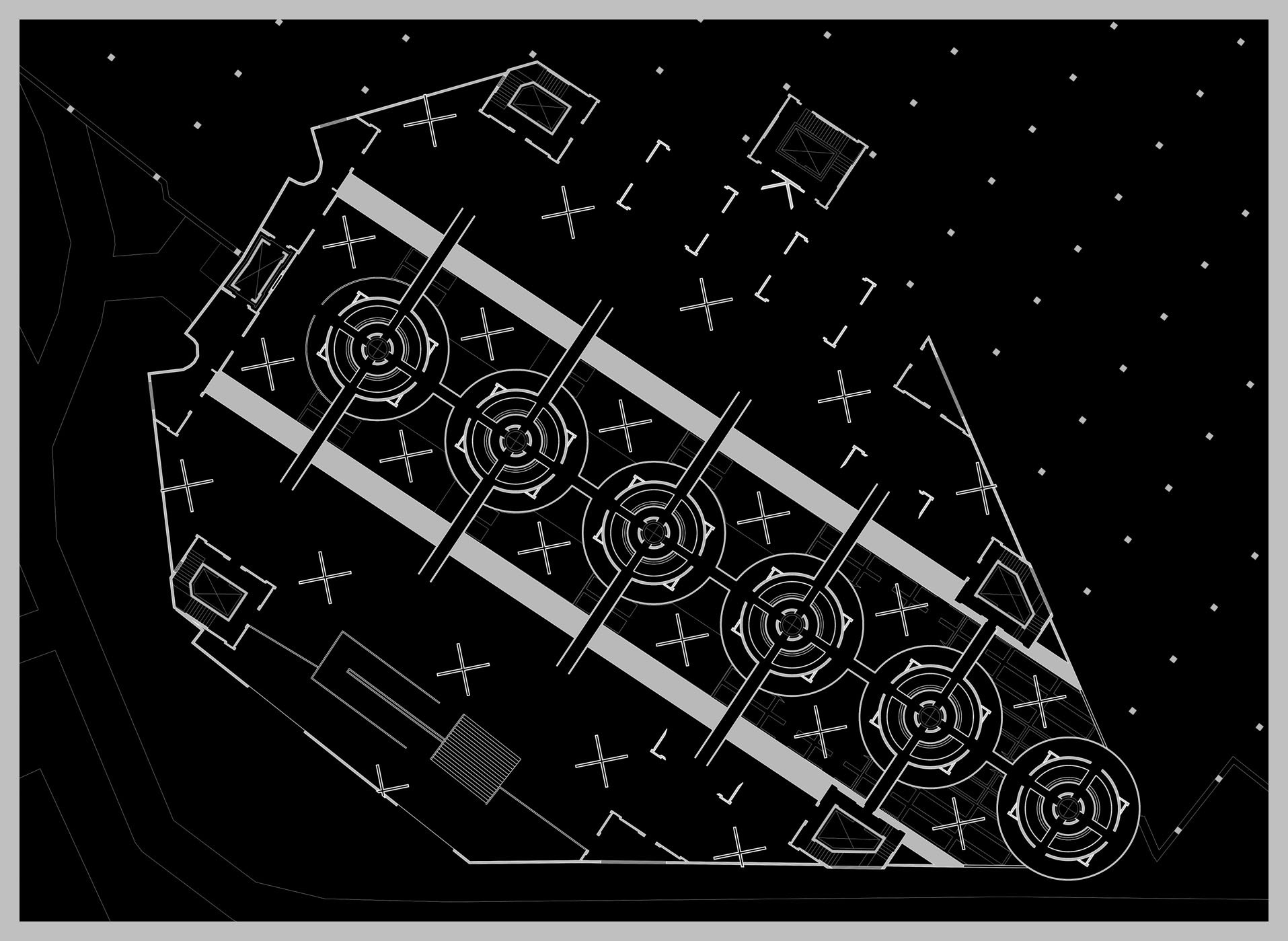
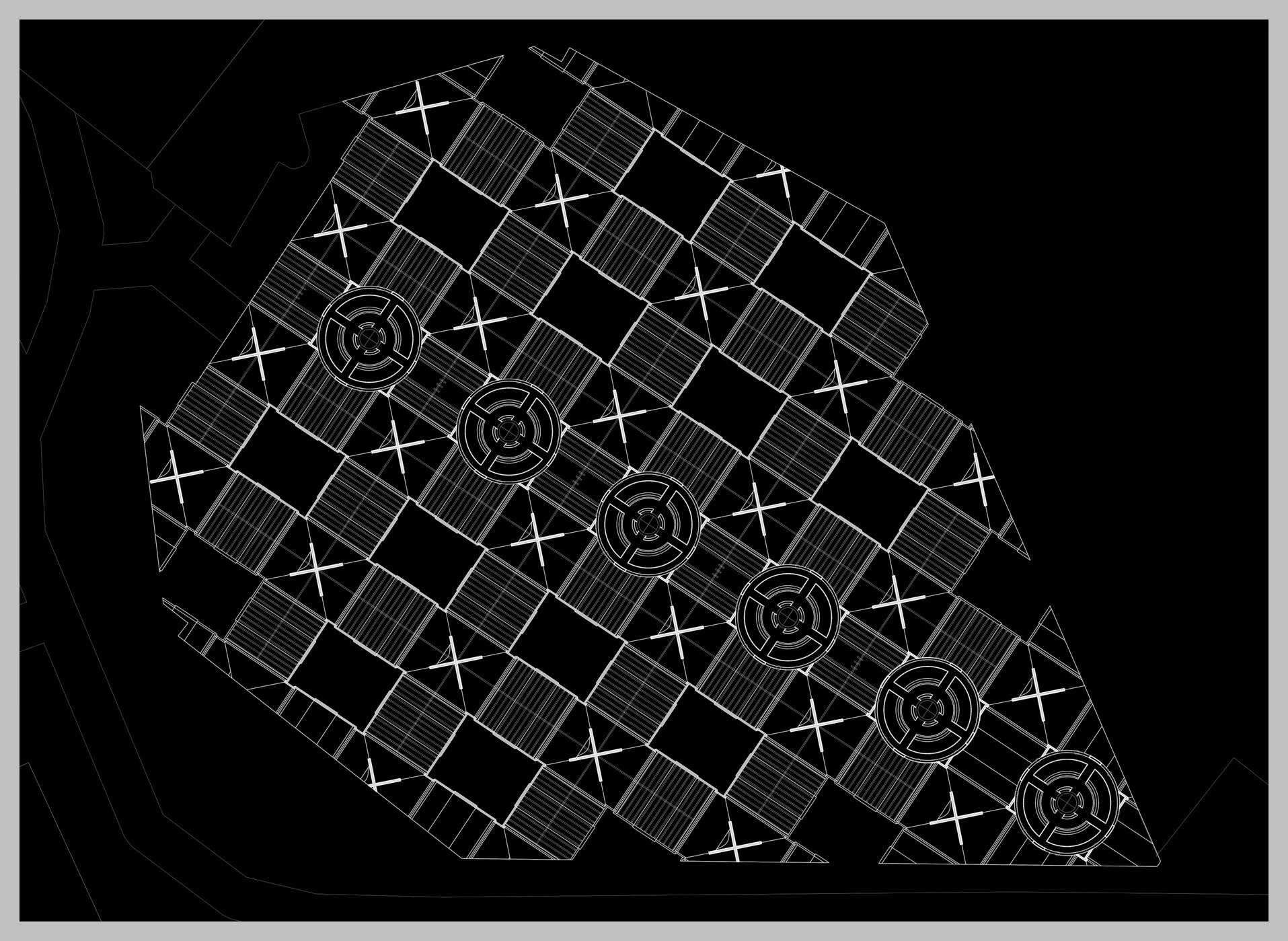
This thesis proposes a speculative yet highly functional urban intervention that transforms underutilized parking lots in Los Angeles’ working-class suburban communities into vertical urban farms — architectural machines for food production, community gathering, and cultural renewal. Anchored at Crenshaw Plaza, a site with deep historical and cultural resonance, the project reclaims the vast expanse of asphalt as an active public realm, integrating a farmers' market and food truck plaza at grade with a soaring, sculptural building from above.
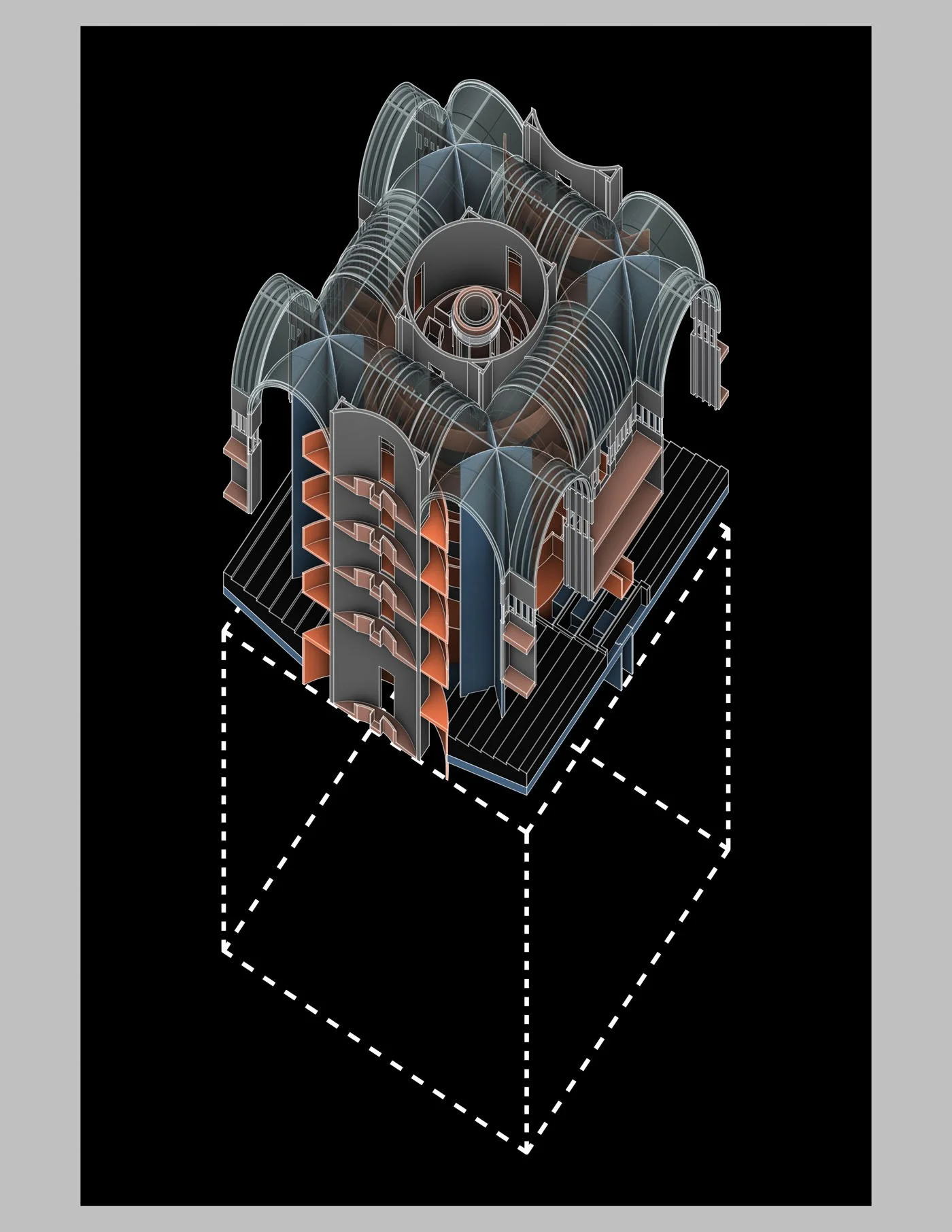
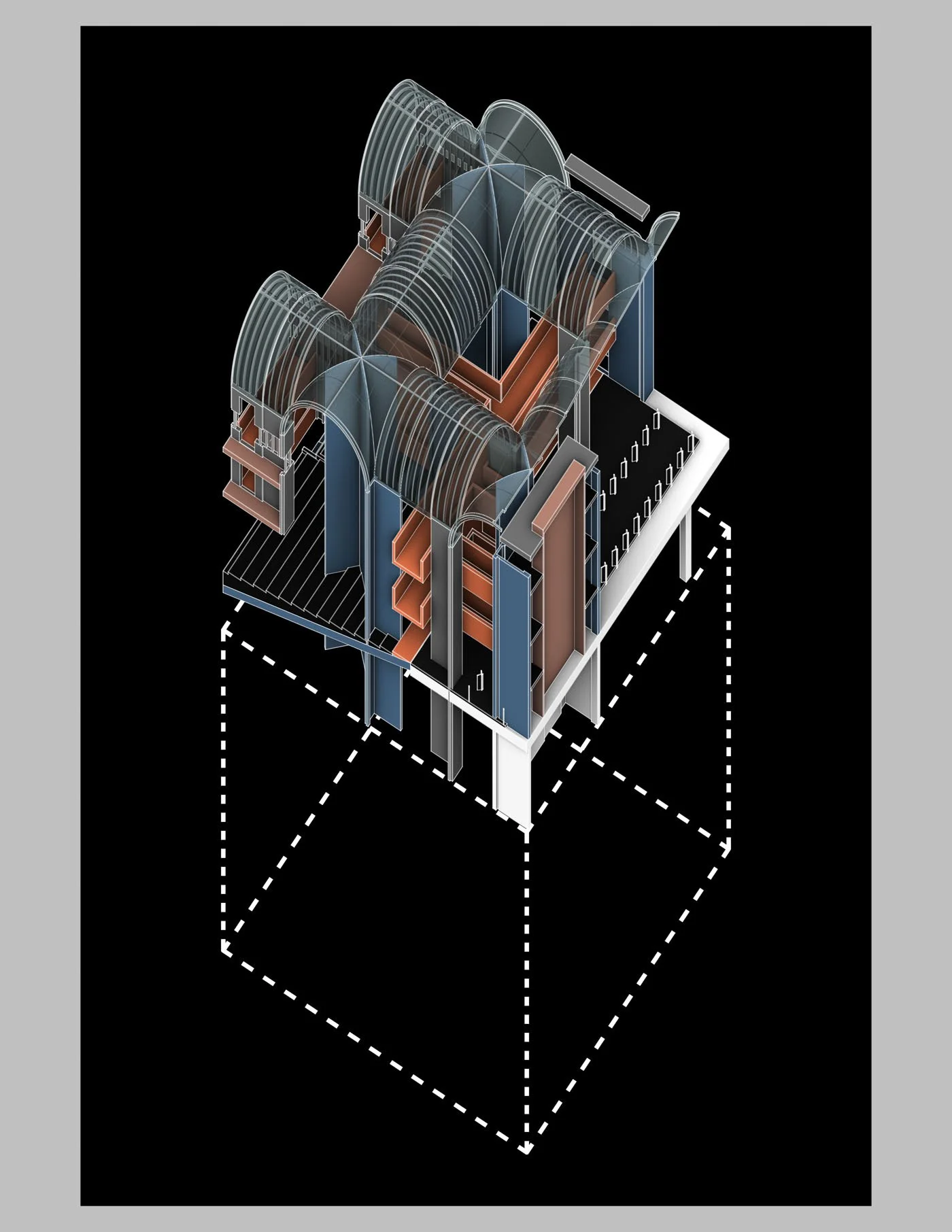
The architecture takes its cue from Googie’s mid-century futurism, reinterpreting its bold geometries and space-age optimism into a vessel for nourishment rather than consumption. In an era where society is again looking toward a “new space age”, the project channels renewed cosmic curiosity through the iconic silhouette of a Star Destroyer from Star Wars. This form acts as a cultural bridge, recalling Googie’s rocket-inspired structures while tapping into the shared visual language of science fiction. Its vast, angular volume offers both a visually striking landmark and an expansive, efficient shell for large-scale farming systems.
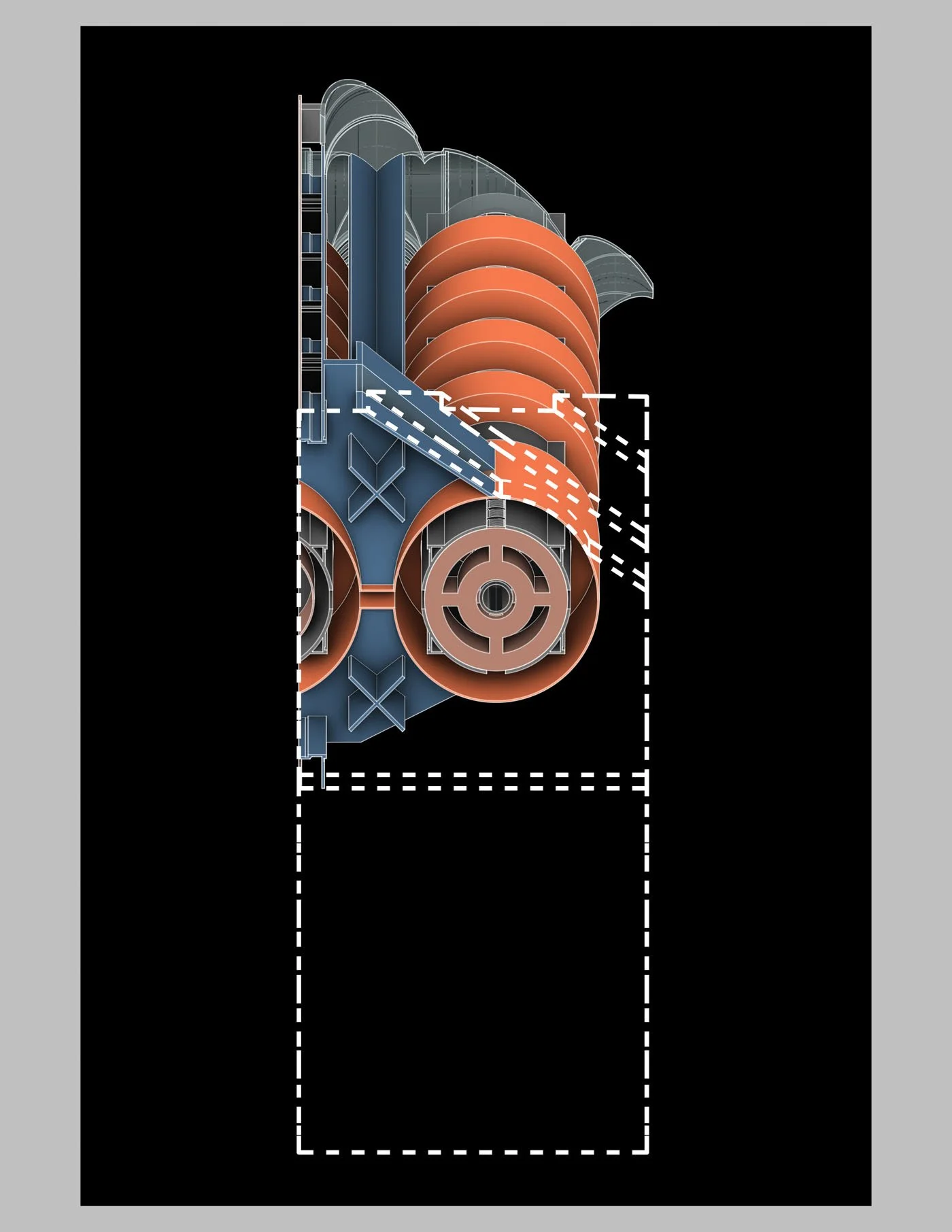
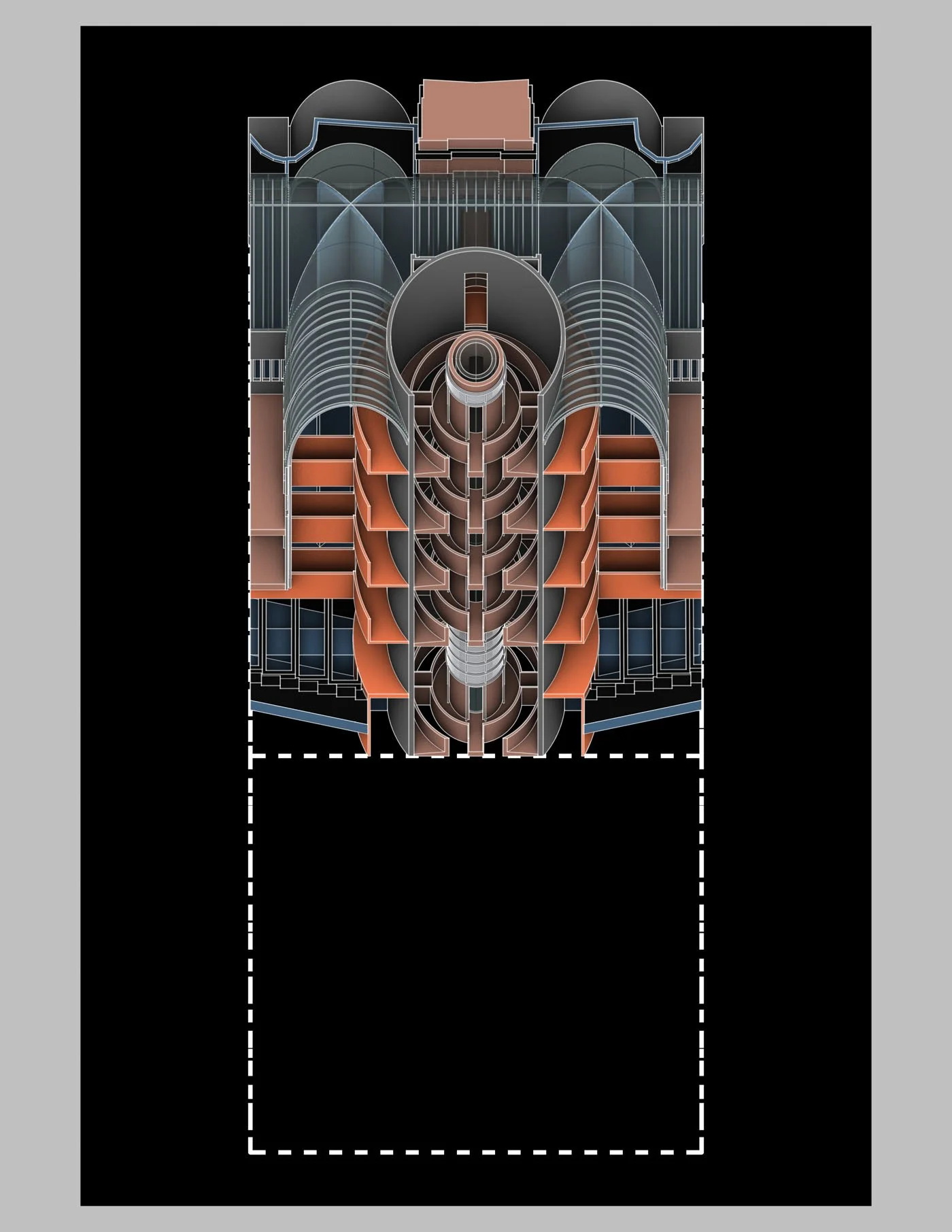
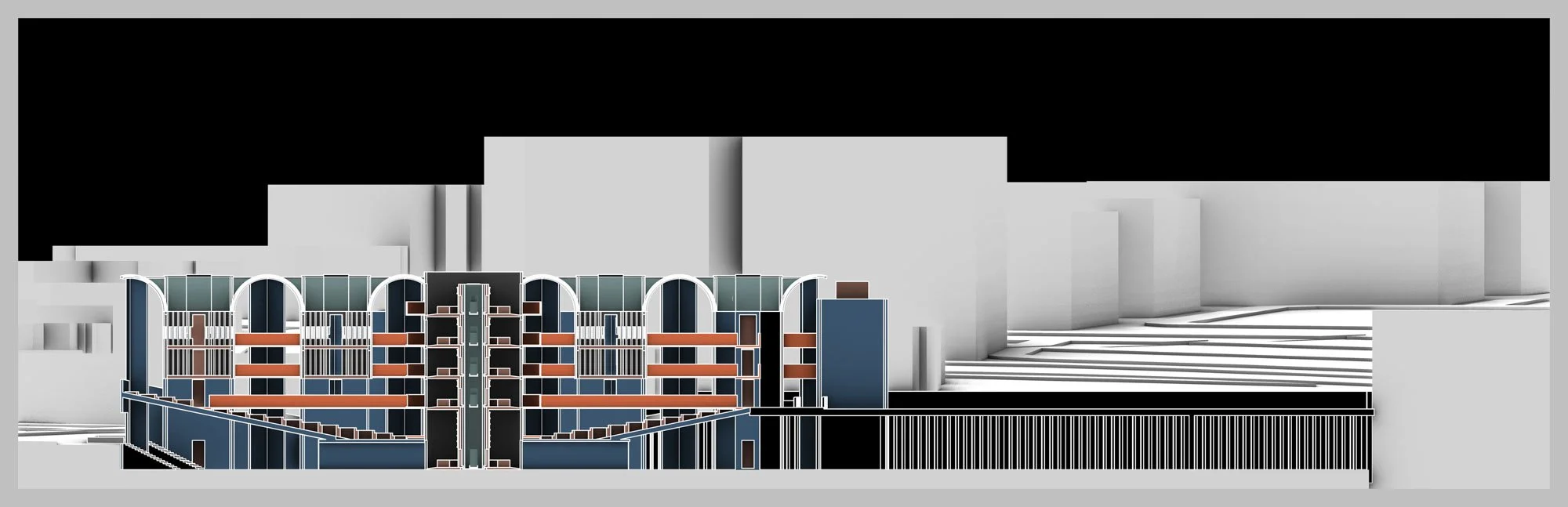
Inside, the building contains multiple agricultural typologies: stepped terrace gardens open to the air, enclosed hydroponic and aeroponic systems, and climate-controlled greenhouses. The openness in the facade and vertical section allows light, air, and views to permeate, while inviting the public to witness and participate in the growing process. Fresh produce harvested on-site directly supplies the market and food trucks below, creating a closed-loop relationship between production and distribution.
Culturally, the project uses food as a catalyst for gathering, storytelling, and economic opportunity, while its form becomes a symbol of renewal, reclaiming Googie’s visual optimism for a new purpose. By reimagining parking lots as productive, community-driven space-age landscapes, the proposal offers a replicable model for a healthier, more equitable Los Angeles.