Noah Losani
The Arkipelago
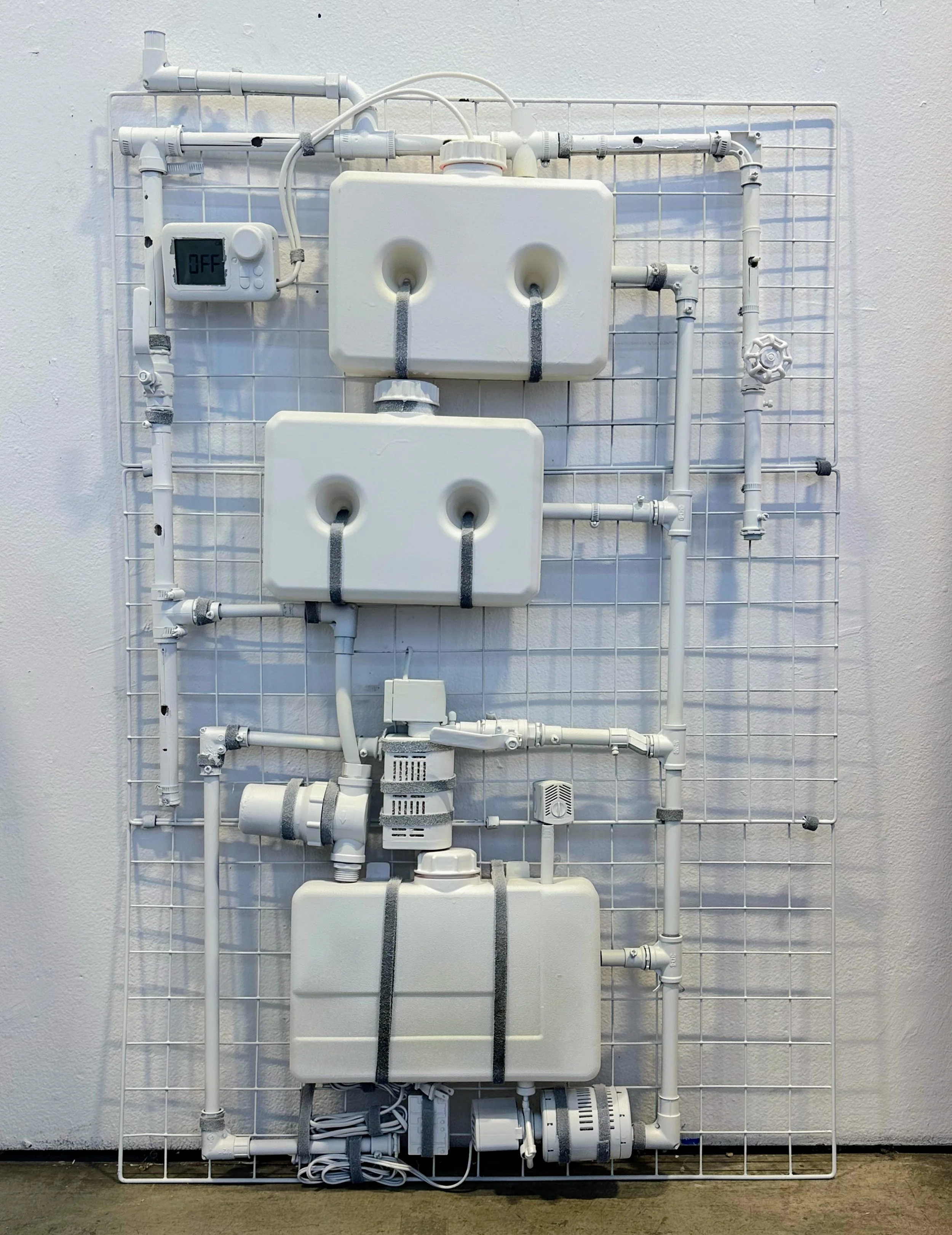
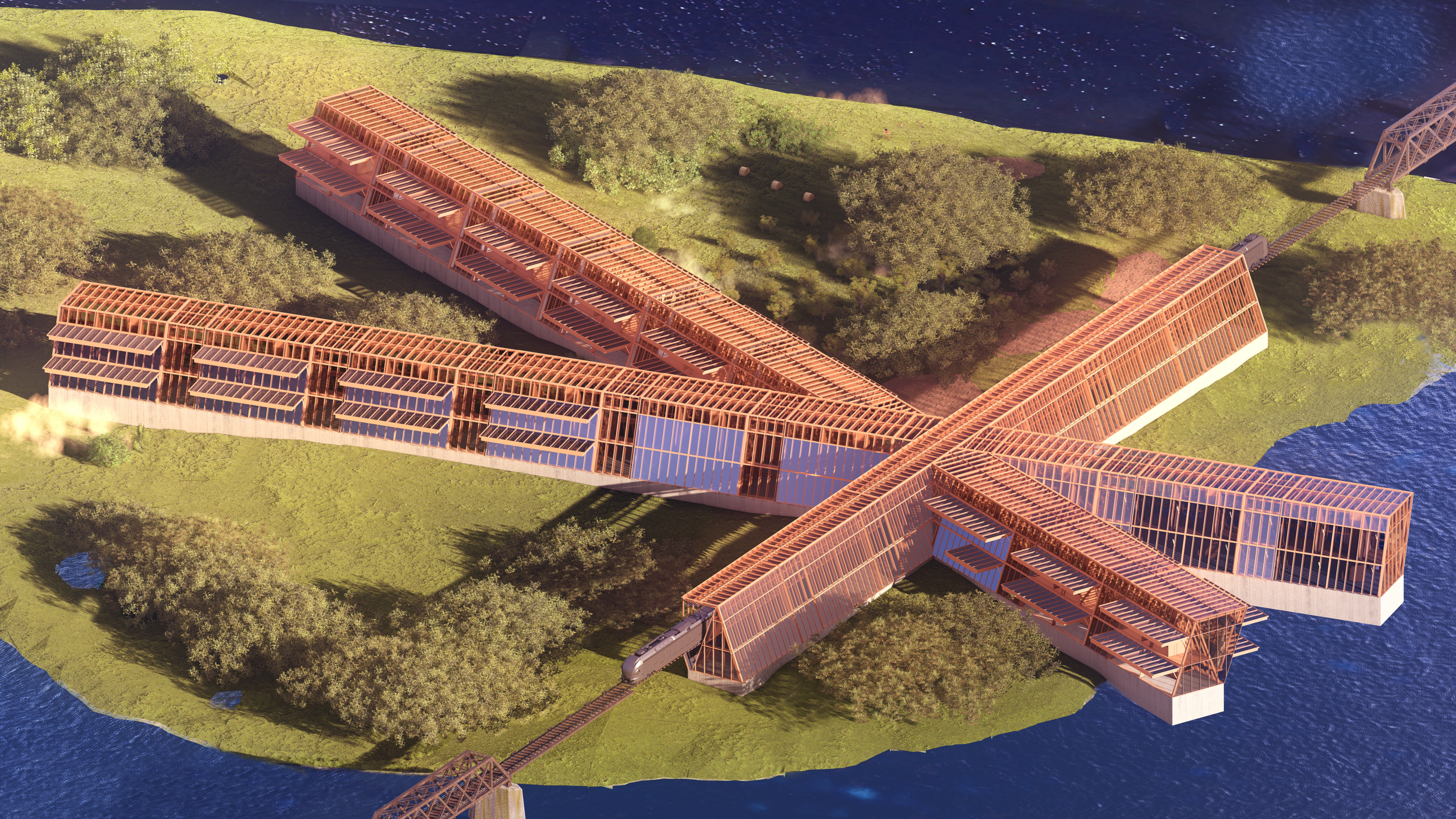
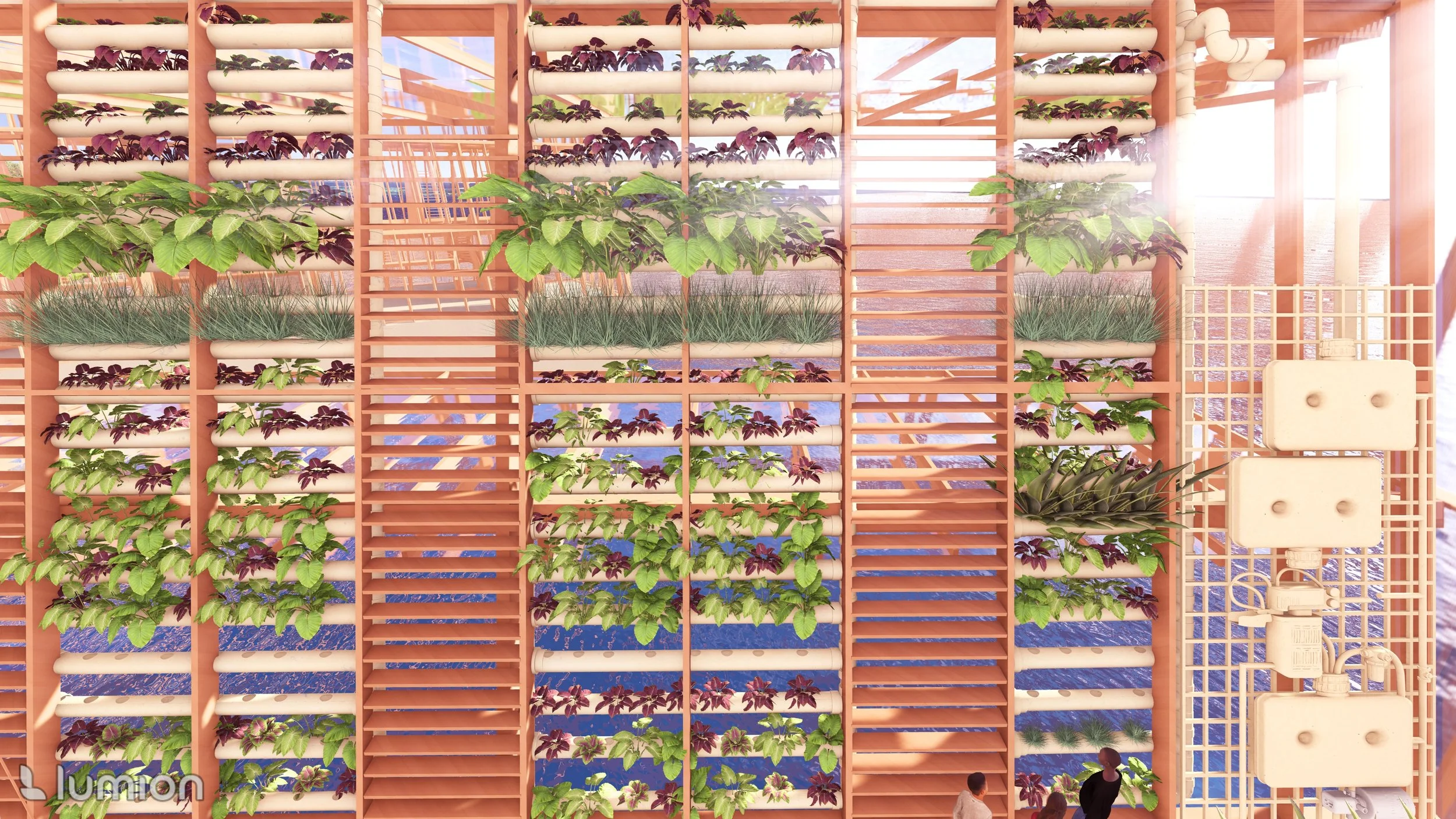
The Arkipelago is a speculative prototype for decentralized, self-sufficient co-ops (Arks), hosted along Canada’s future Alto high-speed rail corridor. Sited on an island within the Hochelaga Archipelago outside Montreal, it explores how large-scale infrastructure can support regenerative, closed-loop co-operatives through modular, climate-adapted homes integrating embedded agriculture. Conceived as both a place to live and a pedagogical campus, it teaches sustainable greenhouse-integrated architecture, aquaponics, and hydroponics through direct, hands-on experience. Knowledge is embedded in the built environment, each element functioning as both dwelling and didactic tool.
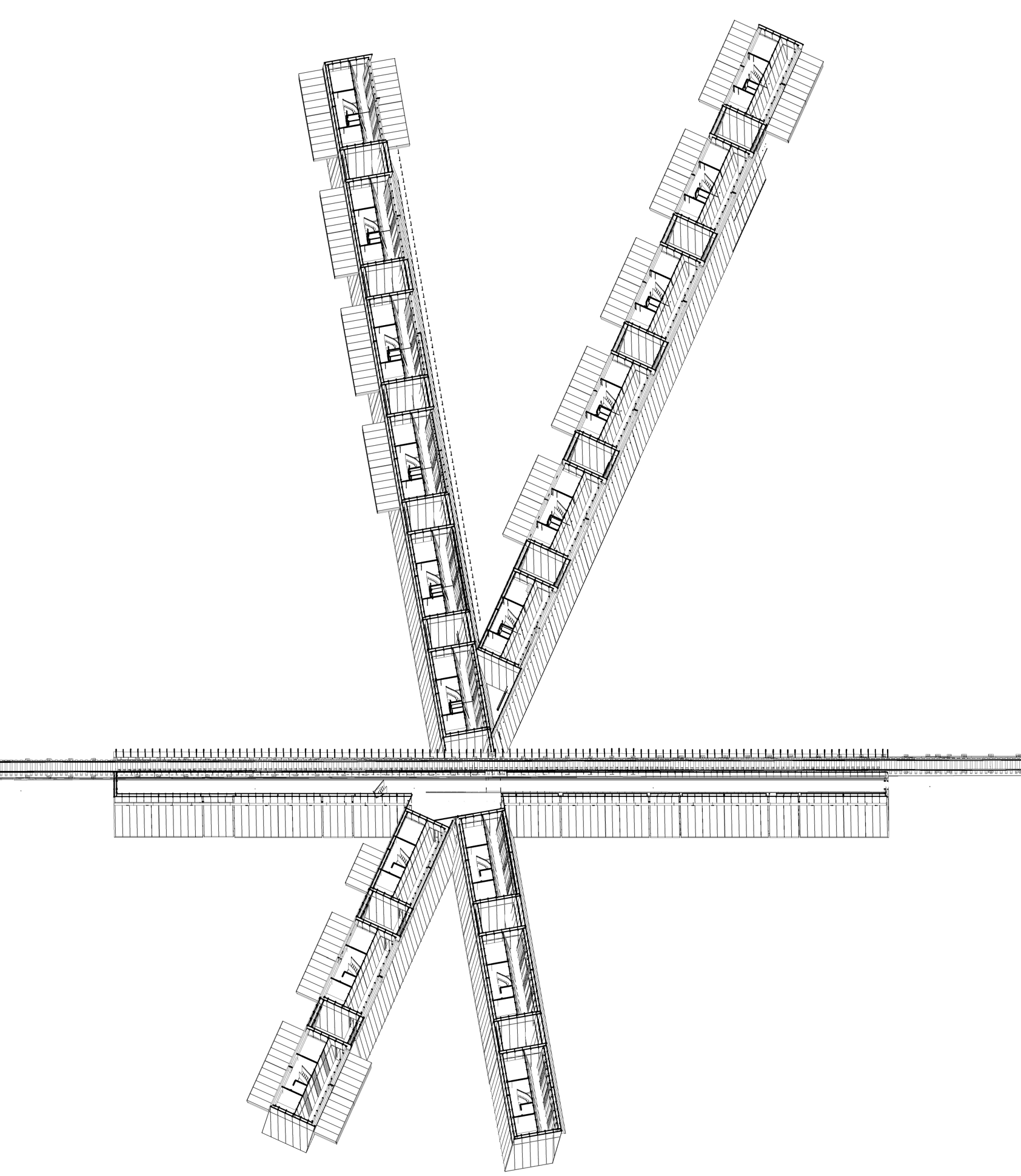
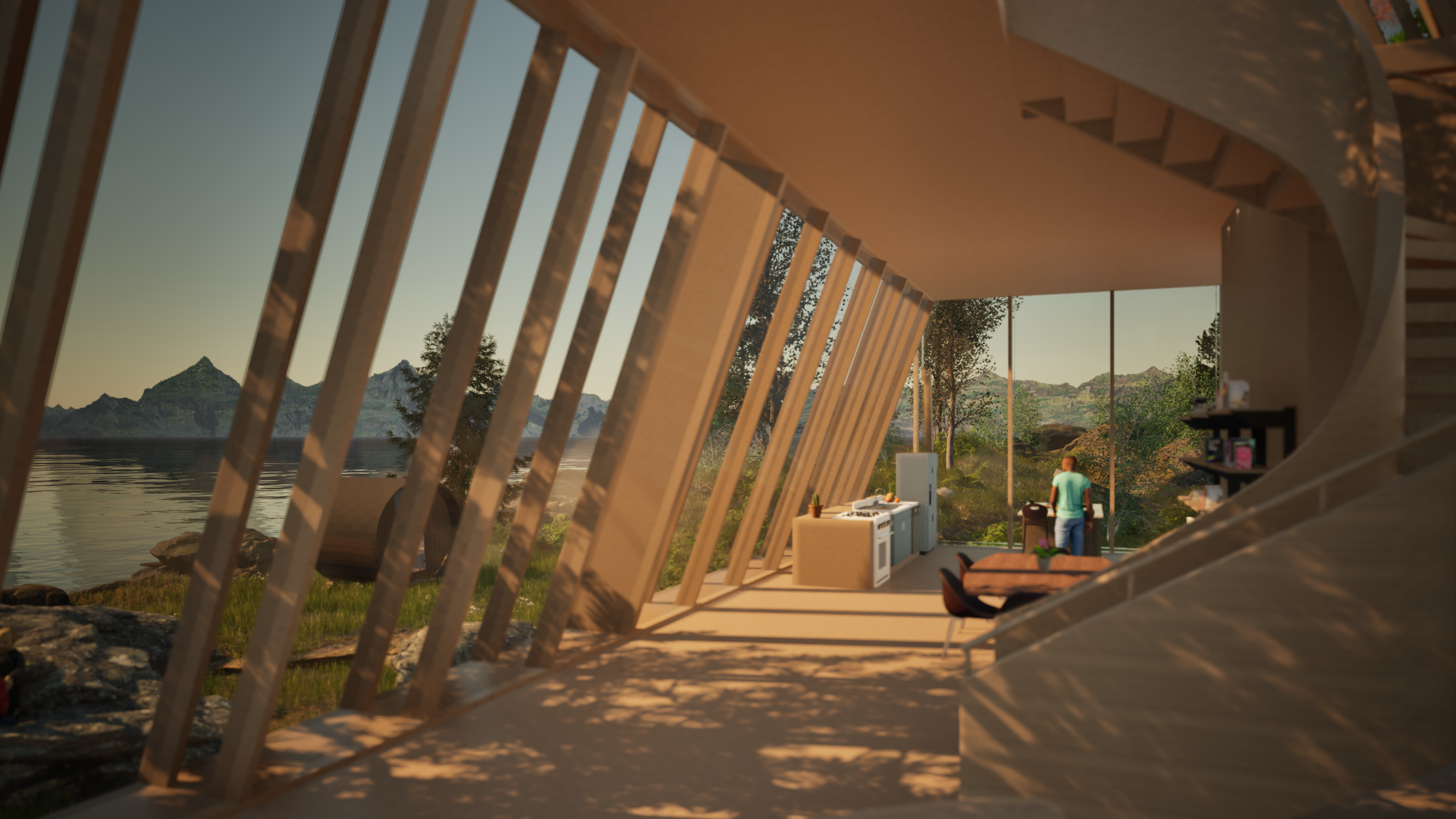
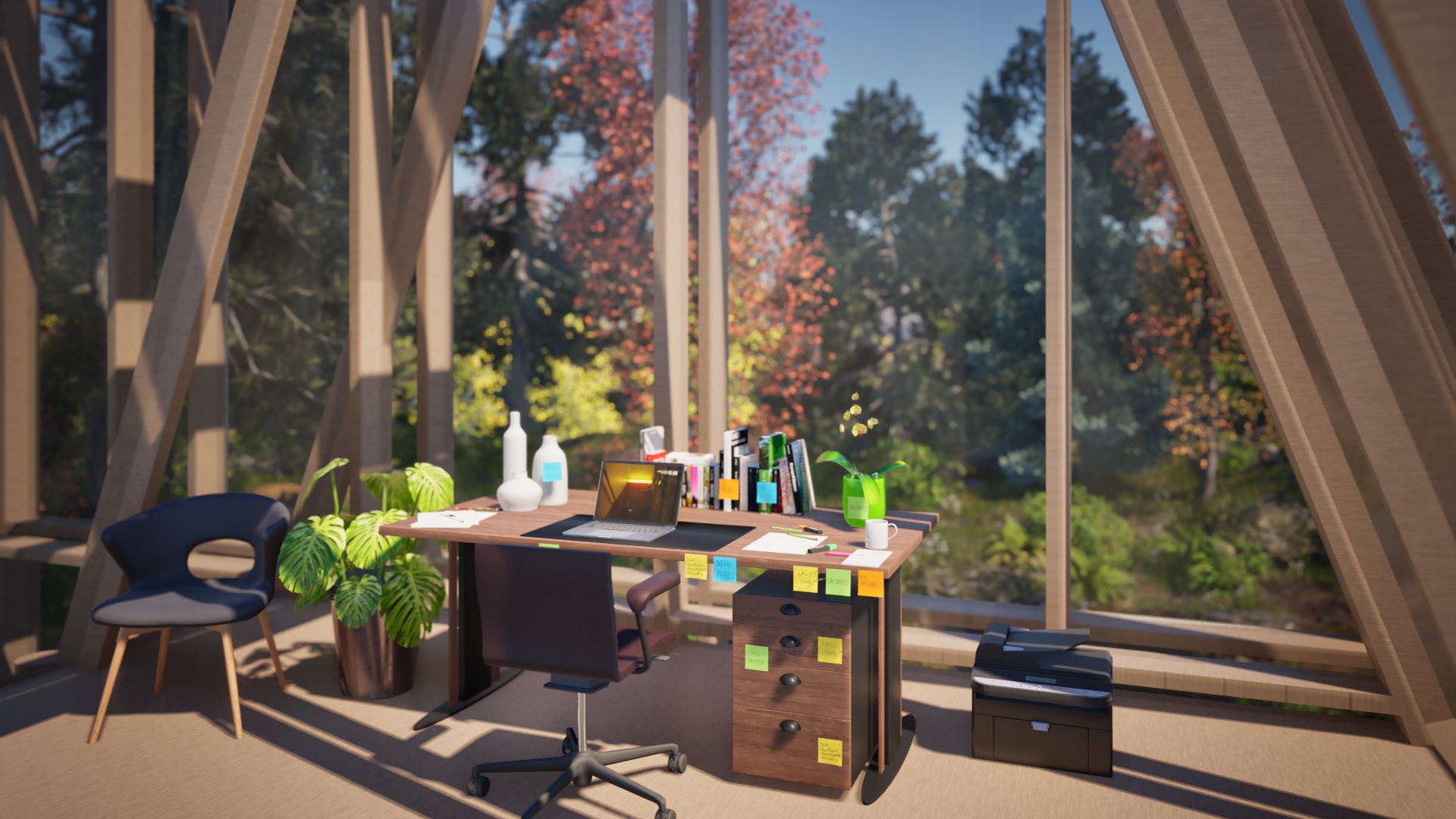
Each AV House pairs an insulated A-frame residence with a mirrored V-frame greenhouse. Locally sourced timber and bio-based polycarbonate form a translucent, double-layered kinetic envelope that regulates temperature and dissolves the threshold between living and growing space. These paired structures re-establish the integrated systems of a traditional homestead within the within the shell of a modern dwelling.
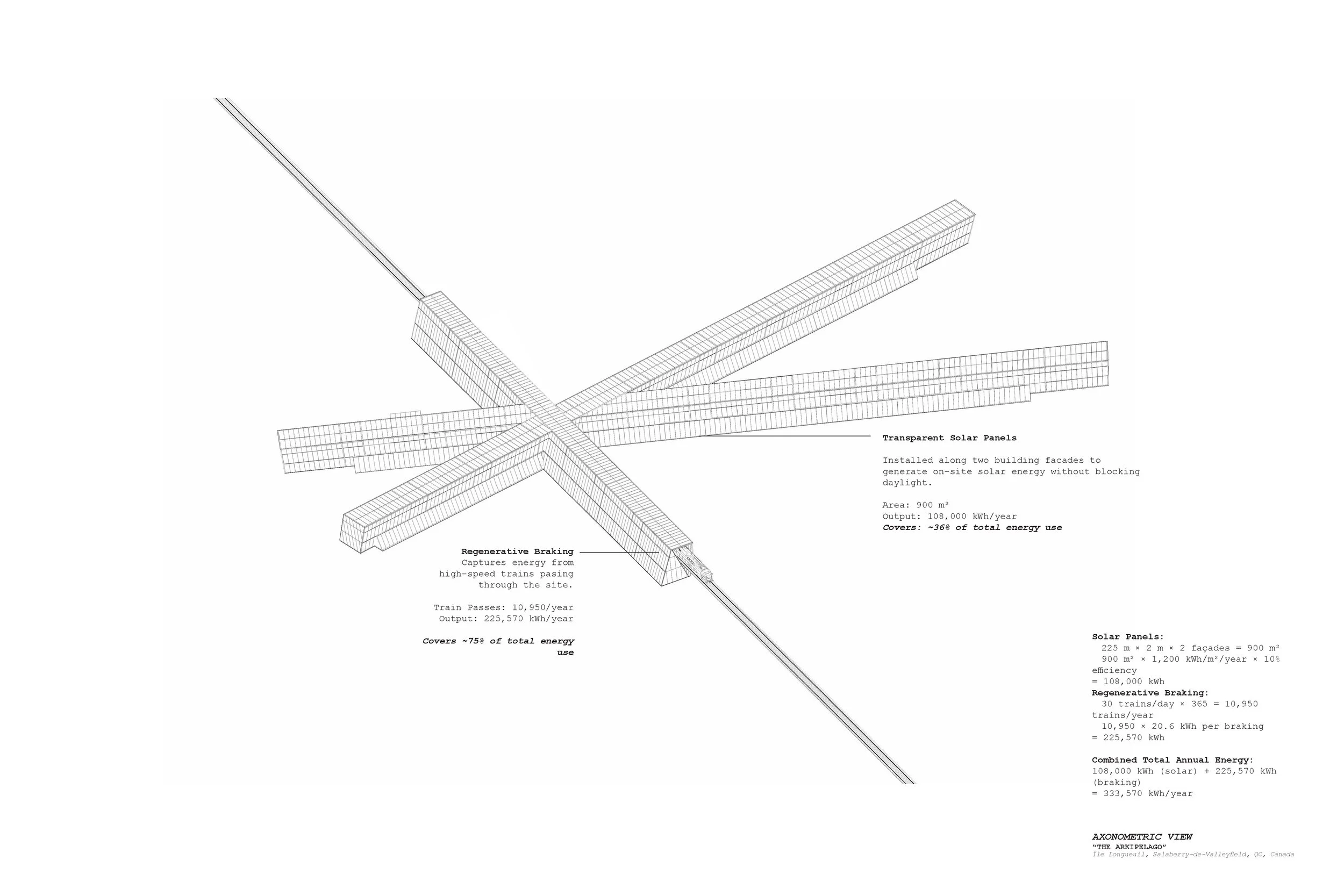
The co-op’s tri-axial geometry features a central systems spine aligned with the Alto corridor, flanked by solar-oriented residential arms. The settlement’s tri-axial geometry transforms the Alto corridor into a generative spine for habitation and ecology. Regenerative braking and slipstream energy harvesting from passing trains combine with transparent solar façades to create a resilient microgrid. Along this backbone, the co-op grows as both energy parasite and ecological symbiont.
The design draws on the New Alchemy Institute’s Ark bio shelters of the 1970s—, specifically, the P.E.I. Ark, which integrated passive solar heating, aquaponics, composting, and renewable energy into closed-loop living systems. It also incorporates Maggie’s Centers’ solarium spaces for psychological wellness, where abundant daylight, visual connection to landscape, and informal gathering areas support mental health and social interaction; Precht’s Farmhouse modular closed-loop agriculture systems; and Paul Fouquet’s translucent polycarbonate and timber envelope. Beyond technical systems, it frames housing as cooperative infrastructure, fostering shared maintenance and reduced reliance on extractive labor systems, building resilience through a balance of autonomy and interdependence.