Monica Cherrington
Standard Faces, Salvaged Forms
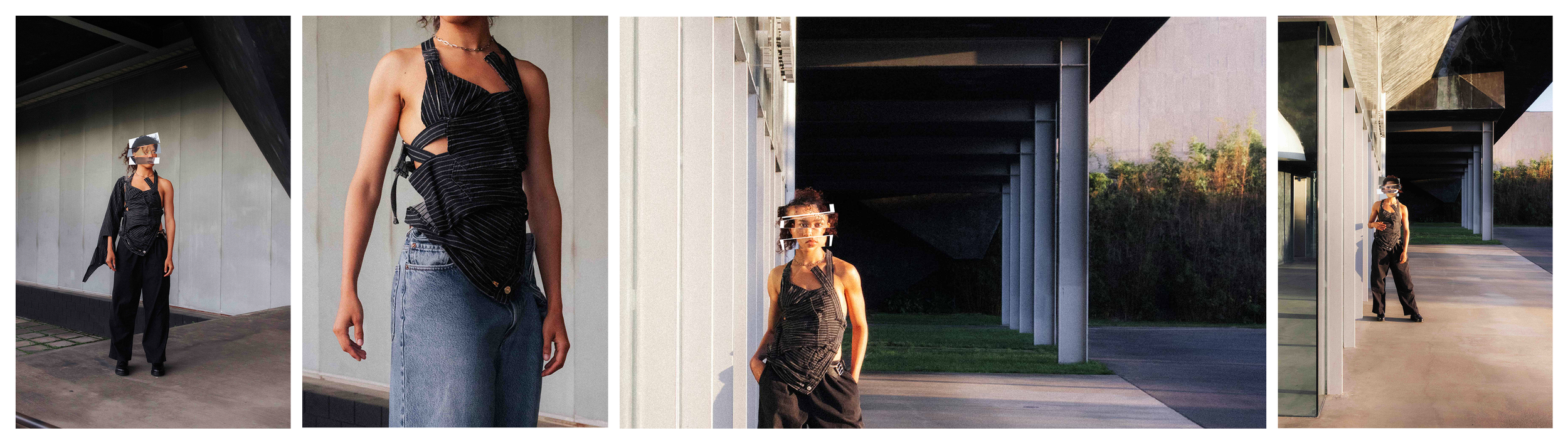
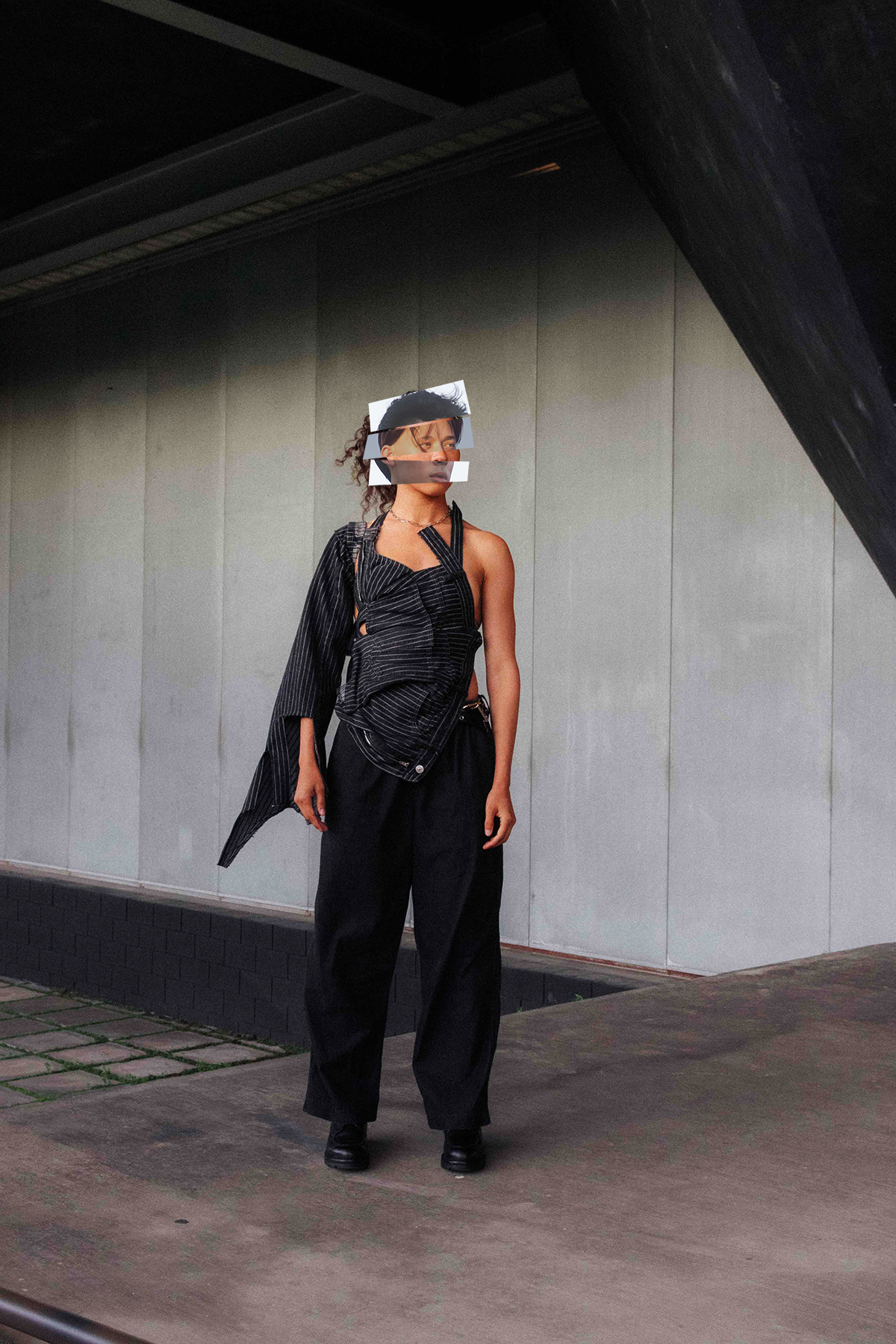
This thesis explores how upcycled fashion can expand the way we perceive and interact with the material world, while also challenging the standardized processes embedded in digital design tools. Fashion is chosen as the medium not only for its direct relationship to materiality and tactility, but also because garment-making demands skills parallel to those cultivated in architectural education. Unlike conventional architectural workflows, working hands-on with clothing offers immediate, tangible results, enabling ideas to evolve free from the constraints of pre-programmed toolsets.
The act of transforming salvaged garments into new forms becomes a form of material research. It exposes the limitations of current software interfaces, which are ill-suited for handling the irregularities and unpredictability embedded in reclaimed textiles. Salvaged materials resist the uniformity that digital environments often assume, requiring designers to adapt through physical manipulation, improvisation, and direct engagement with the fabric.
By engaging in this process, the thesis investigates procedural techniques that emerge outside standardized workflows—methods that cannot be easily captured or replicated in conventional CAD or fashion software. These tactile strategies explore how the act of making at the scale of the body can inspire design thinking at the scale of a building.
Through a non-standard approach, the research aims to reveal how the process of remaking garments offers not just a practical method of production, but also a conceptual framework for rethinking design tools, authorship, and the role of materiality in creative practice. Upcycled fashion becomes both medium and critique — a way to question the uniformity of digital processes and a way to propose new modes of working where the designer’s hand and the material’s history remain visible in the final artifact.