Info
Info
Info

INFORMATION

“Translation is taking on new forms this year, whether turning datasets into spatial proposals, physical models into digital systems, or environmental inputs into architecture. Across these varied approaches, architecture becomes a means of inquiry, grounded in making and attuned to both digital and material conditions.”

— Jackilin Hah Bloom, Graduate Thesis Coordinator

Over three days of reviews, 72 thesis students will present and engage their work in dialogue with over 80 guest critics from within and outside the discipline, alongside 17 faculty thesis advisors. This year’s projects will be alive with ideas and possibilities. We invite you to explore the work on view throughout the halls of SCI-Arc for an additional two weeks as part of the 2025 Graduate Thesis Exhibit.

“In a world that often struggles to imagine a different future, creativity in architecture becomes an act of hope, a way to envision, shape, and insist on possibilities beyond the present. Creation demands risk, vision, and responsibility; it asks us not only to understand what is wrong, but to imagine what could be right and to build it. In the face of global challenges that often seem overwhelming, the creative act becomes a form of resistance, of hope, and of agency. Especially in architecture, where the built environment reflects and shapes human experience, the power to design new possibilities is a necessity, not a luxury.”

— Elena Manferdini, Graduate Programs Chair

DIRECTOR/CEO

Hernán Díaz Alonso

VICE DIRECTOR/CHIEF ACADEMIC OFFICER

John Enright

GRADUATE PROGRAMS CHAIR

Elena Manferdini

GRADUATE THESIS COORDINATOR

Jackilin Hah Bloom

ASSISTANT TEACHER

Aram Radfar

TEACHING ASSISTANTS

Suleyman Aminzada Hongyue Dai

HISTORY + THEORY ADVISORS

John Cooper Erik Ghenoiu Marcelyn Gow

DESIGN ADVISORS

Matthew Au Herwig Baumgartner Jackilin Hah Bloom Ramiro Diaz-Granados David Eskenazi Damjan Jovanovic Zeina Koreitem Elena Manferdini Eric Owen Moss Anna Neimark David Ruy William Virgil Devyn Weiser Andrew Zago
Graduate Thesis ’25 · Graduate Thesis ’25 · Graduate Thesis ’25 · Graduate Thesis ’25 · Graduate Thesis ’25 · Graduate Thesis ’25 · Graduate Thesis ’25 · Graduate Thesis ’25 · Graduate Thesis ’25 · Graduate Thesis ’25 · Graduate Thesis ’25 · Graduate Thesis ’25 · Graduate Thesis ’25 · Graduate Thesis ’25 · Graduate Thesis ’25 · Graduate Thesis ’25 · Graduate Thesis ’25 · Graduate Thesis ’25 · Graduate Thesis ’25 · Graduate Thesis ’25 · Graduate Thesis ’25 · Graduate Thesis ’25 · Graduate Thesis ’25 · Graduate Thesis ’25 · Graduate Thesis ’25 · Graduate Thesis ’25 · Graduate Thesis ’25 · Graduate Thesis ’25 · Graduate Thesis ’25 · Graduate Thesis ’25 · Graduate Thesis ’25 · Graduate Thesis ’25 · Graduate Thesis ’25 · Graduate Thesis ’25 · Graduate Thesis ’25 · Graduate Thesis ’25 · Graduate Thesis ’25 · Graduate Thesis ’25 · Graduate Thesis ’25 · Graduate Thesis ’25 · Graduate Thesis ’25 · Graduate Thesis ’25 · Graduate Thesis ’25 · Graduate Thesis ’25 · Graduate Thesis ’25 · Graduate Thesis ’25 · Graduate Thesis ’25 · Graduate Thesis ’25 · Graduate Thesis ’25 · Graduate Thesis ’25 ·

Karlson Spencer Ty

Advisor: William VirgilMA2

Relic Reframed: Manila Film Center


Drawing from Viktor Shklovsky’s concept of “defamiliarization” (ostranenie) and the Renaissance humanist re-seeing of ruins by Erasmus, Petrarch, and Alberti, the project investigates how architectural tension can resist “algebrization” — the erosion of perception through habit. 

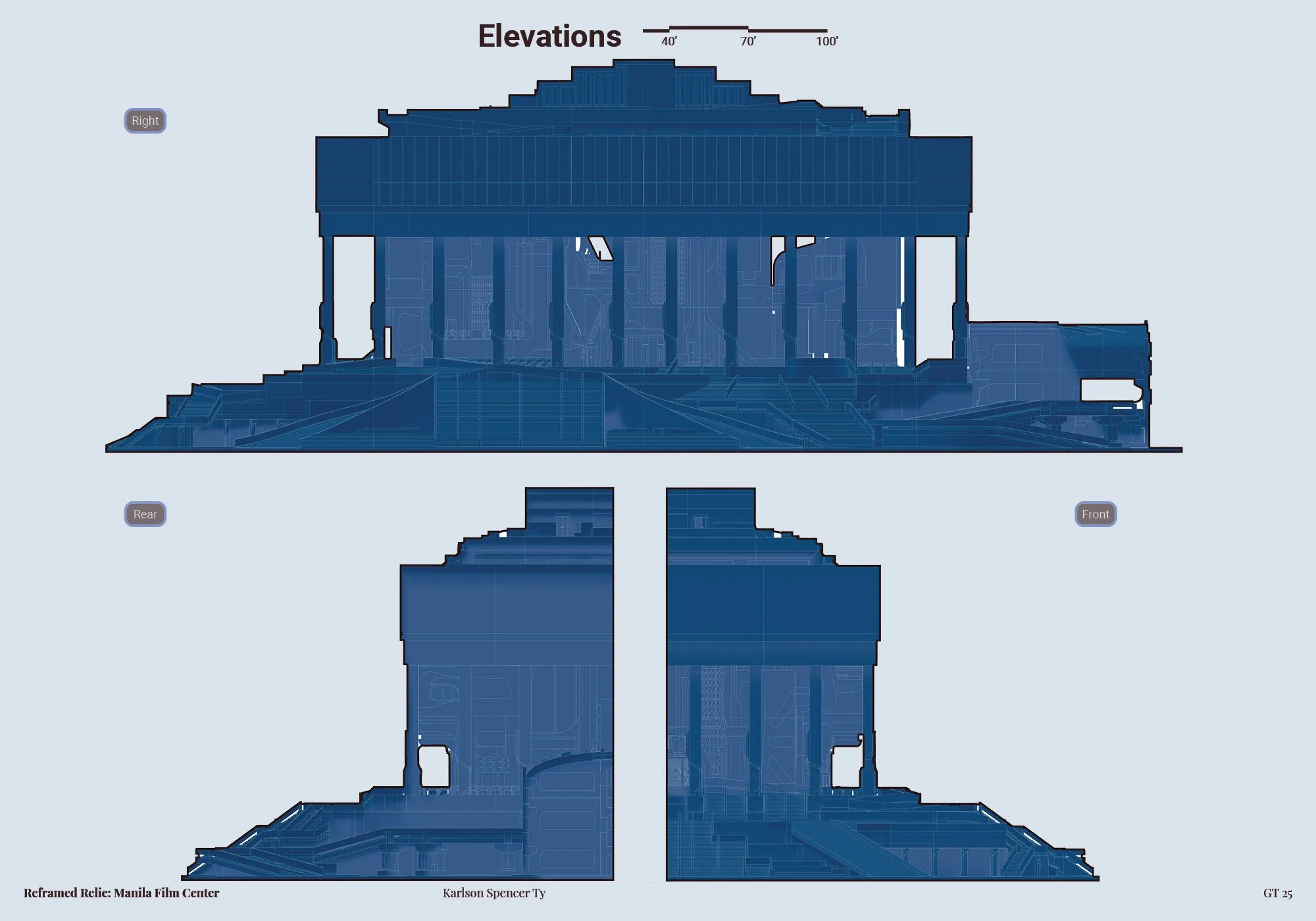
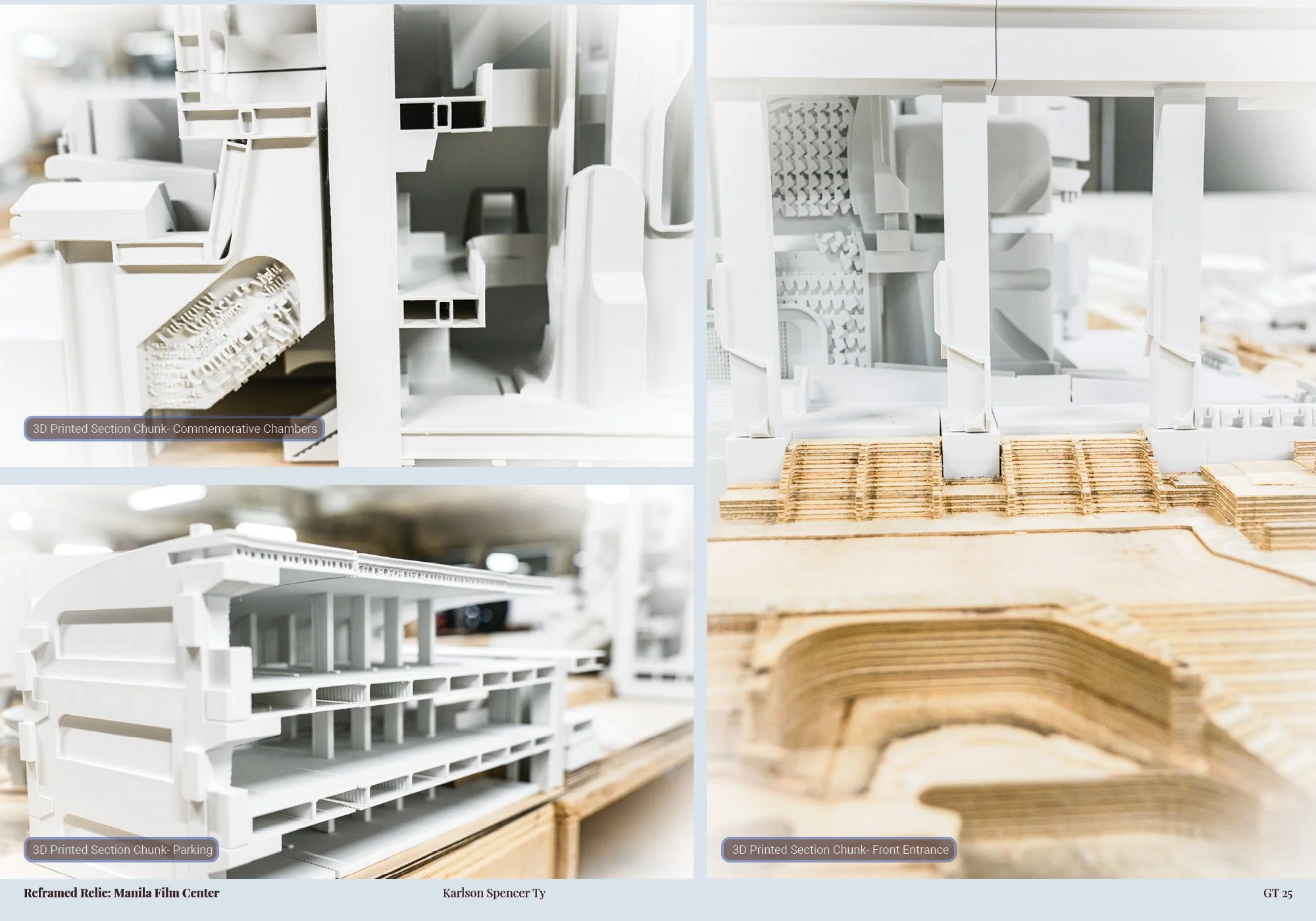
Deliberate spatial insertions — counterforms acting as prosthetics or strategic overlays — reframe the Manila Film Center, a brutalist relic in Pasay, Metro Manila, within the Cultural Center of the Philippines (CCP) complex, as a site of latent memory and cultural significance. These calibrated interventions manifest through the integration of subterranean archives, commemorative chambers, and public performance spaces. 

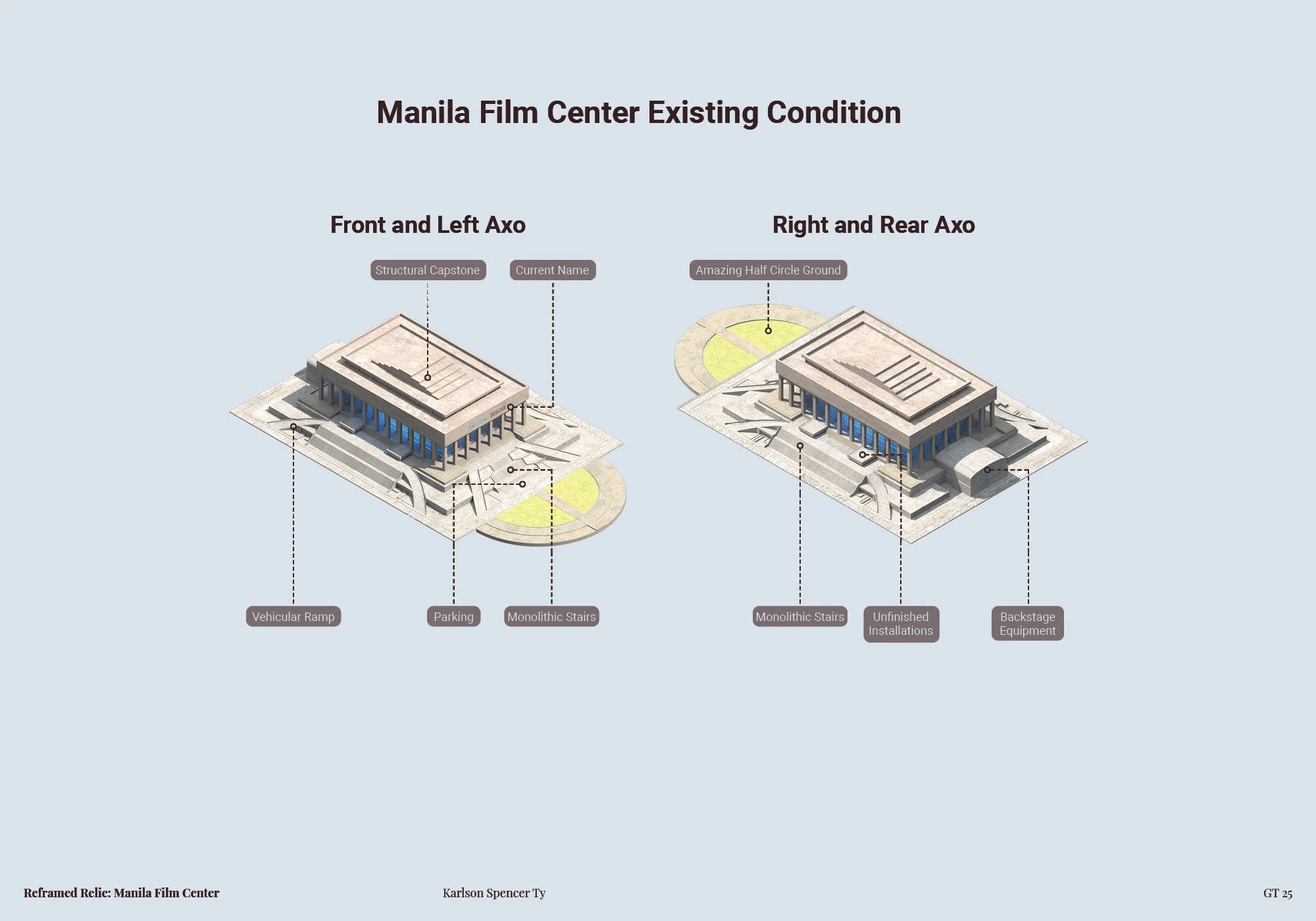
Built in 1981 during the Marcos regime, the Manila Film Center was intended as a statement of cultural ambition and independence from the Philippines’ colonial past. In the rush to complete it for an international film festival, construction was accelerated under unsafe conditions, leading to a tragic accident in which workers were buried beneath uncured concrete. The exact number of victims remains uncertain, and over the decades, public memory of the event has faded. The structure has since become a normalized backdrop — a relic overlooked in daily life — prompting this project’s response through targeted design interventions. 

The significant moves are as follows: 

(1) Maintaining the existing monolithic structure as the constraint 

-Since the tragic event in 1981 primarily affected the building’s interior, the intervention focuses within the existing bounding volume. 

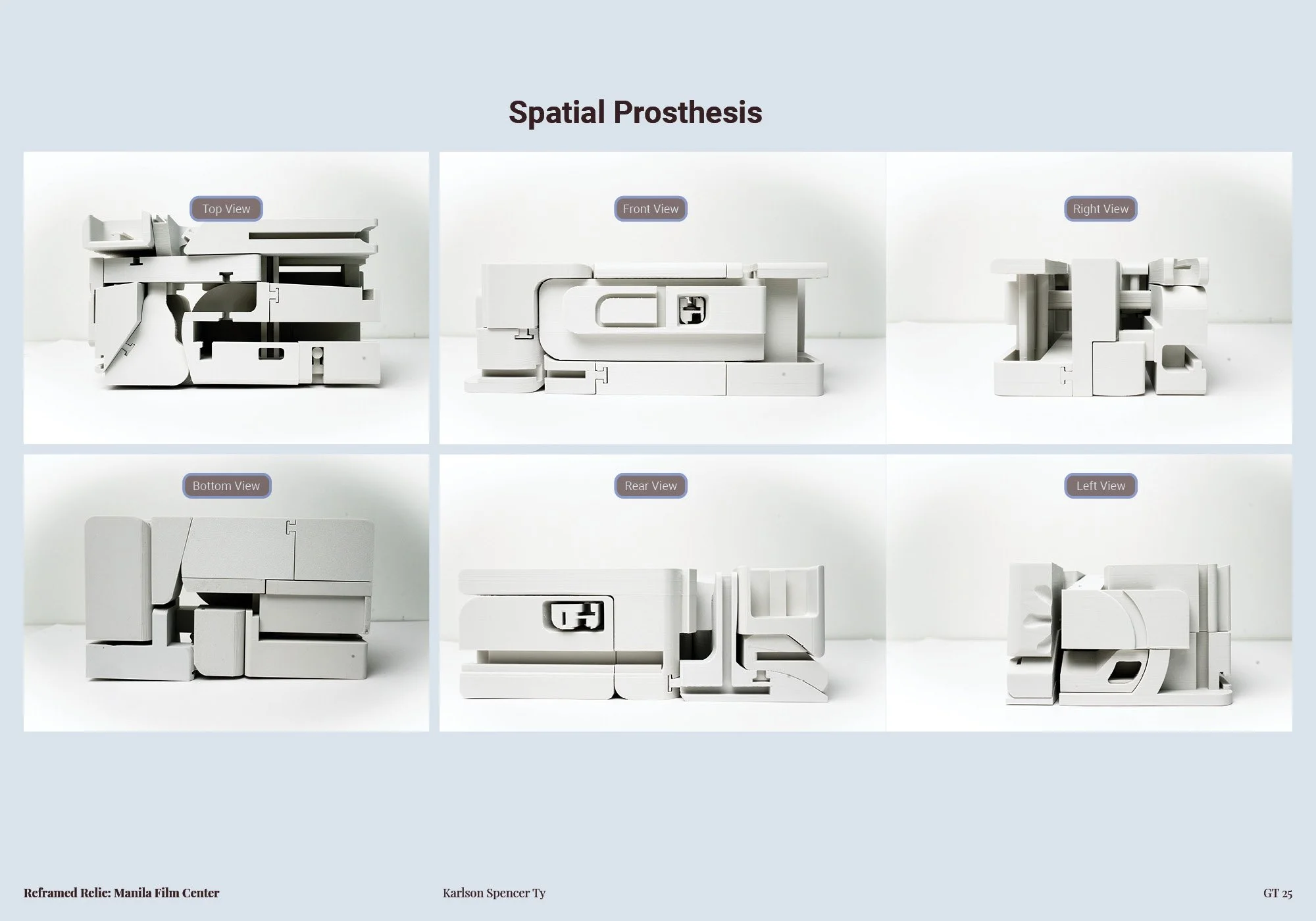
(2) Spatial Prosthesis Standards 

-These components are reconfigured to rehabilitate and reorganize the spaces and programs within the structure. 

(3) Public Activation through defamiliarization 

-Select areas are adapted and integrated to encourage public engagement, while preserving the building’s geometric forms to maintain its genius loci. 

The proposal seeks to disrupt the building’s cultural invisibility and habitual neglect. In a metropolis of over 15.2 million, it asks: how can architecture reanimate a forgotten structure — restoring its political and spatial agency through memory, rupture, and re-engagement? 
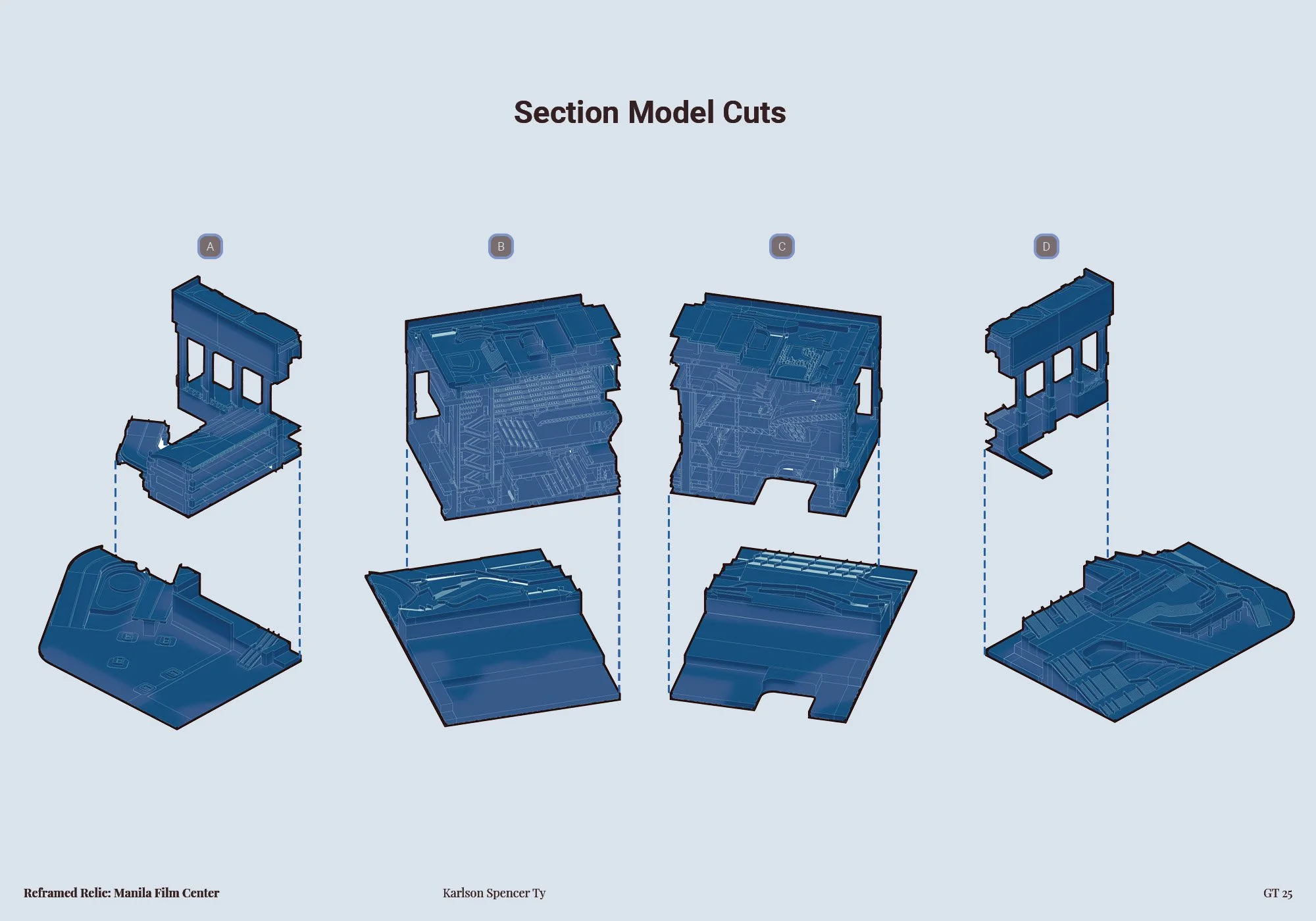
 
Section Model Cuts
Elevations
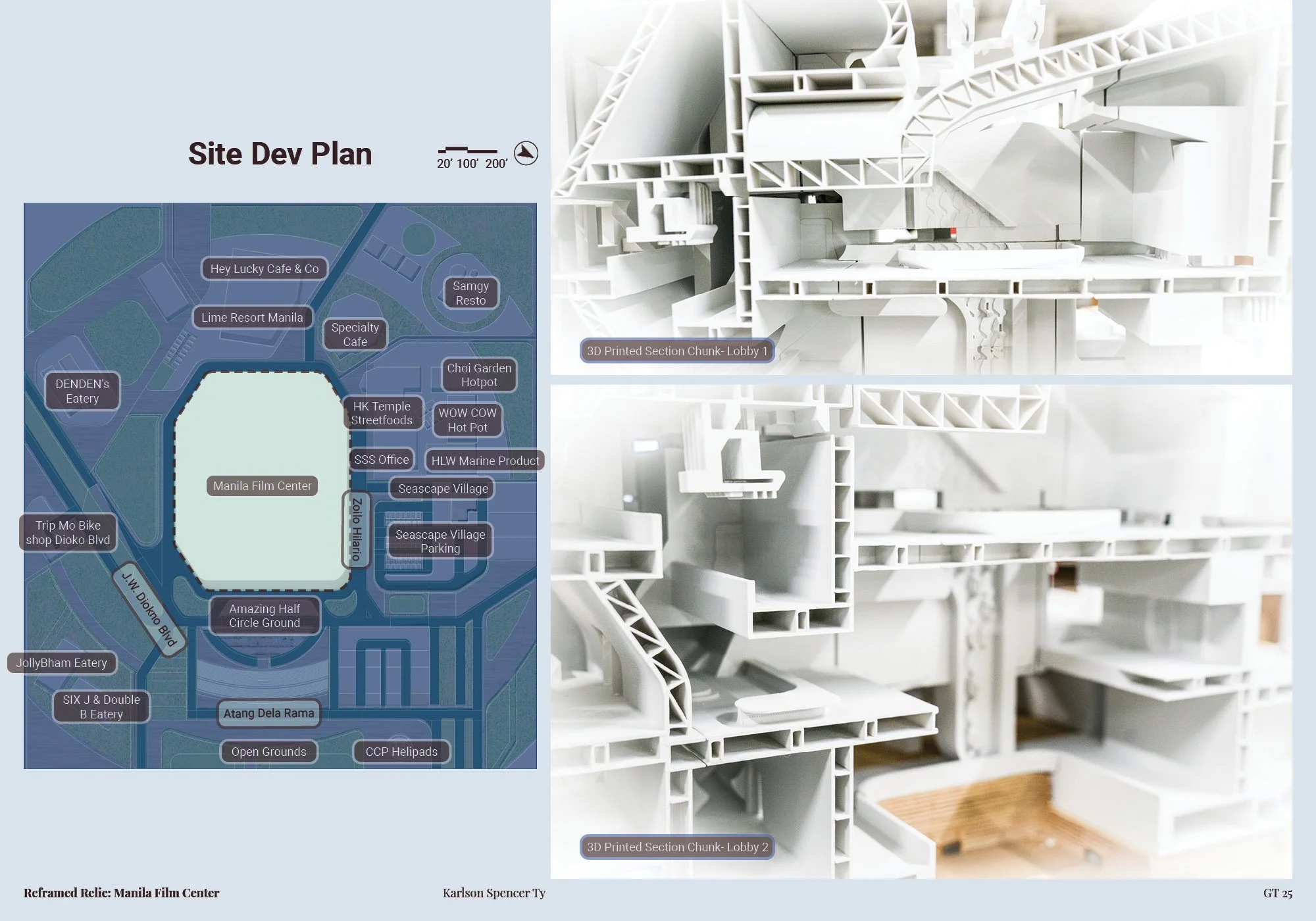
Site Plan and Chunk Details
Physical Model Details
Spatial Diagram
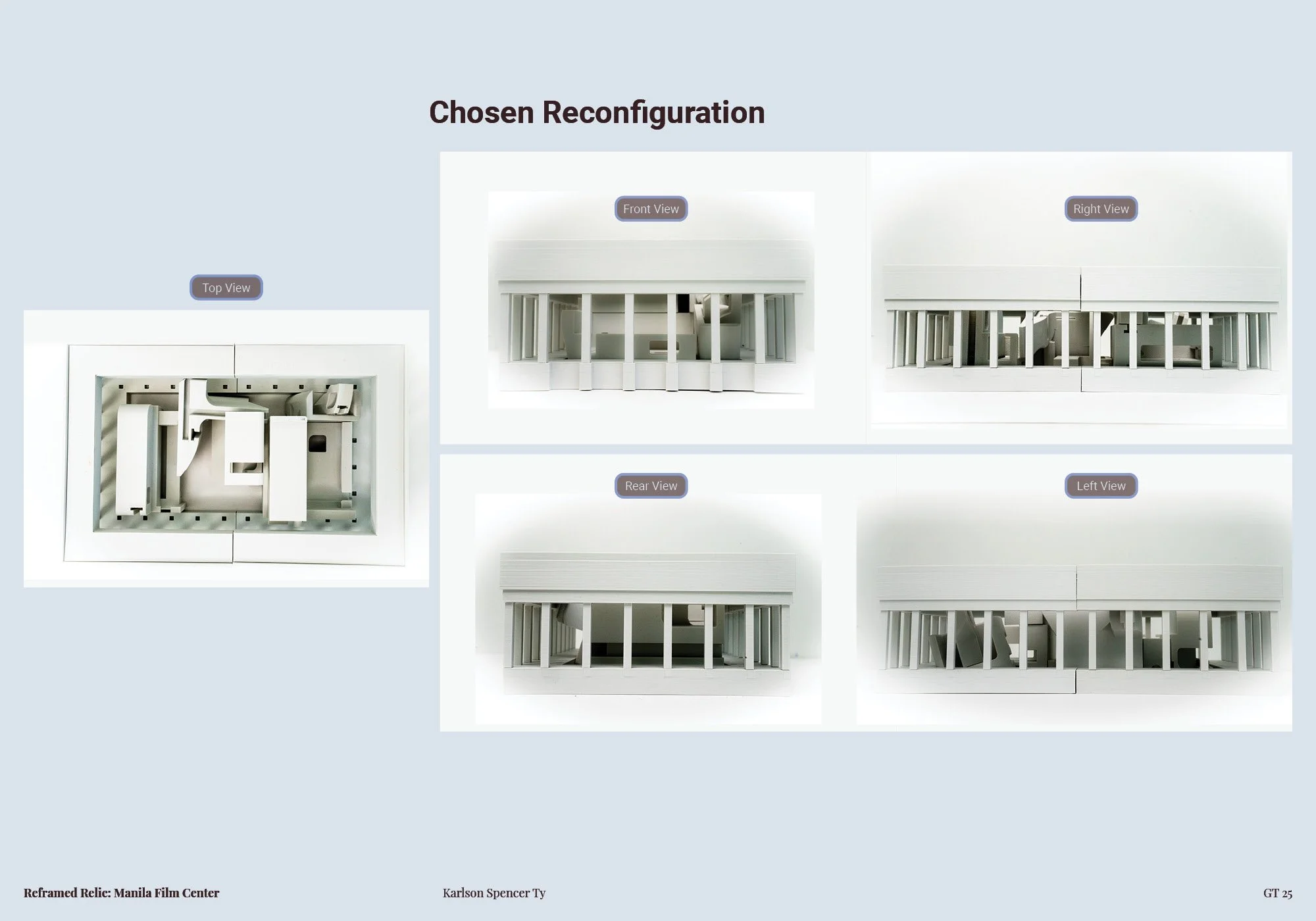
Reconfiguration Graphic
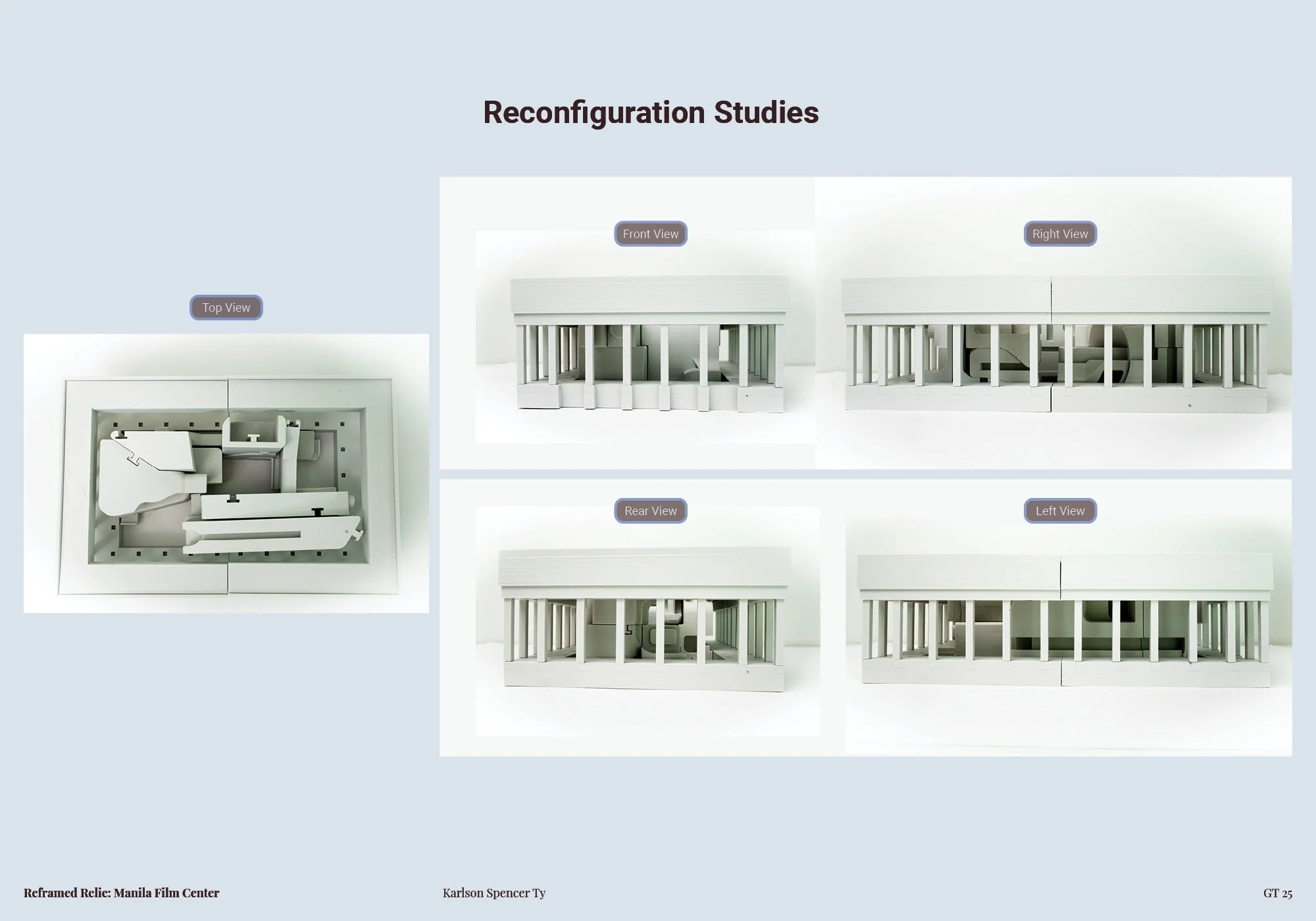
Reconfiguration Studies Graphic
Isometric Diagram
Alonso Alonso · Carissa Auth · Yoon Kyung Bai · Shaikha Ben Sabt · Shaheen Bharwani · Esteban Chavez · Geng Chen · Yuhang Chen · Monica Cherrington · Yi Cheung · Krish Dittmer · Sabrina Ellison · Yingzhe Fan · Drake Gaither · Paula Guerrero · Jonathan Guirguis · Nash Guyre · Yeasuh Ha · Jun Han · Yi Han · Basheer Hejal · Haven Henningsen · Minkuan Hu · Sean Keeley · Jinyun Kim · Dilara Şule Kipel · Noah Knuckles · Zachary Kuderna · Sze-Hin Jason Leung · Acacia Li · Jia Li · Yian Li · Zhengda Liu · Maxwell Lorenze · Noah Losani · Huihao Ma · Piyush Mahulkar · Oskar Maly · Carlos Martin · Quinn McCormack · Taylor Naftali · Chuwei Ni · Tarunima Nigam · Gabriella Pena · Samuel Perng · Harrison Phan · Sagar Ratnani · Jesus Renteria · Aahan Sakhuja · Brian Slusher · Carson Somer · Courtney Springbett · Werakul Srihahsan · William Tan · Mingfei (Allen) Teng · Modhi Tifouni · Karlson Spencer Ty · Giuseppe Vecchio · Raymund Vista · Chunjie Wang · Ke Wang · Jack Wasielwski · Wang Ching Wong · Kaijiani Wu · Ruozheng Wu · Chen Xu · Yunpeng Xu · Phuchong Yamchomsuan · James Yeh · Shander Yeh · Xiaoyun Zeng · Xintong Zhu ·  Alonso Alonso · Carissa Auth · Yoon Kyung Bai · Shaikha Ben Sabt · Shaheen Bharwani · Esteban Chavez · Geng Chen · Yuhang Chen · Monica Cherrington · Yi Cheung · Krish Dittmer · Sabrina Ellison · Yingzhe Fan · Drake Gaither · Paula Guerrero · Jonathan Guirguis · Nash Guyre · Yeasuh Ha · Jun Han · Yi Han · Basheer Hejal · Haven Henningsen · Minkuan Hu · Sean Keeley · Jinyun Kim · Dilara Şule Kipel · Noah Knuckles · Zachary Kuderna · Sze-Hin Jason Leung · Acacia Li · Jia Li · Yian Li · Zhengda Liu · Maxwell Lorenze · Noah Losani · Huihao Ma · Piyush Mahulkar · Oskar Maly · Carlos Martin · Quinn McCormack · Taylor Naftali · Chuwei Ni · Tarunima Nigam · Gabriella Pena · Samuel Perng · Harrison Phan · Sagar Ratnani · Jesus Renteria · Aahan Sakhuja · Brian Slusher · Carson Somer · Courtney Springbett · Werakul Srihahsan · William Tan · Mingfei (Allen) Teng · Modhi Tifouni · Karlson Spencer Ty · Giuseppe Vecchio · Raymund Vista · Chunjie Wang · Ke Wang · Jack Wasielwski · Wang Ching Wong · Kaijiani Wu · Ruozheng Wu · Chen Xu · Yunpeng Xu · Phuchong Yamchomsuan · James Yeh · Shander Yeh · Xiaoyun Zeng · Xintong Zhu ·