Huihao Ma
Naturalizing the Bigness
As artificial intelligence rapidly rises to prominence, architectural infrastructures such as data centers and distribution centers have emerged under post-industrial capitalism, increasingly occupying and reshaping our urban environments. However, their spaces are not designed for humans, but for machines. They exist at a massive scale within the urban fabric but remain largely absent from the public's awareness.
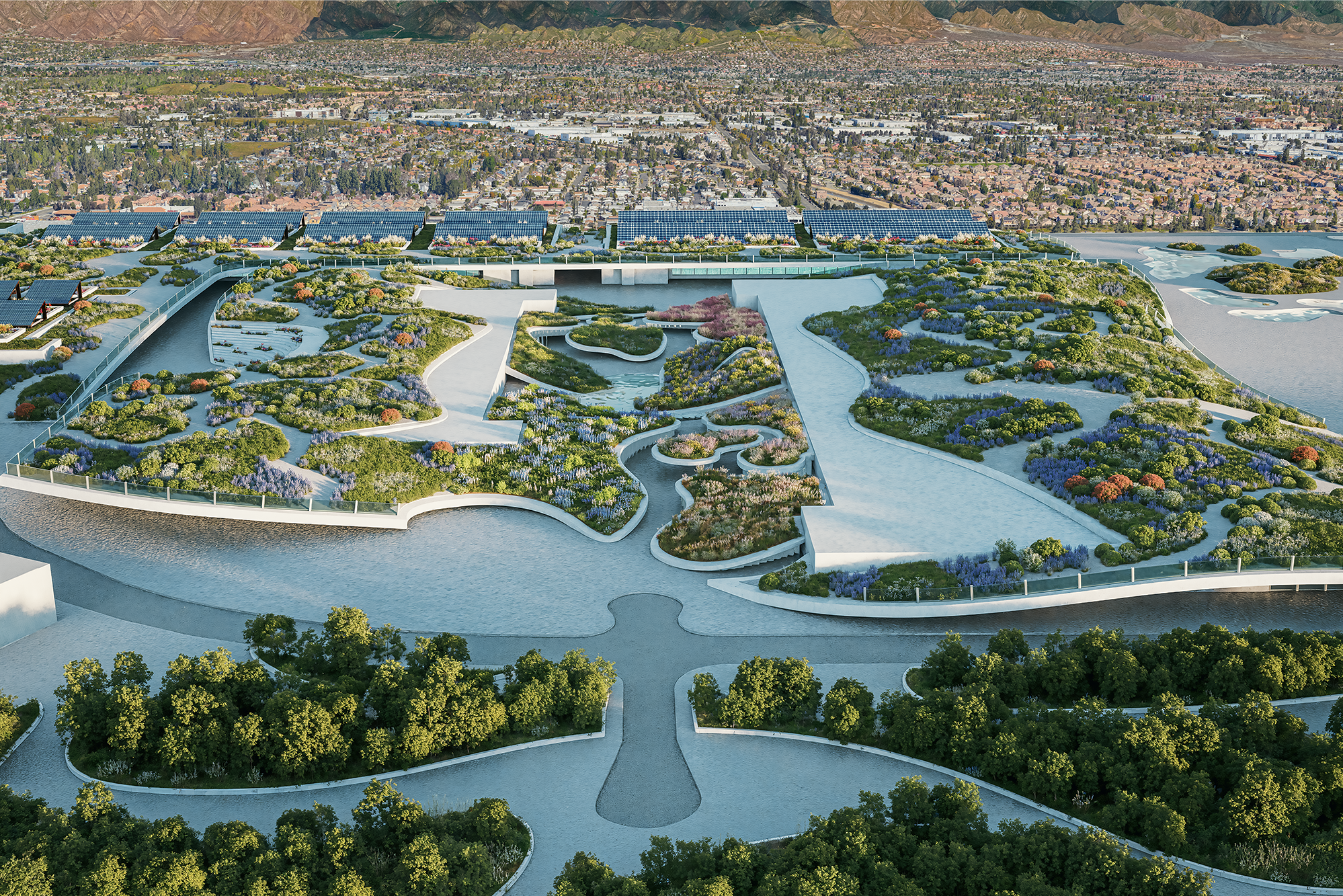
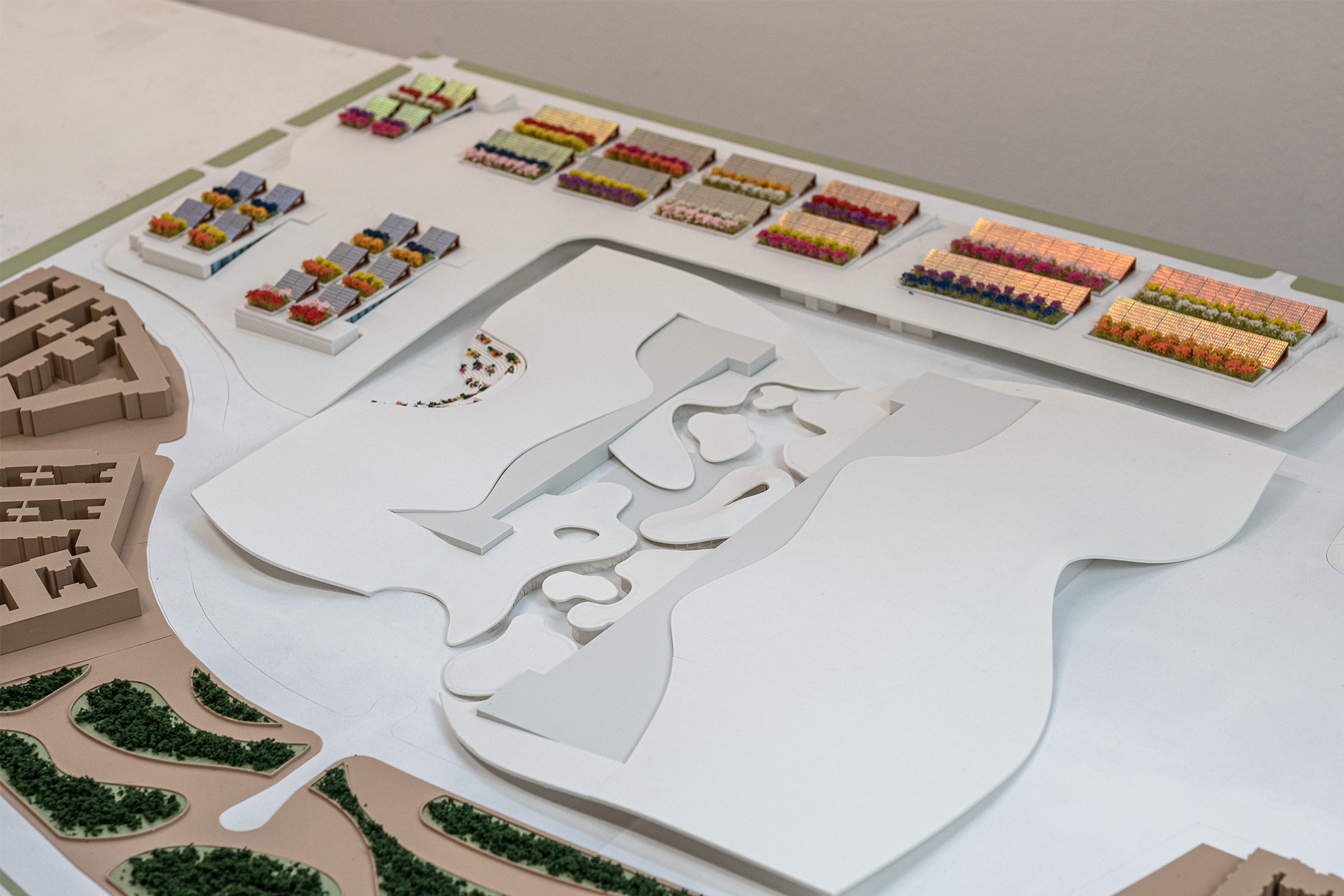
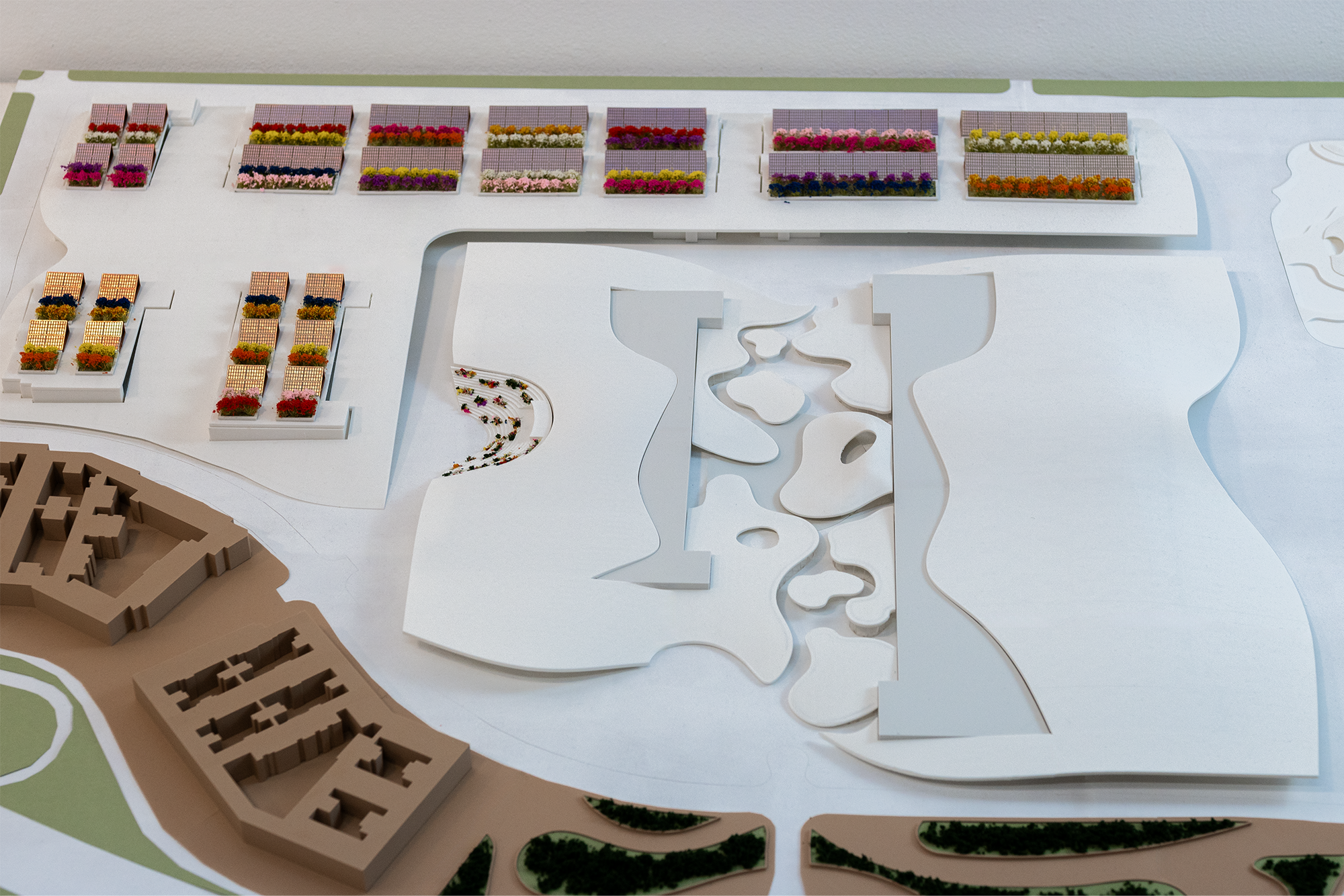
Amid the dissonance between physical scale and public invisibility, this thesis juxtaposes these two building types to explore the potential to assume new roles within the city. The project is situated in Ontario City, east of Los Angeles—one of the largest U.S. logistics hubs with over 600 densely packed warehouses. Over the past decades, these massive warehouses have gradually encroached on farmland and ranches. By transforming seven existing warehouses on the site into a hybrid complex of data centers and digital media art galleries, the project aims to dissolve the bigness of these industrial buildings and reconnects the infrastructure with the surrounding community and civic life.
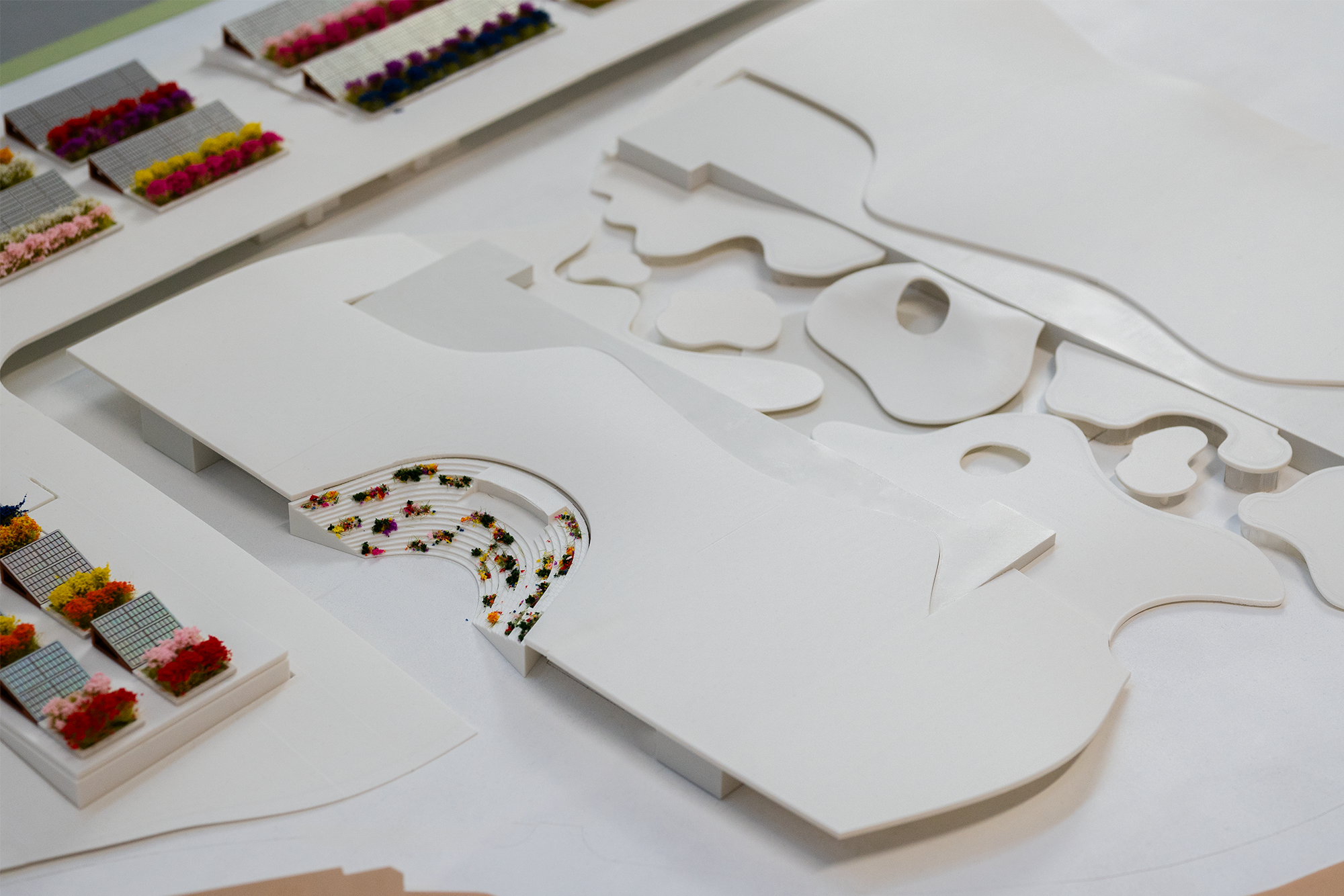
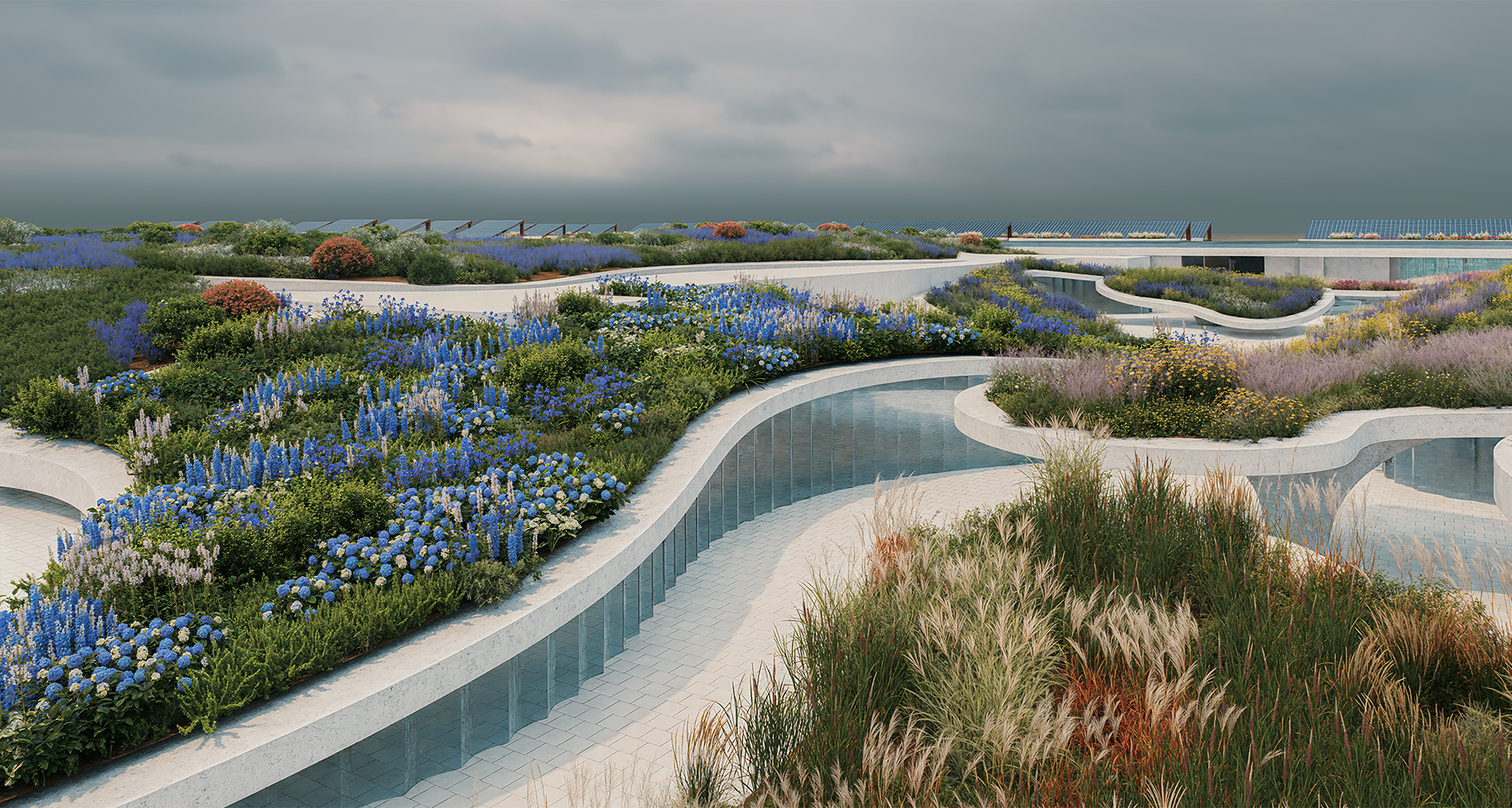
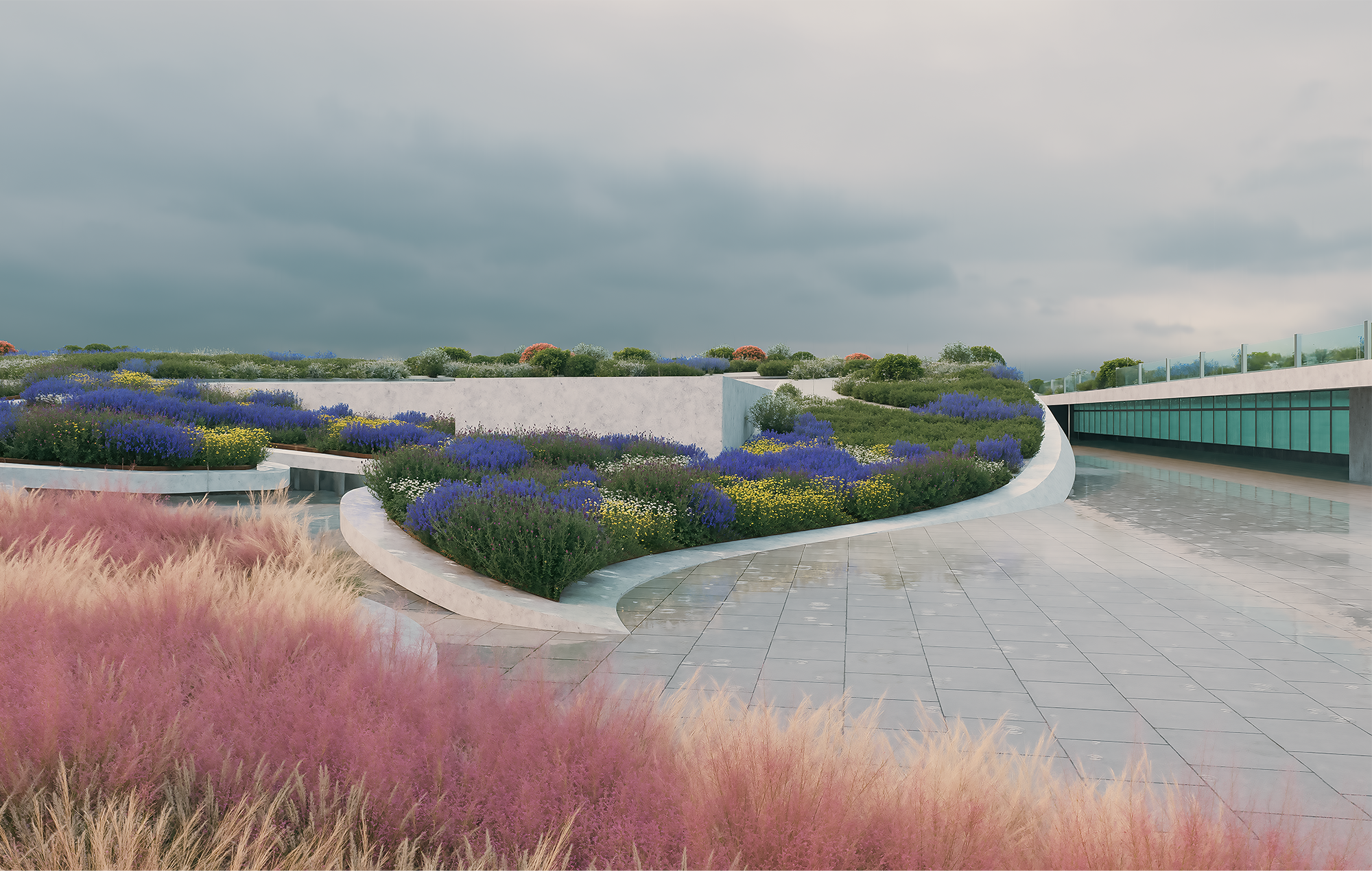
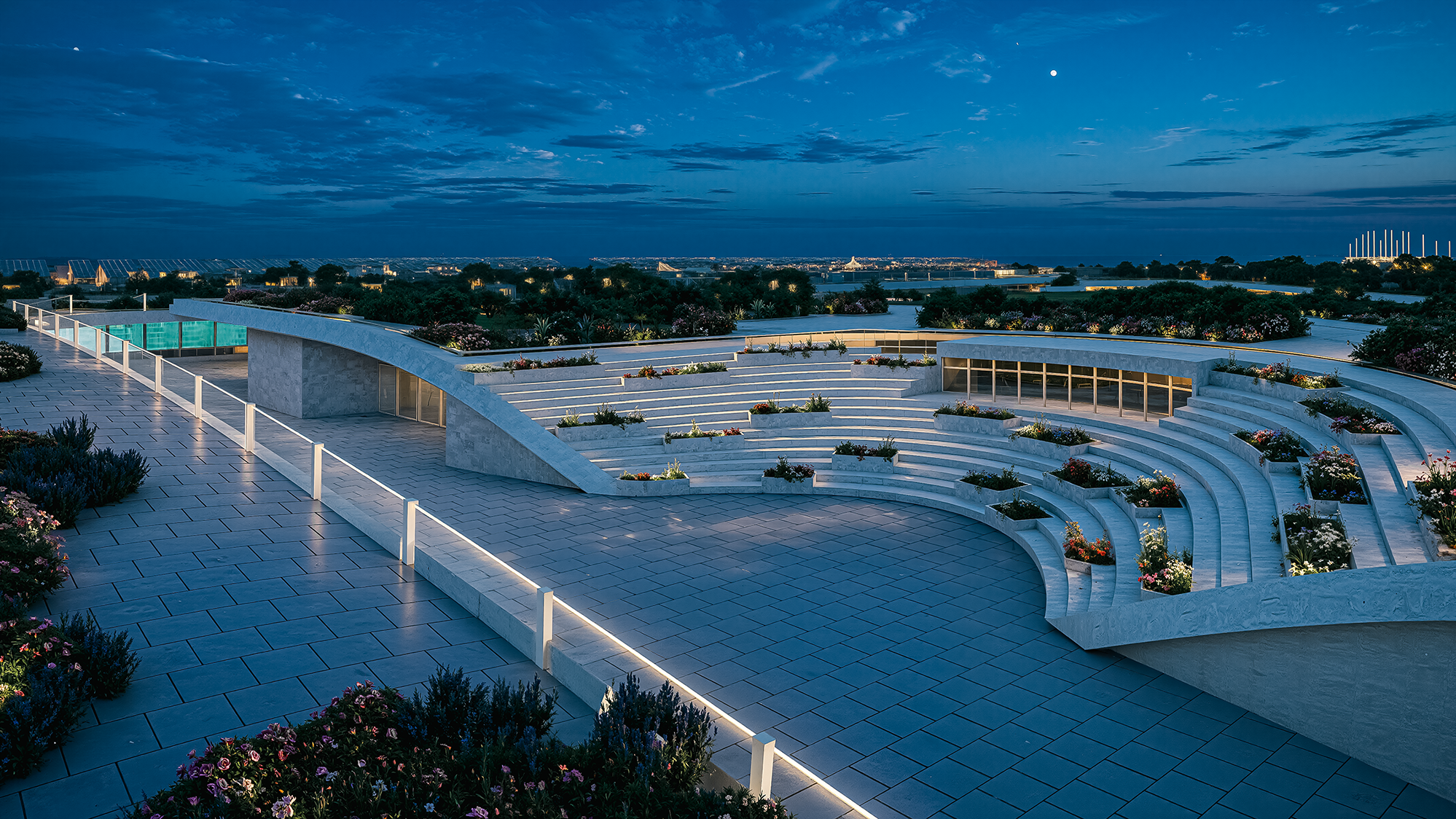
The intervention adopts a multi-layered approach, formally drawing from naturalizing and terrascaping geometries to design a continuous green roof system above the warehouses to mediate between the industrial buildings and the urban environment, thereby transforming the originally massive and enclosed volume into an accessible urban landscape and cultural space. Programmatically, the project transforms the function of the existing warehouse spaces below the roof, integrating data storage, AI computing, immersive digital art, and civic gathering into a multi-functional architectural complex. This project challenges the traditional notion that infrastructure must be invisible, technical, and inaccessible, while re-examining the relationship between technology and nature, as well as between machines and humans, creating a new kind of civic hub. It proposes a new paradigm where “bigness” is no longer invisible but naturalized—reintegrated into the rhythms of the urban environment and civic life.