Drake Gaither
Coastal Commons
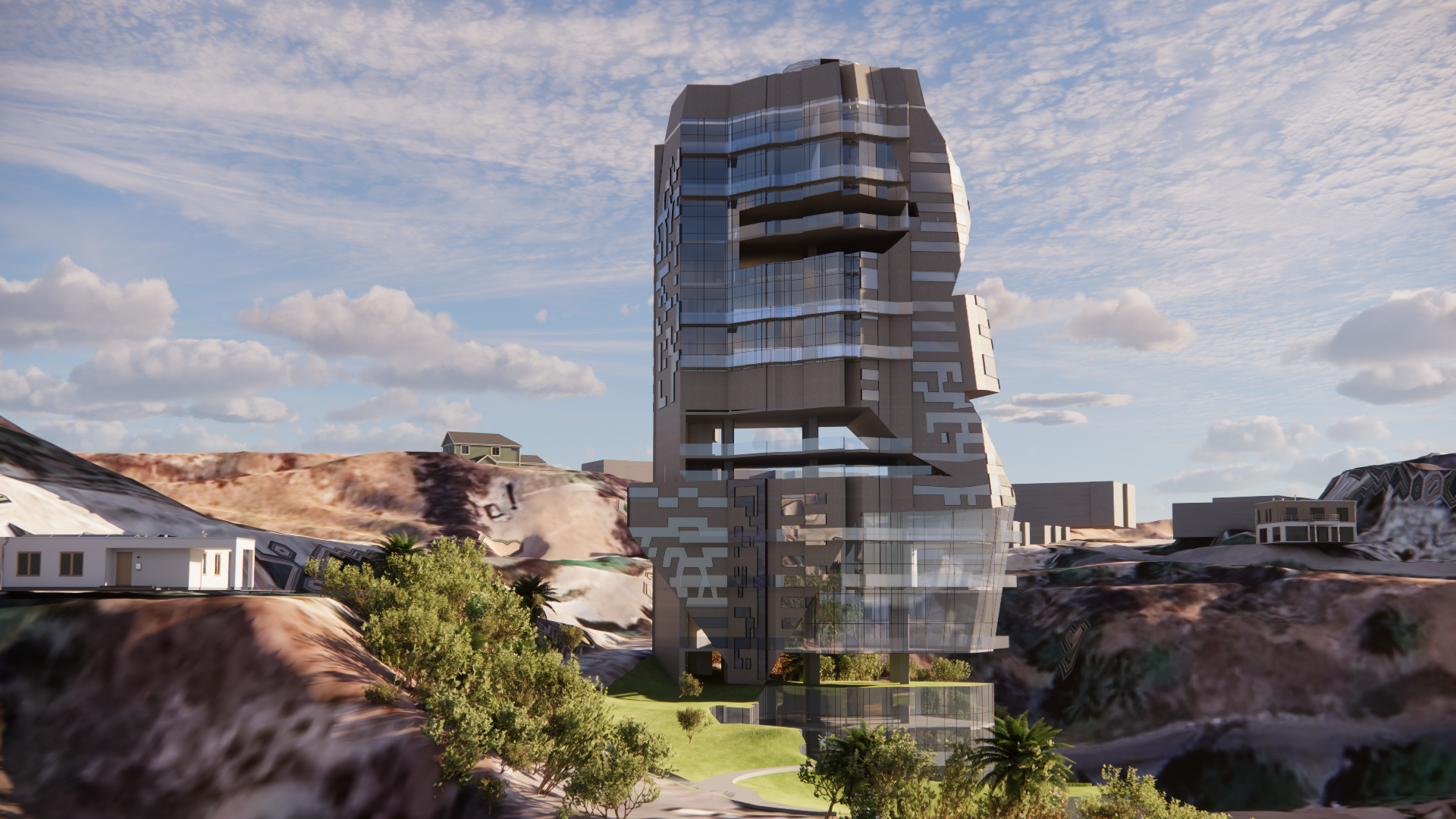
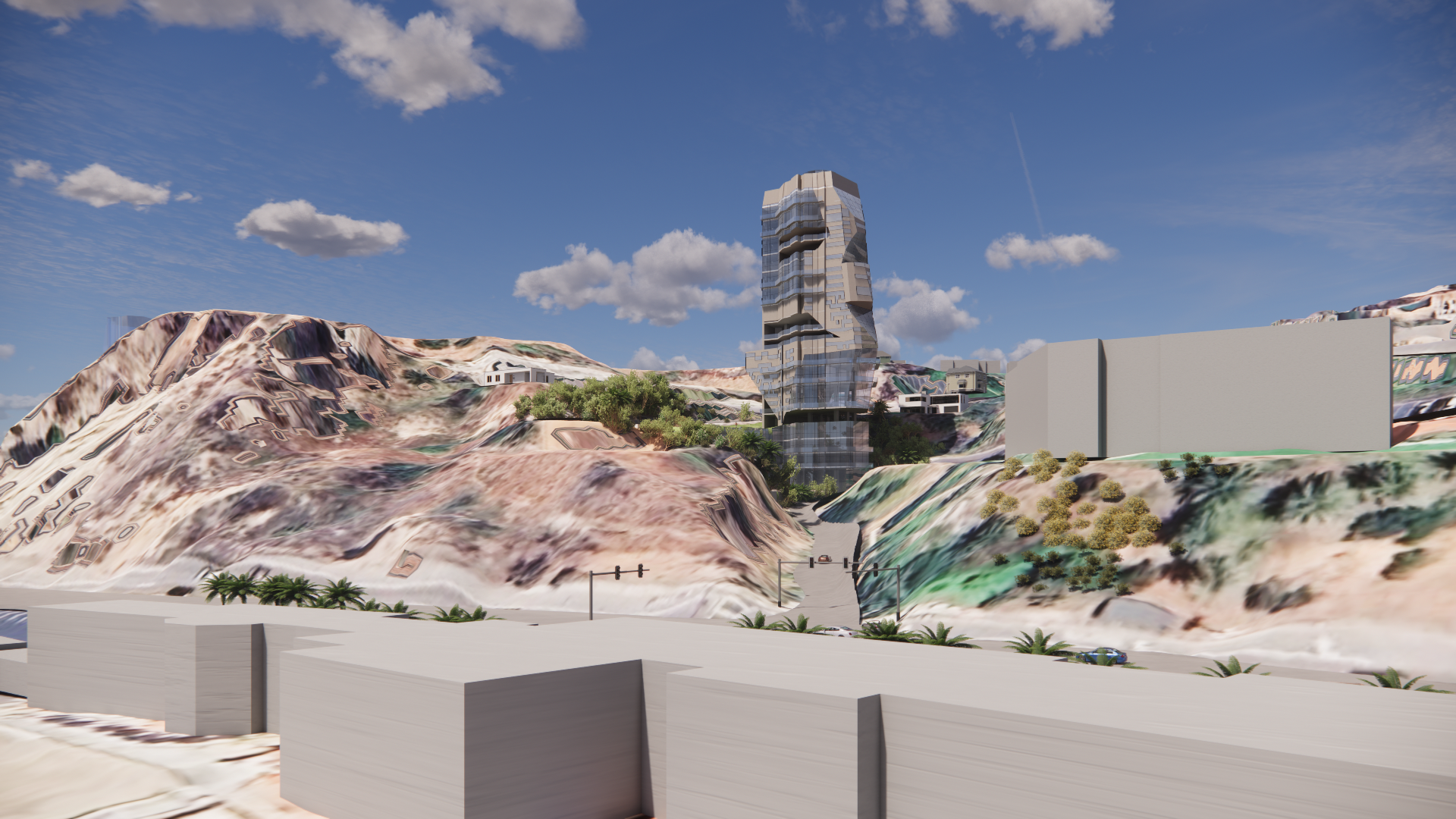
In the wake of the 2025 Palisades Fire, which destroyed thousands of hillside homes along the wildland-urban interface, this thesis proposes a new approach to rebuilding: a fire resilient high-rise residential tower situated along Pacific Coast Highway. Rather than restoring a fragmented field of single-family houses, the project consolidates housing into a vertical structure that minimizes land consumption, concentrates fire safety infrastructure, and creates a more defensible edge against future disasters. In doing so, it addresses both the urgency of post-disaster housing demand and the long-term need for climate-adaptive, high-density living along California’s vulnerable coastline.
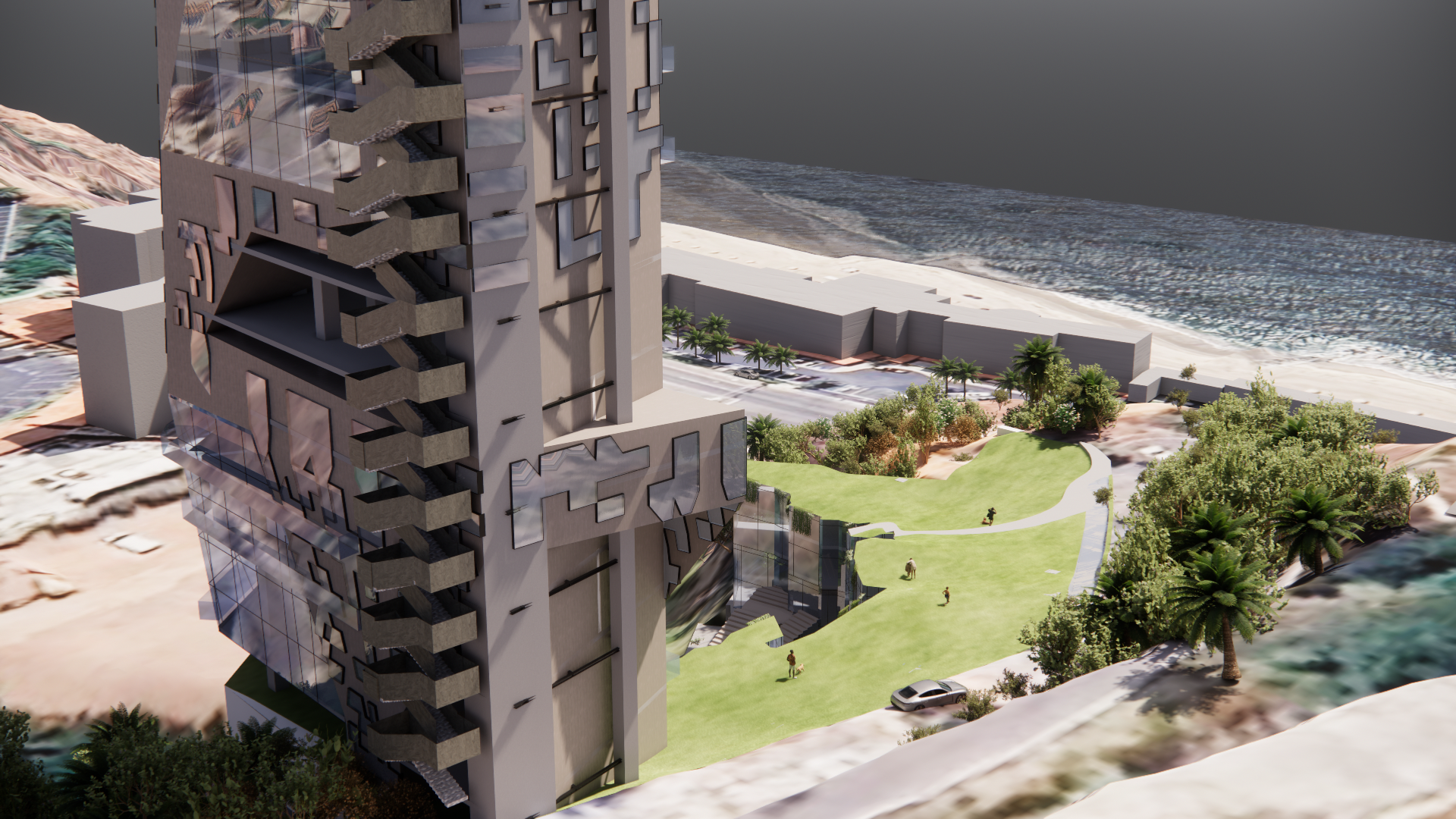
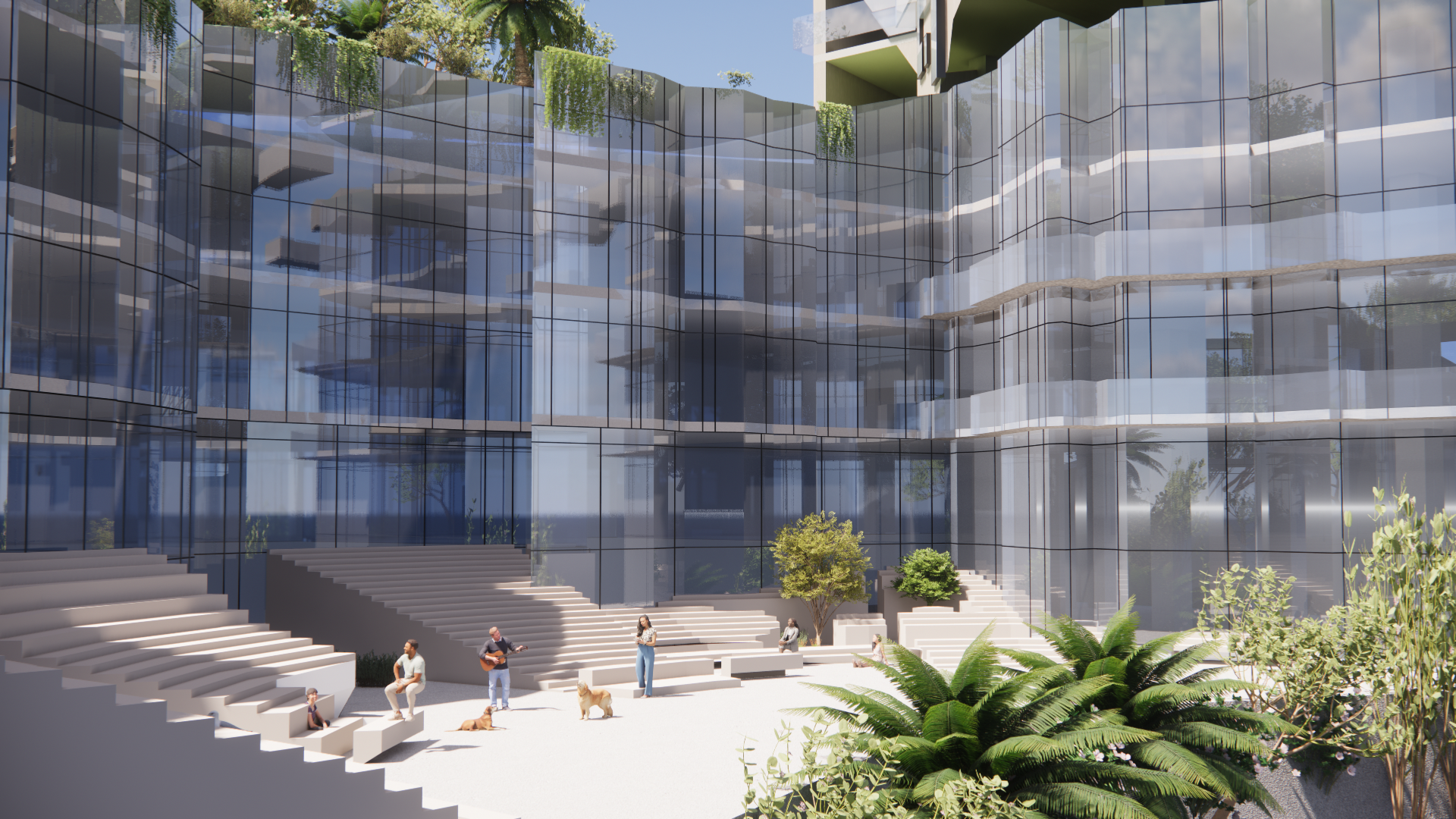
The architecture responds to its context through a series of integrated fire-adaptive strategies. A sunken green roof is carved into the hillside, providing both public open space and a natural buffer against fire spread. At the top of the tower, an elevated water reservoir supplies emergency fire suppression and thermal regulation. Sectional cutouts are sculpted to preserve view corridors for neighboring homes and to generate outdoor terraces, ventilation, and spatial variety. These moves, visible in the building’s form, are not merely aesthetic—they are performative acts of resilience, placing infrastructure, landscape, and form into direct dialogue with site and climate.
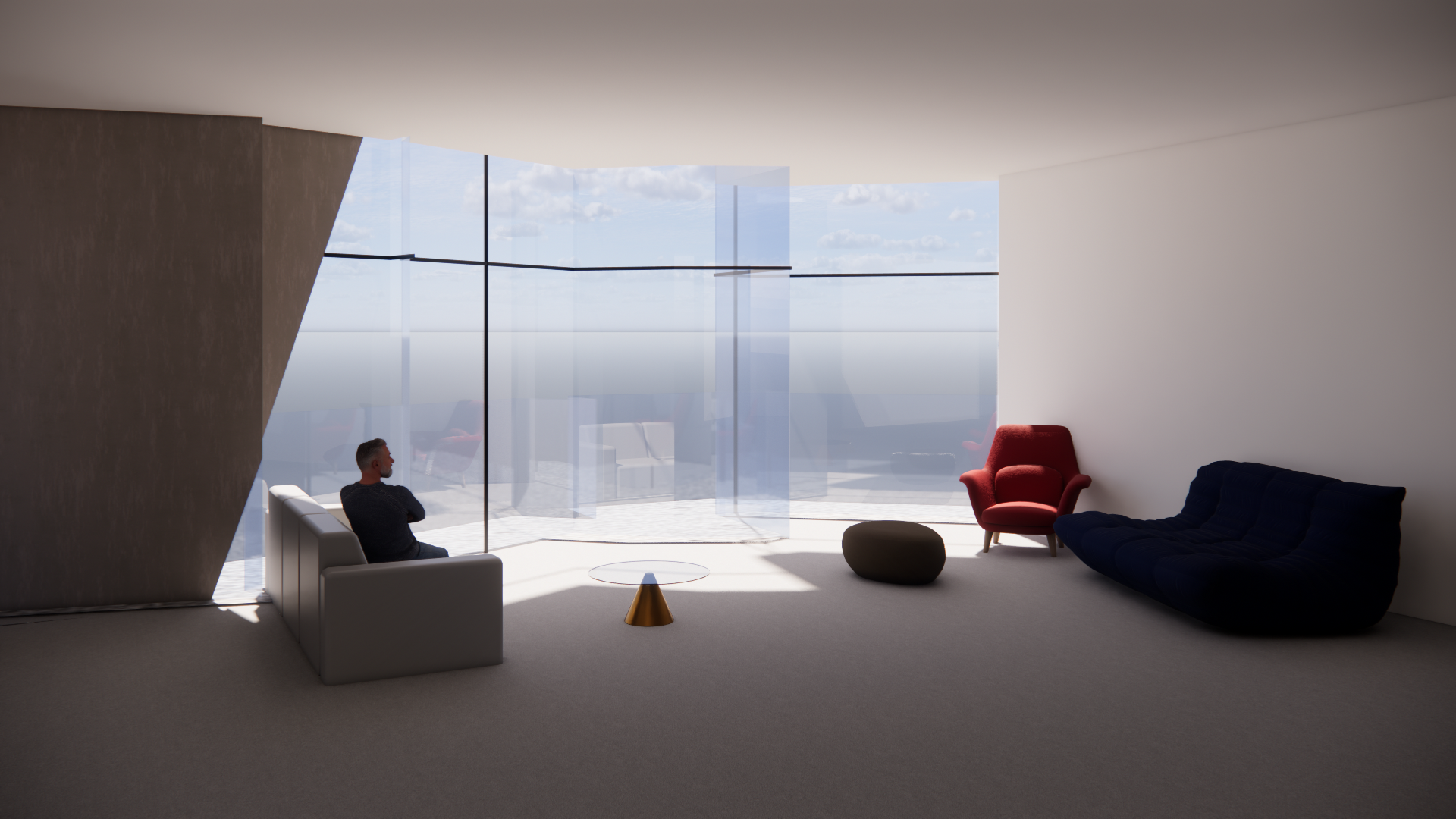
The decision to introduce a tower into a traditionally low-density residential zone is not simply a response to fire risk, but a redefinition of the local way of life. In a place where panoramic ocean views and coastal proximity have historically been reserved for a privileged few, the tower redistributes access—allowing many residents to share in the visual, climatic, and cultural benefits of living on the California coast. By stacking homes vertically, the project fosters a community that blends urban sociability with the natural beauty of the Pacific, creating spaces for collective gathering, recreation, and connection to the landscape. This shift represents more than an architectural intervention; it is a transformation in how coastal living is experienced, expanding both the social and cultural value of the Palisades in a post-wildfire future.