Aahan Sakhuja
The Adaptive Mesh
In the context of London’s dense urban fabric with evolving housing needs, navigating council regulations remains a significant challenge for architects who wish to innovate within traditional residential neighbourhoods.
In London there are 33 councils and this project comes under the regulations set by Hammersmith and Fulham. Each council based on the types of houses within the borough sets its own design regulations.
There are two key regulations set by Hammersmith and Fulham which are of importance here:
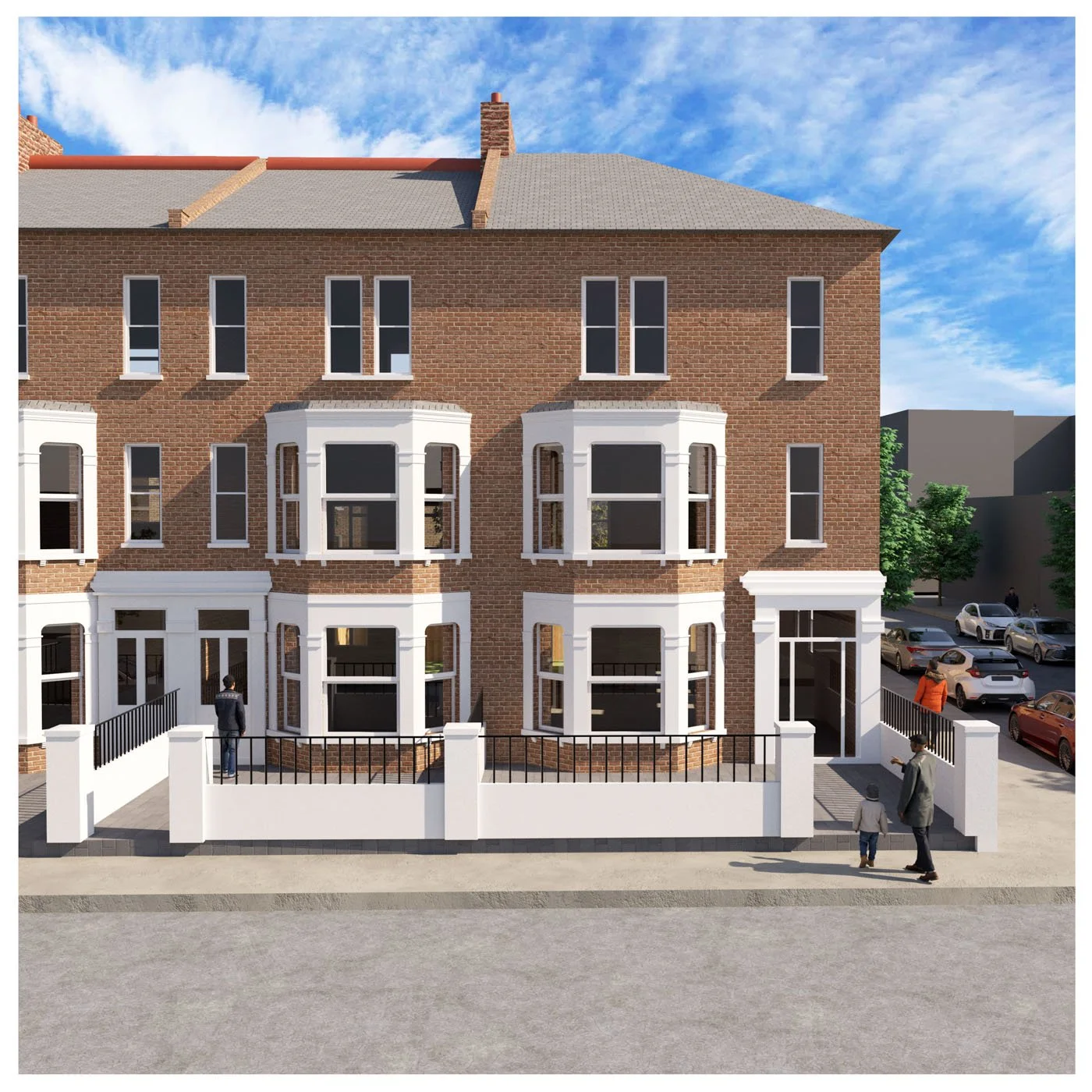
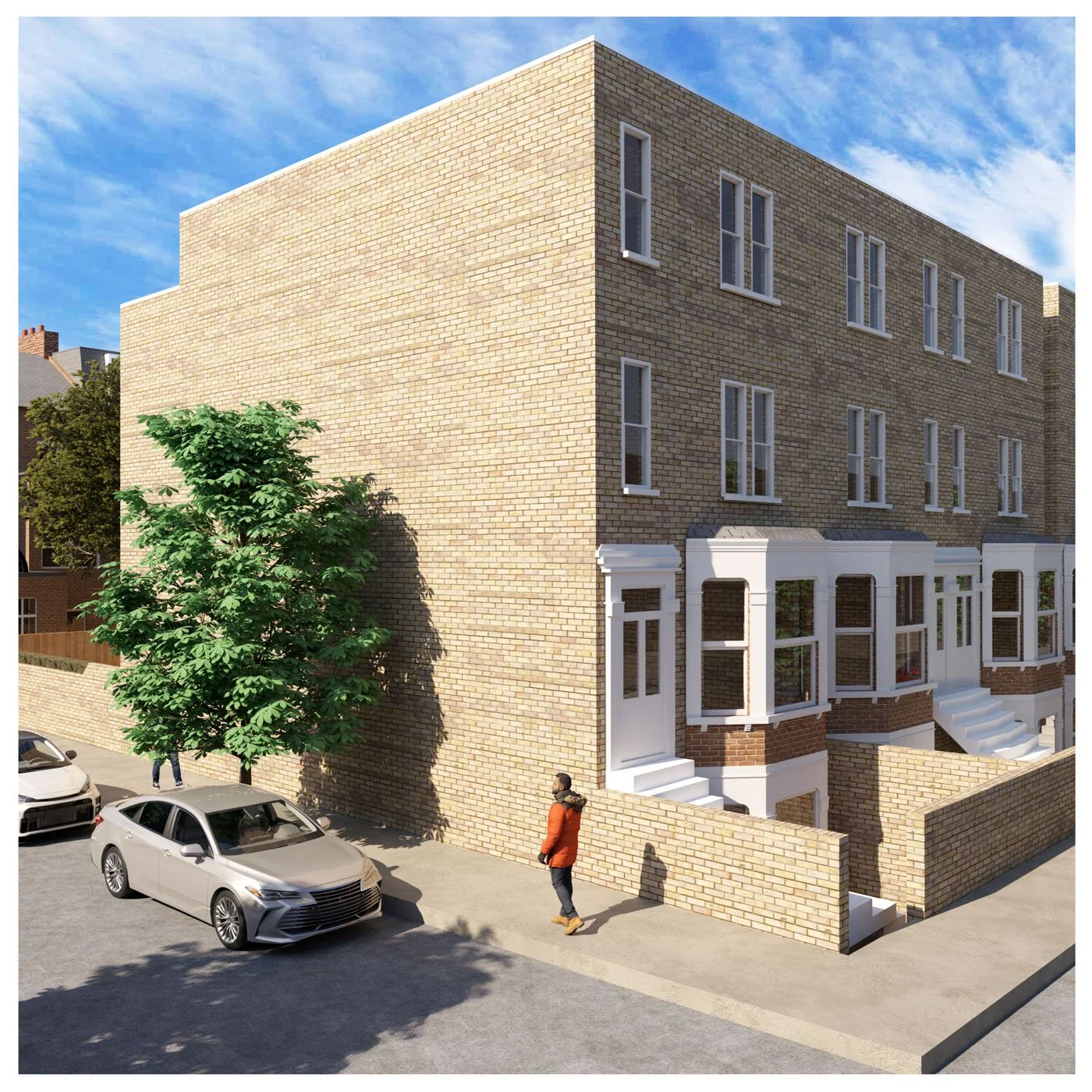
1- All new development should respect the key townscape features, such as height and massing, building types and density, that define the sense of place. Proposed works within consistent groups of buildings such as terraces should respect the established homogeneity of the townscape.
2- The scale, proportion, alignment, style and use of features and materials must be carefully conceived to achieve high quality buildings that form a harmonious relationship with their neighbours.
Existing regulations often impose strict design guidelines on the appearance and construction of the buildings with façade uniformity on the street and heritage conservation limiting the creative expression and adaptive reuse. This thesis explores a design strategy that respects the historic façade of single-family homes while introducing modern interventions to facilitate community-oriented living.
The regulations are about maintaining an image from the past rather than a way of living from the past.
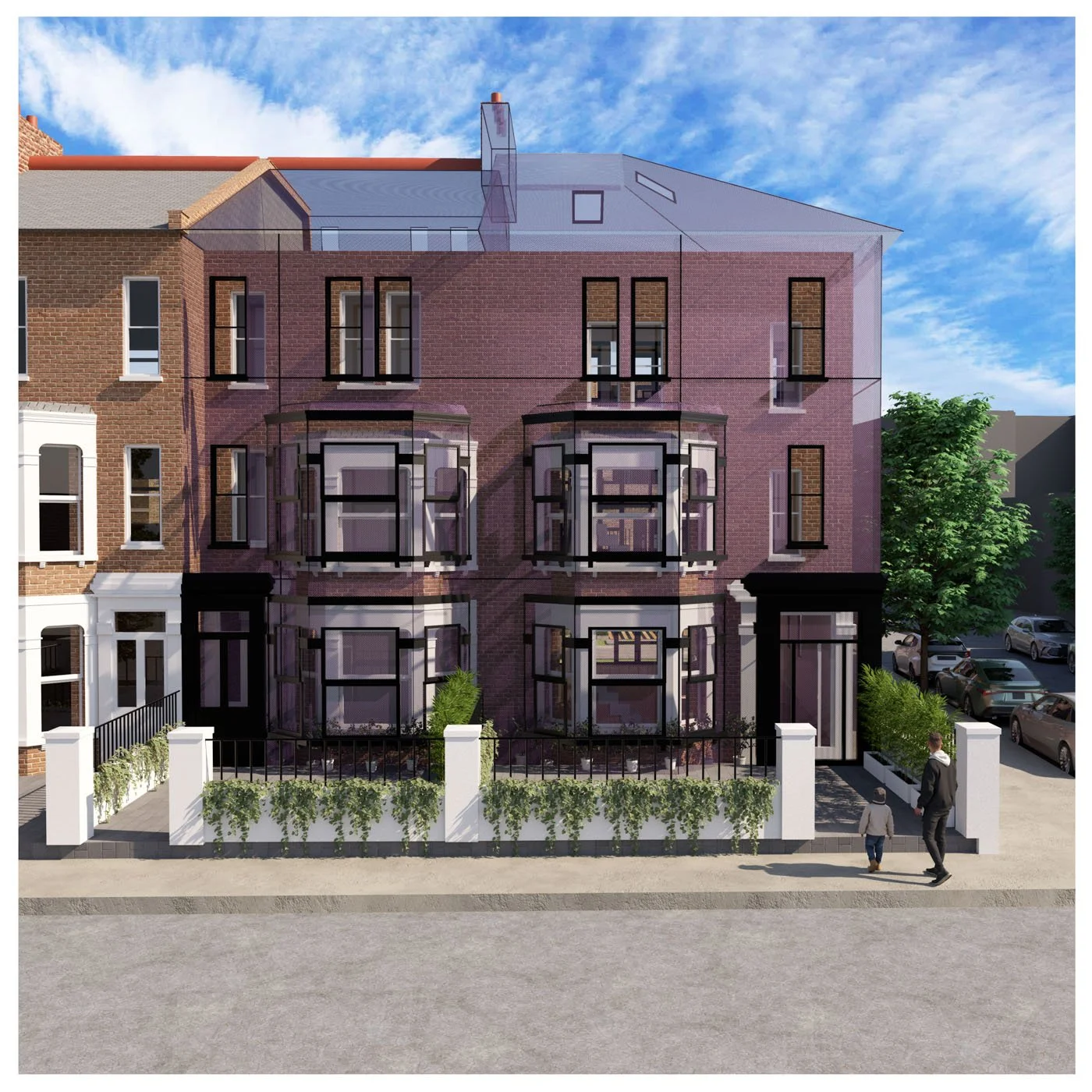
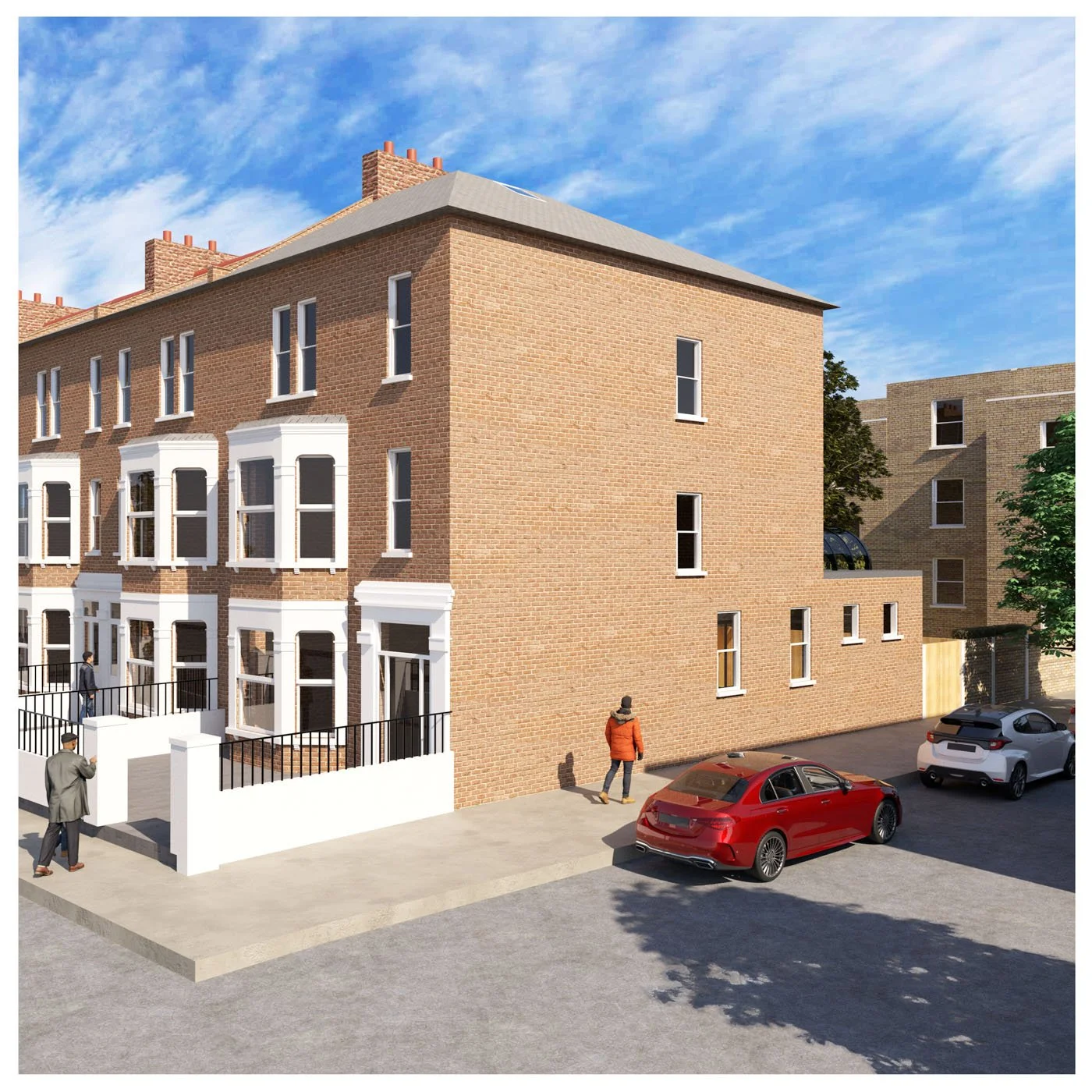
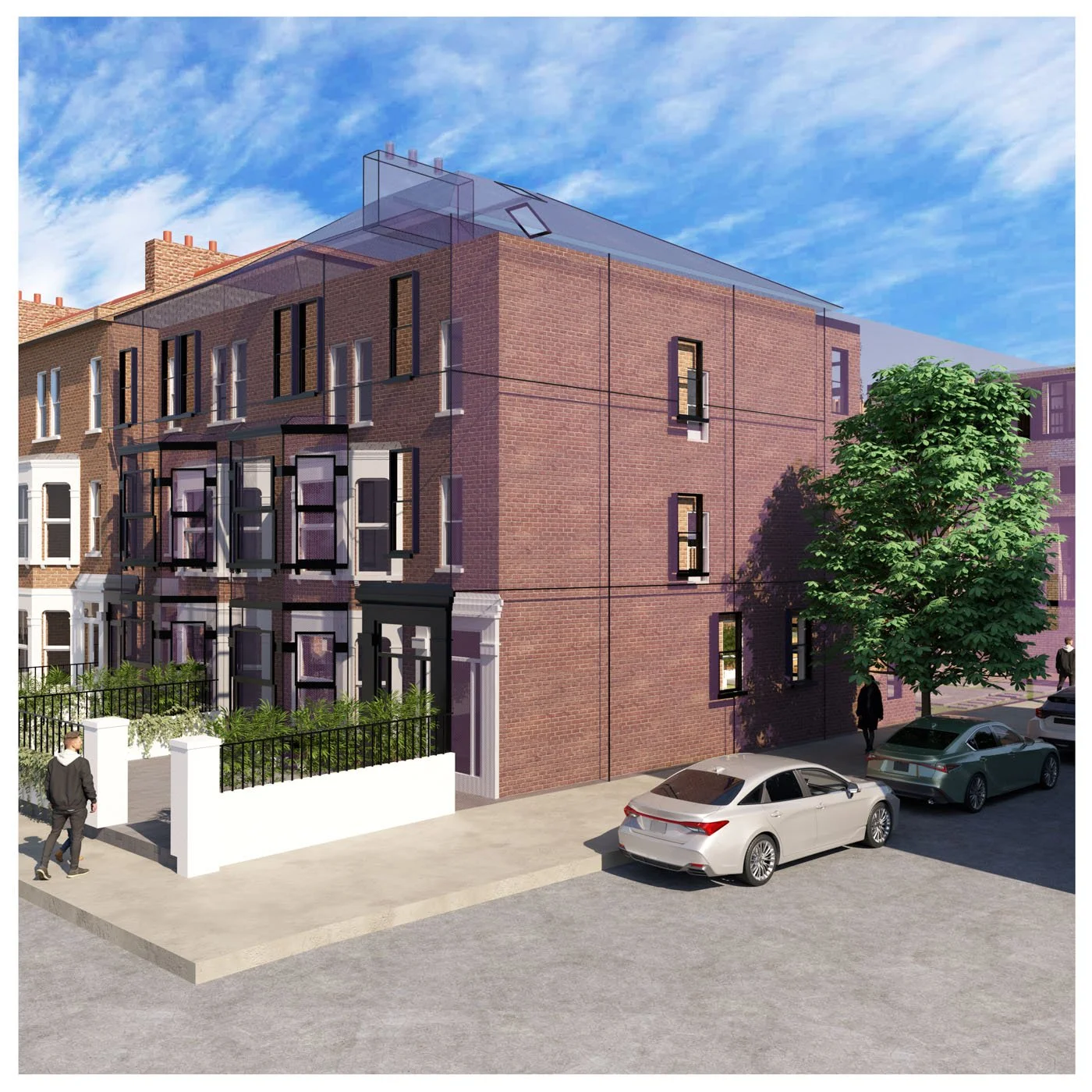
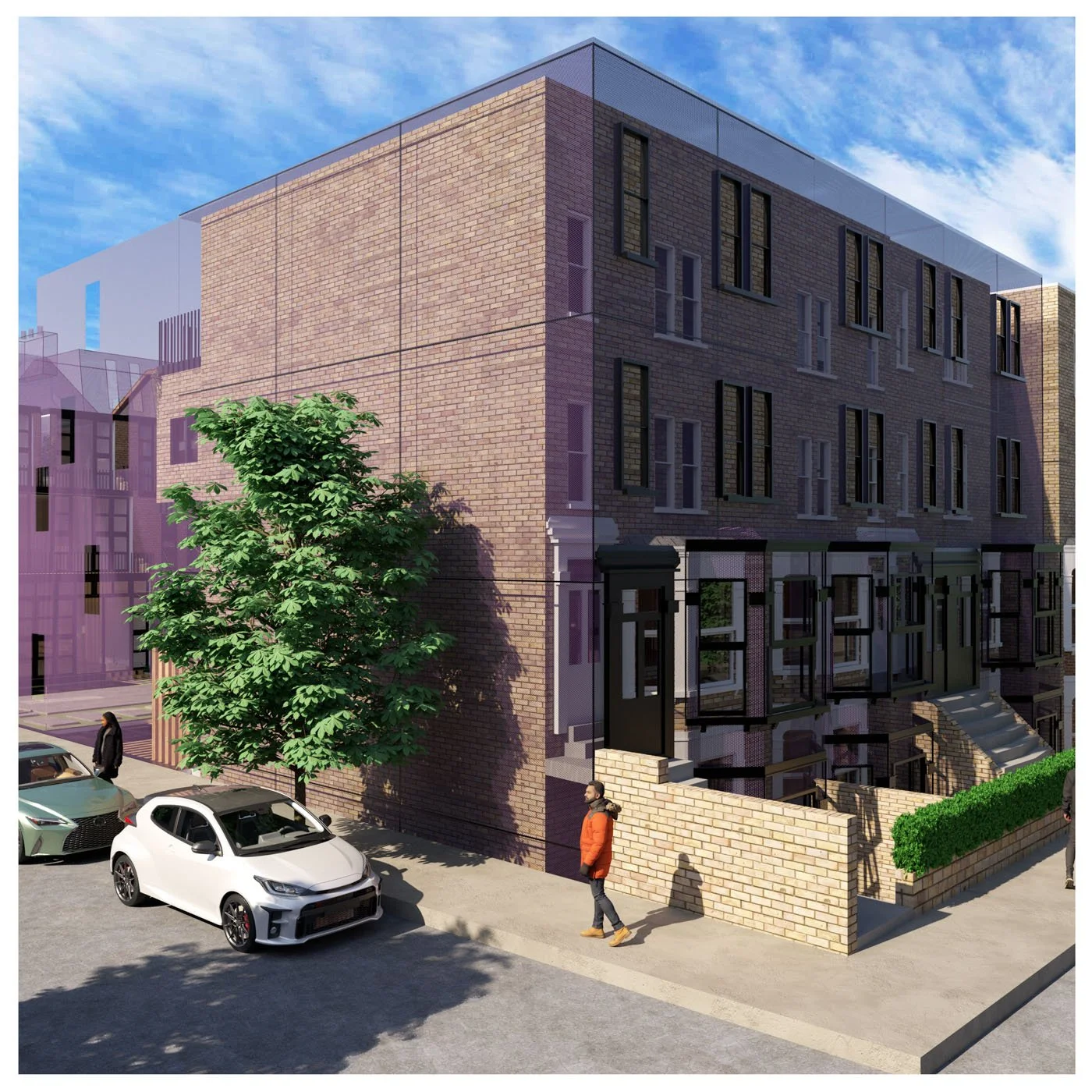
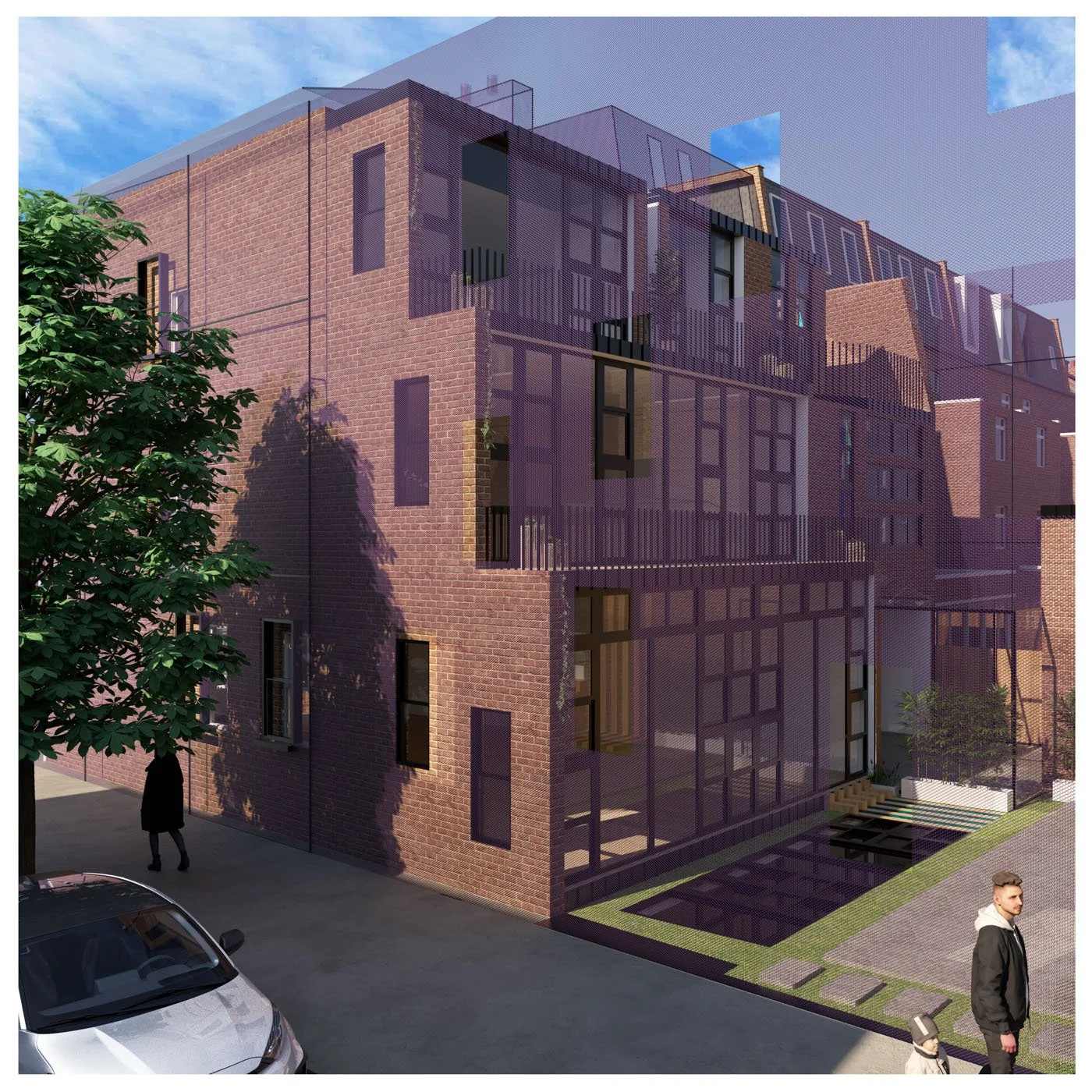
The project centers on a specific site in West London where the existing street features predominantly single-family residences with consistent façades maintaining the characteristics and aesthetics of the street. My approach involves maintaining the original façade’s outward appearance by pushing back and preserving the street’s visual continuity while overlaying a contemporary mesh in front of the offset brickwork. This layered façade concept aims to address regulatory constraints by creating a visual dialogue between the old and the new. This allows the historic materiality to be visible from the street while introducing a new lightweight layer that can be manipulated.
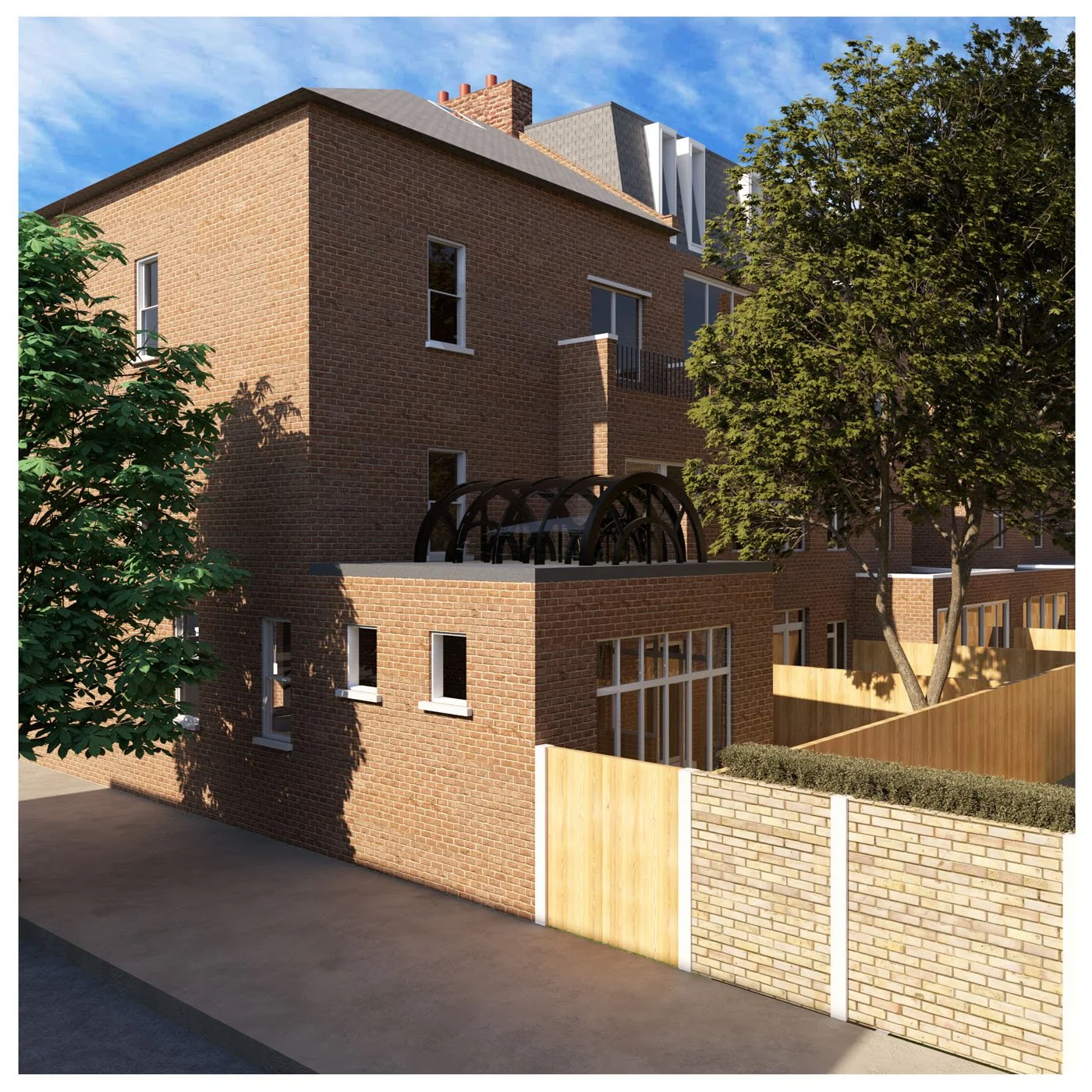
Beyond the façade treatment, the project involves transformative interior reorganisation. Gutting out the existing structures and reconfiguring 5 houses into a cohesive multi-unit complex. This reconfiguration tries to maintain the original extensions to the rear and play with the same style of levels and introduces communal spaces with shared living environments.
The challenges lie in balancing the council regulation compliance such as façade materiality and style and the need for contemporary design solutions.
This thesis aims to demonstrate that regulations while essential for safety and historic conservation need not stifle innovation. The layered façade concept exemplifies a method for mediating between tradition and modernity, preserving London’s rich architectural history while adapting it to meet contemporary housing demands.